
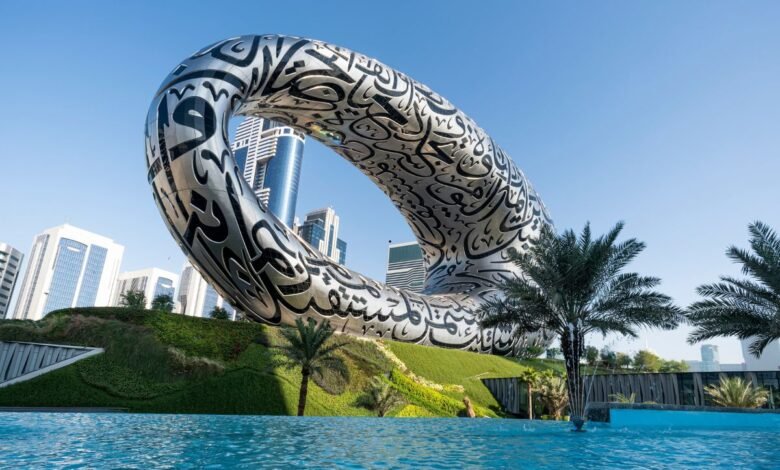
Dubai Future Foundation Maps 14 Global Solutions for Humanity

Dubai Future Foundation has unveiled 14 groundbreaking solutions that could reshape humanity’s future. Their latest report presents practical, real-life solutions to address our shared challenges. The team selected these solutions from more than 200 future opportunities outlined in The Global 50 reports between 2022 and 2025.
Dubai Future Foundation’s strategic approach aims to promote international collaboration to tackle humanity’s most urgent challenges. These solutions target ten critical megatrends that shape our future. The megatrends include Materials Revolution, Technological Vulnerabilities, Energy Boundaries, Digital Realities, Future Humanity, and Advanced Health and Nutrition. Dubai Future Forum, the world’s largest gathering of futurists, will showcase these initiatives. The forum features over 70 keynotes, panels, and activations that challenge the powerful forces shaping humanity’s future.
This detailed approach shows how innovative thinking can turn visionary ideas into useful frameworks for global cooperation. The innovative pathways include creating a global equity fund for long-term challenges, establishing international frameworks for genetic governance, developing centennial plans for planetary health restoration, and implementing global business licensing systems for small enterprises.
Dubai Future Foundation launches special foresight report

Image Source: ZAWYA
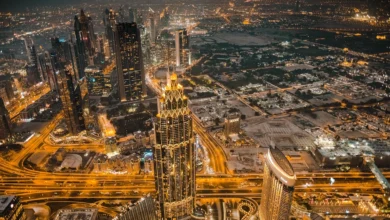
The Dubai Future Foundation (DFF) showed a detailed foresight report with trailblazing solutions to tackle global challenges. Dubai has become more than just a testing ground for emerging technologies. The emirate now serves as a global platform to address worldwide problems.
Report titled ‘Global Solutions and Shared Futures’
The new report, “Global Solutions and Shared Futures,” presents carefully selected opportunities that can become real-life solutions for humanity’s shared future. A careful study identified 14 promising opportunities from more than 200 future scenarios. The team explored these scenarios across The Global 50 reports between 2022 and 2025. This special edition highlights the most promising paths for global cooperation, future design, and collective action by combining human imagination, scientific insight, and data-driven solutions.
Released as part of The Global 50 special edition
This report marks a milestone as a special edition of DFF’s annual foresight publication series. A distinguished group of experts, researchers, and innovators from the UAE and worldwide collaborated on its development. The document shows how shared paths to progress and promising futures naturally extend beyond borders.
The report’s timing matches the UN’s Summit of the Future, where global leaders will tackle critical challenges to create a better future. Sources confirm that the report condenses three years of global futures research into 14 key opportunities. These opportunities could evolve into practical policy frameworks, governance models, and cooperative systems in the coming decades.
Experts from many disciplines contributed their knowledge to this special edition. The team included specialists in environmental science, genetics, AI research, law, economics, space policy, and innovation. This diverse expertise will give readers detailed perspectives on turning these opportunities into concrete solutions.
Khalfan Belhoul calls for global cooperation

Image Source: Al Tamimi & Company
Dubai Future Foundation’s CEO, His Excellency Khalfan Belhoul, has emphasized the need for stronger global teamwork to tackle humanity’s shared challenges. During the “Global Solutions and Shared Futures” report launch, Belhoul stressed the importance of cooperative approaches that surpass traditional sectoral and national boundaries.
CEO emphasizes importance of international partnerships
The foundation’s latest foresight report showcases a collective global effort that demonstrates international partnerships’ growing role in creating future-ready solutions. Countries, institutions, and societies must work together to turn opportunities into real benefits for future generations.
“We continue to collaborate with global experts in foresight and future design, building on Dubai’s leadership as a hub for activating future opportunities and as an international platform for cooperation,” Belhoul stated. The foundation aims to establish common ground around global solutions that strengthen communities and protect humanity’s future.
Belhoul identified three major changes shaping humanity’s future at the Dubai Future Forum: focus as a “new currency” amid decreasing attention spans, a new era of information overload where “everyone and no one is an expert,” and AI companions’ development redefining social connections.
Quote: ‘Our future depends on our ability to work together’
“This report highlights promising opportunities that can form a shared global pathway forward. Our future depends on our ability to work together, transcend traditional boundaries between sectors and nations, and guide cooperative efforts with wisdom and clarity of vision, paving the way for a new era of growth, prosperity, and quality of life,” Belhoul remarked.
Dubai serves as a global testing ground for emerging technologies, supported by UAE’s adaptive approach to governance, Belhoul noted at the Annual Meeting of the Global Future Councils 2024. The city encourages state-of-the-art solutions through mutually beneficial alliances between government, industry, and researchers by creating environments to safely test, deploy, and adapt new technologies.
Report identifies 10 megatrends shaping the future

Image Source: The Business Research Company
The Dubai Future Foundation’s landmark report reveals ten powerful megatrends that are reshaping our world in ways never seen before. These long-term forces will bring irreversible changes that will reshape the global economy and society.
Materials Revolution
Materials stand at the forefront of the 5th industrial revolution. Machine intelligence and nanotechnology advances in materials science are changing everything we use in our daily lives. The global eco-friendly materials market, valued at $333.31 billion today, will likely reach $1073.73 billion by 2034. The piezoelectric smart materials segment should grow at 15.63% annually between 2024-2028.
Technological Vulnerabilities
Biotechnology, gene editing, and IoT adoption creates complex vulnerabilities across industries and regions. The estimated damage from cyberattacks will reach $38.56 trillion annually by 2025, triple the amount from 2015. The cybersecurity market will grow at 8.7% compound annual rate through 2026. Protection against these risks becomes more critical each day.
Digital Realities
Digital natives now create virtual worlds where real-life activities come alive in immersive 3D and 4D environments. The arrival of 5G and 6G networks will boost autonomous applications through reliable, high-speed connectivity. The gaming industry, with 3.2 billion gamers worldwide, will grow at 8.4% CAGR through 2026 and become a $1178.69 billion industry.
Future Humanity
Advanced machine intelligence, brain-computer interfaces, and technological breakthroughs in science and medicine will redefine human potential. People’s expectations about self-realization, work, education, and success will change dramatically. Nearly 300 global technology experts predict “deep and meaningful” or even “fundamental and revolutionary” changes in human abilities and behaviors as they adapt to AI over the next decade.
Advanced Health and Nutrition
Machine intelligence, nano- and biotechnology, and IoT breakthroughs will transform our understanding and experience of health and nutrition. Half of all consumers worldwide worry about their mental and physical health, and weight management remains a key concern for nearly half of them.
Universal Universe Laws proposes space protection goals
Dubai Future Foundation’s report presents 14 global solutions, and Universal Universe Laws emerges as a framework that tackles the growing challenges of outer space governance. This solution acknowledges today’s complex digital world of space activities and suggests standardized international approaches to protect space as a shared domain.
Unified global goals for outer space governance
The Outer Space Treaty serves as the life-blood of international space law, and the proposal builds upon its foundations. The Committee on the Peaceful Uses of Outer Space (COPUOS) now acts as the main multilateral platform for space governance. It includes 102 member countries and more than 50 observer organizations. The current framework doesn’t deal very well with international regulations about property rights, liability, dispute resolution, and licensing for space activities.
Universal Universe Laws supports stronger international cooperation through consistent standards. These standards recognize both common and individual ownership interests in space. Space activities positively affect all 17 Sustainable Development Goals. Almost 40% of targets benefit directly from space-derived information and Earth observation data.
Treating space as a shared resource
The solution highlights space as “the province of all mankind,” a principle that existing space treaties made 50 years ago. No nation can claim sovereignty over outer space or celestial bodies. This creates challenges when regulating how resources should be used.
Universal Universe Laws wants to answer whether using space resources means free exploration or prohibited appropriation of celestial bodies. Economic incentives for space resource exploitation could lead to conflict, environmental damage, and cultural loss without agreed international principles.
The proposal recommends new principles to ensure space resource activities follow international law in a “safe, sustainable, rational and peaceful manner”. It emphasizes that cooperation, not competition, will help every nation on Earth while supporting responsible innovation.
A Catalyst for Common Good suggests global equity fund

The “Catalyst for Common Good” proposal stands out among solutions in Dubai Future Foundation’s report. It suggests creating a global equity fund to tackle worldwide challenges. This new funding approach will reshape how we handle and distribute resources for long-term global issues.
Addressing long-term global challenges
A huge gap exists between available resources and funding needs for major global issues. The cost to implement Sustainable Development Goals ranges from AED 33.71 trillion to over AED 67.42 trillion each year. Official development assistance reached only AED 1.77 trillion in 2015. The proposal recognizes that we need to change from funding single projects to financing bigger changes that make a real difference.
The global equity fund’s concept takes its cues from success stories like the Global Fund. It makes use of private sector resources to support and spark larger funding from public donors and local sources. This method works well with complex problems like climate change. Right now, 71% of these investments go to the 50 countries most at risk from climate change.
Funding mechanisms for collective benefit
The proposal details several ways to maximize collective impact. Pooled funding offers clear benefits – better coordination, smarter risk management, and more donors. These team-based structures help funders make a real difference through organizations that use different solutions for shared goals.
Expert assessment of needs and deep knowledge of specific fields make this fund special. Resources flow more effectively compared to old funding models. The proposal shows that working together produces better results and spreads the message wider. This leads to more progress on critical issues than when organizations work alone.
Beyond Classifications redefines global rankings
The “Beyond Classifications” proposal in Dubai Future Foundation’s report presents a fresh approach to global rankings that surpasses traditional development metrics. This solution tackles a core problem in current classification systems. The IMF, World Bank, and UN Development Program agree on only 20-25% of countries’ status.
New system based on collaboration and shared effect
The proposal champions dynamic metrics that are the foundations for global collaboration rather than rigid country classifications. New rankings would track cooperation patterns and trade flows that line up with shared global challenges, supported by advanced machine intelligence. This system makes shared evidence-based partnerships possible by matching each country’s needs with appropriate support. Local requirements take priority over predefined categories. Many universities now follow similar approaches. The Times Higher Education Impact Rankings evaluate 2,389 institutions from 127 countries based on their contributions to Sustainable Development Goals.
Moving away from GDP-centric metrics
GDP metrics don’t capture complex, interconnected challenges like climate change and social inequality. The UN Environment Program’s Inclusive Wealth Index shows that true wealth growth rates are much lower than GDP figures suggest. Alternative frameworks like the Human Development Index, Better Life Index, and Genuine Progress Indicator now include health, education, environmental conditions, and subjective well-being. This fundamental change represents a new understanding of economy. Well-being, sustainability, and resilience now stand at the heart of decision-making.
International Agreements in Our DNA explores genetic governance

Image Source: Editverse
The “International Agreements in Our DNA” solution from the Dubai Future Foundation’s report examines the faster growing field of genetic research. This solution suggests governance frameworks that don’t deal very well with ethical concerns and help advance scientific progress.
Frameworks for ethical genetic research
Global genetic governance remains fragmented today, though several important frameworks exist. The Oviedo Convention serves as the only legally binding international instrument that covers biomedical research and genetics. Twenty-nine European countries have ratified this convention. UNESCO’s International Declaration on Human Genetic Data has become a critical reference point in bioethics. Countries implementing genomics in healthcare systems follow frameworks developed by the Global Alliance for Genomics and Health (GA4GH), including the Ethics Review Recognition Policy. These initiatives have led to principles that involve Indigenous communities through collaboration, cultural competency, and transparency.
Balancing innovation with bioethics
Genetic research brings up deep ethical questions. We focused on editing germlines—choices that affect future generations without their consent. These changes could affect future individuals’ autonomy and their right to an unaltered genetic identity. All the same, well-designed frameworks could make gene editing a valuable tool to treat diseases while managing risks effectively. A proposed global charter would give everyone equal access to genetic services. This charter would protect the rights of people with edited and unedited genes and support gene editing as a way to prevent suffering.
Make it 100 introduces centennial restoration plans
Dubai Future Foundation’s global solutions catalog introduces the “Make it 100” initiative, a groundbreaking framework for centennial restoration planning. The initiative implements 100-year horizons to restore environmental and social systems. This solution supports multi-generational commitments to our planet’s health that reach way beyond typical policy timeframes.
Long-term strategies for planetary health
The UAE Centennial Plan 2071 inspired Make it 100 with its clear roadmap that stretches five decades to strengthen the country’s readiness for the future. This global solution takes such thinking worldwide, as our planet’s health needs commitments that span generations. Governments can use Long-Term Strategies (LTS) to create mid-century visions. These visions aim to reduce greenhouse gasses, build climate resilience, and achieve national development goals. The UNFCCC received submissions from 31 parties, and 58% of them include health protection as a key outcome.
Sustainability over generations
This solution’s life-blood comes from intergenerational thinking. Research shows that 65% of Gen X and Millennial respondents are willing to make daily changes to tackle climate change. Make it 100 highlights how environmental sustainability will give future generations access to essential resources—clean water, fertile soil, and breathable air. The solution supports a move from short-term planning to centennial restoration frameworks. This approach ensures policies continue even as governments change. Environmental and human health become directly linked, and the solution recognizes that “when natural systems are healthy, they support both our physical health and our mental health”.
Global Precedents aims to standardize future policies

Image Source: SlideTeam
Dubai Future Foundation has identified 14 solutions, and among them, Global Precedents promotes standardized policy approaches that countries worldwide can implement. This solution creates templates to address complex global issues through coordinated efforts.
Creating replicable models for global challenges
Global Challenge Platforms (GCPs) are the life-blood of this solution and accelerate public and private sector solutions as unified approaches. These platforms help design integrated solutions that countries can copy and use. GCPs must meet specific criteria. They need clear client demand, flexibility potential, and a clear theory of change. The World Economic Forum has put similar concepts into practice through their Global Challenge Initiatives. These initiatives bring together private sector members and non-business constituents in time-limited collaborations.
Policy templates for international use
Governments can use standardized frameworks from policy templates that outline normative guidelines for governance. International organizations have delivered policy standards that support implementation, especially when you have emerging challenges like AI. These templates improve efficiency by copying the “efficiency core” of proven solutions—the specific part that works in different local contexts. This method strikes a balance between standardization and local adaptation. It ended up providing affordable mechanisms to address complex global issues without starting from scratch in each implementation.
Mission Accomplished envisions climate neutrality

Image Source: Emission Index
The Dubai Future Foundation’s report presents the Mission Accomplished solution that aims to achieve climate neutrality through worldwide collaborative action. This solution maps out realistic paths toward net-zero emissions and establishes international frameworks that enable climate collaboration.
Pathways to net-zero emissions
The world needs a complete reshaping of production, consumption, and transportation methods to reach net-zero status. The energy sector plays a vital role in preventing climate change’s most severe impacts. A powerful alliance of countries, cities, and businesses has made climate neutrality pledges. The commitment spans 107 countries that account for about 82% of global greenhouse gas emissions. The Race to Zero campaign has united more than 9,000 companies, 1,000 cities, and hundreds of educational and financial institutions. These organizations want to take immediate action to cut global emissions in half by 2030.
Global cooperation on climate goals
Countries can speed up their energy transition by sharing resources and making use of collective innovation through international climate partnerships. Power grid connections between nations help solve the challenge of irregular renewable energy supply. The North Sea Link exemplifies this approach by connecting the UK and Norway, which allows them to share their excess wind and hydropower. COP26 saw the launch of the Green Grids Initiative, which has support from over 80 nations. This project aims to develop interconnected electricity grids across countries and continents. These joint efforts mark significant progress toward climate neutrality goals that countries cannot achieve alone.
The Global Protocol for Small Businesses proposes licensing reform
Dubai Future Foundation’s Global Protocol for Small Businesses identifies licensing reform as the key to realizing SME potential worldwide. Complex regulatory requirements burden smaller enterprises disproportionately and remain one of the most cited obstacles to business growth.
Global business licensing for SMEs
The protocol foresees a unified international licensing framework to standardize requirements in different jurisdictions, similar to successful models like Canada’s BizPaL. Small businesses today deal with scattered regulations during international expansion. Each country’s distinct licenses, trading rules and business laws create obstacles. A simplified procedure would allow licenses from one jurisdiction to receive quick recognition in others. This change would enable cross-border operations without extra compliance costs.
Reducing barriers to entry
Small businesses face complicated procedures, strict compliance standards, high fees, and multiple approval processes. SMEs find these barriers particularly challenging because they lack resources to handle complex regulatory requirements. The protocol supports regulation based on risk assessment and requires licenses only for activities that need real oversight. Low-risk ventures like small home-based businesses could use alternatives to full licensing. These reforms would address the gap between SMEs’ economic contribution and their limited presence in international markets.
Innovations Beyond Borders promotes satellite internet
Dubai Future Foundation’s foresight report highlights satellite internet as a game-changer that reshapes the scene of global accessibility. Satellite technology evolves faster to break down traditional connectivity barriers across the world.
Expanding global connectivity
Satellite communications now support everything from home broadband to mobile communications. They connect machines to machines and integrate with critical infrastructure. LEO satellites positioned 100-1,000 miles above ground have brought dramatic advances to the industry. These satellites deliver better speed and latency than traditional geostationary satellites. Starlink dominates the market with 72% share of 2.4 million household connections. Amazon’s Project Kuiper and other players launch their satellite constellations to expand coverage further.
Bridging the digital divide
Satellite internet serves areas where fiber networks would be too expensive or impossible to build. Rural communities benefit from remote learning opportunities and better healthcare through telemedicine. Small businesses in these areas can now propel development. Satellites beam signals directly to any spot on Earth. This makes them perfect for mountain regions, isolated islands, and disaster zones where ground infrastructure might fail. These networks not only provide reliable internet access but also create backup systems during emergencies when ground systems stop working.
Reinventing Happiness rethinks quality of life metrics

Image Source: Our World in Data
Reinventing Happiness stands out as a breakthrough solution in the Dubai Future Foundation’s report. It takes a fresh look at how societies measure prosperity and success. The concept goes beyond economic metrics to build frameworks that capture human fulfillment and societal progress better.
Beyond GDP: measuring well-being
GDP has dominated development discussions for decades, but it doesn’t capture many subtle impacts on our quality of life. More countries are now learning about different metrics to get a more detailed view of their society’s health. New Zealand came out with its Well-Being Budget in 2019. The budget funded Indigenous communities, tackled child poverty, and boosted mental health support. We can see other promising options like the Genuine Progress Indicator. This indicator looks at environmental health, income distribution, education, and leisure time. The UN Secretary-General’s High-Level Expert Group on Beyond GDP released an interim report. They suggested additional metrics that show well-being, inclusiveness, and sustainability.
Cultural and emotional dimensions of happiness
Research across nations shows that happiness isn’t one-size-fits-all. It combines personal psychological aspects with broader social dimensions. Our cultural values shape our emotions and behavior from an early age. These values play a big role in why happiness levels vary between nations. People in individualist cultures put more weight on personal freedom and achievement. Those in collectivist cultures value relationships and social harmony more. These cultural differences affect how people seek and review happiness. This shows that measuring prosperity needs both universal and culture-specific elements of human fulfillment.
Public AI advocates for ethical artificial intelligence

Image Source: TechCrunch
The Dubai Future Foundation’s report promotes artificial intelligence systems that serve the public interest. Commercial AI focuses on product-market fit, but Public Interest AI asks a deeper question about society’s true needs.
Developing public-interest AI frameworks
Governments must lead proactively beyond regulation to build Public Interest AI. The Public Interest Law movement of the 1960s provides inspiration. This solution demands clear public values, alternatives to private control, and community participation in shaping these systems. UNESCO and Latin American companies collaborate through the Business Council for Ethics of AI to implement ethical practices in industry. A handful of firms control compute power, data, and model access, which makes public infrastructure investments crucial.
Ensuring transparency and accountability
Transparency and accountability are the life-blood of responsible AI development. These principles equip people to understand AI decision-making and create clear paths for responsibility when systems cause harm. Explainable AI (XAI) builds trust by making complex systems interpretable to humans. The EU AI Act reflects this priority and requires high-risk AI system providers to reveal key characteristics such as training data and model architecture. Algorithmic auditing has become a vital accountability tool that scrutinizes AI system inputs, processes, and outputs to detect potential biases before deployment.
The Network Networks unlocks shared data potential
Dubai Future Foundation’s report on Network Networks foresees a world where data flows freely through trusted platforms. This creates unprecedented value through collaboration and tackles the need for secure environments where organizations can share information while they retain control.
Trusted platforms for data sharing
Data spaces are the foundations of this solution. These trusted environments let organizations exchange information while they keep full control over its use. The International Data Spaces Association has developed key components like the Reference Architecture Model, Rulebook, and Dataspace Protocol to set clear rules for trusted data sharing. The growing number of data spaces makes interoperability crucial. The Dataspace Protocol defines procedures to publish, negotiate, and access data in systems of all types. These trusted platforms use privacy-enhancing technologies that let organizations analyze data while protecting sensitive information.
Boosting innovation through open access
Data sharing platforms tap into massive economic potential. The global data economy stands at AED 385.55 billion in 2023. This is a big deal as it means that it will reach AED 954.70 billion by 2025. These networks combine government data with commercial, civil society, and citizen input to create richer insights than any single source could provide. Organizations that promote data-sharing perform better than their peers in most business metrics. Shared data networks have ended up as catalysts for economic growth and society’s advancement.
Ambassador of Scenarios embeds foresight in diplomacy
Dubai Future Foundation’s Ambassador of Scenarios initiative supports integrating foresight methods into diplomatic practice. This innovative approach acknowledges that traditional diplomatic techniques no longer work well with today’s complex global challenges.
Using future scenarios in international relations
Strategic foresight enables diplomats to spot future trends, handle emerging risks, and discover hidden opportunities. The ability to adapt to different scenarios is the life-blood of modern diplomatic work. This helps representatives move beyond just solving problems to taking strategic positions. Diplomatic foresight ended up striking a balance between immediate actions and long-term vision. This prepares practitioners to handle urgent issues and long-term global changes.
Training diplomats in foresight thinking
Modern training programs give diplomatic personnel vital foresight skills. The current curriculum focuses on simulation exercises, scenario planning, and identifying trends that drive global change. Diplomats need to master seven core competencies to work effectively, especially when you have systems thinking, strategic foresight, and the ability to craft responsive international agreements. Diplomatic academies worldwide are steadily building these forward-thinking methods into their frameworks through strategic collaborations with organizations like the Center for Political & Diplomatic Studies. These educational programs use project-based learning that shares knowledge among all stakeholder groups. This ensures diplomatic representatives stay ready for an increasingly unpredictable global environment.
A Wide World of Data explores data-driven learning

Dubai Future Foundation’s report emphasizes how analytical insights can transform learning environments worldwide. Education serves two purposes: it enriches lives and creates opportunities to tackle humanity’s biggest challenges.
Exploiting data for global education
Educational outcomes show troubling gaps worldwide. We found that only 44% of primary school students master basic math skills. The situation looks worse in low-income countries, where most children finish primary school without basic reading abilities. Regular monitoring through standardized measurements called Minimum Proficiency Levels (MPLs) helps spot these gaps by assessing essential student skills. Students learn better when taught in familiar languages. Yet the data from one-fifth of countries shows less than half of their children receive instruction in their native language.
AI and analytics in knowledge sharing
AI technologies improve information flow between organizations and boost state-of-the-art solutions. These systems tackle common problems like scattered information, isolated data, and time-consuming searches. AI combines information from Slack, Google Drive, and CRMs into one searchable system, which saves time previously spent searching through different tools. The technology understands natural language queries to deliver accurate, relevant results at crucial moments without disrupting work. AI helps global teams work better by combining input from different time zones and spotting missing information or resources.
Dubai Future Foundation’s “Global Solutions and Shared Futures” report maps out an ambitious yet practical roadmap for humanity. These 14 groundbreaking solutions go beyond theoretical concepts and offer real pathways to tackle our most pressing global challenges. Each solution shows how innovative approaches can turn complex problems into opportunities that everyone can act on together, from space governance frameworks to ethical genetic research protocols.
Ten critical megatrends reshape our world today, including Materials Revolution, Digital Realities, Advanced Health and Nutrition, and Future Humanity. These solutions address them all comprehensively. Tomorrow’s most important challenges need more than individual nations or sectors working alone. The world needs coordinated global responses built on shared values and mutual benefits.
Dubai serves as more than a testing ground for innovative technologies – it’s a global platform for international cooperation. The emirate can drive meaningful progress on issues from climate neutrality to ethical AI development. His Excellency Khalfan Belhoul believes that “our future depends on our ability to work together,” which serves both as a call to action and a guiding principle.
Long-term thinking emerges as a key theme throughout these solutions. Make it 100’s centennial restoration plans and Universal Universe Laws’ approach to space as a shared resource recognize that real progress needs multi-generational commitments. Beyond Classifications and Reinventing Happiness push societies to measure success through well-being rather than just economic terms.
Technology’s transformative power, guided by ethical considerations, plays a central role in these solutions. Public AI supports artificial intelligence systems designed for public benefit. The Network Networks foresees trusted platforms where data flows securely across organizational boundaries. These frameworks welcome breakthroughs while protecting fundamental human values.
Humanity faces a vital juncture where cooperation determines our survival and prosperity. The report provides a blueprint for this cooperation that balances ambitious vision with practical implementation. A more sustainable, equitable, and prosperous future seems within reach through these 14 pathways. Success will require unprecedented global collaboration and steadfast dedication to common goals.