

Oman Unveils Major Marble Mining Sites in North A’Sharqiyah

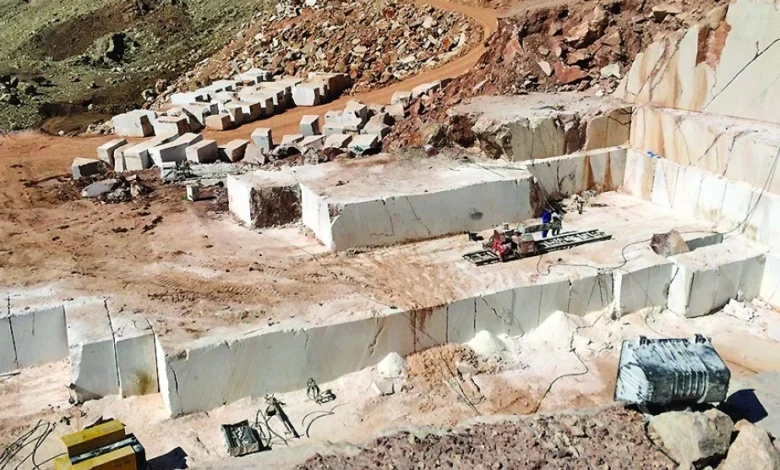
Oman has unveiled new marble mining investment sites in North A’Sharqiyah that create exciting chances in the sultanate’s thriving natural stone sector. The investment sites cover a combined area of approximately 2.55 square kilometers. The first site spans approximately 1.33 square kilometers while the second covers approximately 1.22 square kilometers. Our original geological studies show promising commercial potential, with dark marble deposits that could draw substantial investment interest.
These new sites enhance Oman’s robust marble industry, which now has more than 15 active quarries and around 11 integrated marble processing plants throughout the country[-3]. The sultanate produces over one million tons of marble yearly, and we directed exports to GCC countries, India, and South Korea. Investors can participate in this opportunity from December 28, 2025, to April 28, 2026. Omani marble stands out with its unique characteristics. It consists of metamorphic limestone and dense, polishable sandstone in colors ranging from white and brown to yellowish-brown and black.
Oman opens marble mining investment sites in North A’Sharqiyah

Image Source: Muscat Daily
Oman’s Ministry of Energy and Minerals has launched two prime marble mining sites in the North A’Sharqiyah Governorate. This launch marks a major growth in the sultanate’s mineral resource development program. Companies interested in these sites can submit investment bids from December 28, 2025, and they have four months until the April 28, 2026 deadline.
The newly opened sites sit in a region famous for its exceptional geological formations. These locations give access to high-quality dark marble reserves that international markets increasingly demand. The first site includes 1.33 square kilometers of resource-rich terrain, and the second covers 1.22 square kilometers of promising land.
Ministry officials selected these sites after thorough geological surveys proved their commercial value. The government created a simplified application process for potential investors. Companies must show their expertise in modern extraction methods and eco-friendly mining practices.
The ministry has set specific investment criteria that focus on adding value within Oman instead of just extracting raw materials. This strategy lines up with the country’s broader economic diversification goals to create more manufacturing jobs while getting the most from natural resources.
The government will favor investors who plan to build processing facilities in Oman. These facilities should turn extracted marble into finished products like tiles, slabs, and decorative items before export. This value-added approach will boost the economic benefits from these natural resources by a lot.
Geological studies reveal high-potential marble deposits

Image Source: The Arabian Stories
Recent geological surveys across North A’Sharqiyah have revealed valuable dark marble deposits with significant commercial value. The first location spans 1.33 square kilometers, and the second covers 1.22 square kilometers. Together, these sites create an exploration area of 2.55 square kilometers. These discoveries highlight the region’s importance to Oman’s growing mineral industry.
The research shows that Omani marble consists of metamorphic limestone and dense, polishable sandstone. The stone’s color palette ranges from white and brown to yellowish-brown and black. This variety makes it perfect for architectural and decorative uses. The black marble deposit in Dima wa al Taien stands out and has caught experts’ attention because of its unique properties.
The Ministry’s Director General of Minerals, Engineer Saud bin Khamis al Mahrouqi, points out that Omani marble has become one of the mining sector’s biggest success stories. The stone’s exceptional geological quality and rich color variations have made it a strong competitor in regional and global markets.
These geological findings suggest that the new sites hold enough reserves for green commercial extraction over many years. These deposits offer more than just raw materials – they lay the groundwork for industrial operations that could boost Oman’s non-oil economy significantly.
Government promotes value-added production and export control

Image Source: OMANET
Oman’s government strictly controls how the country uses its marble resources to maximize local value. Raw marble exports in blocks, cubes, or slabs thicker than three centimeters are now banned by the Public Authority for Mining. These restrictions push companies toward domestic processing and higher-value production.
The rules do allow some flexibility. Companies can export raw marble if they get written permission from the Public Mining Authority’s CEO. This usually happens when construction projects need specific measurements that local factories can’t process.
Most Omani marble exports now go to GCC states, India and South Korea. India stands out as a special case. The sultanate made India the first country allowed to import marble blocks through a special trade agreement. This deal helps India’s marble industry, worth about Rs 40,000-crore, add value locally and reduce its dependence on Turkish imports.
The Ministry of Energy and Minerals drives sector growth through its ‘Taqah’ digital platform. This platform shows promising building materials projects to Omani companies and international investors alike. Their detailed strategy focuses on finding new quarry sites, building specialized logistics centers, and boosting local production of polished slabs and architectural cladding materials.
Oman has taken a bold step forward in its natural stone sector by opening two marble mining sites in North A’Sharqiyah. These sites cover 2.55 square kilometers and will boost the thriving marble industry that already produces over one million tons each year. The rich deposits of high-quality dark marble make these locations particularly appealing to investors.
Potential investors have a four-month window until April 28, 2026, to submit their applications. The government wants companies to focus on value addition rather than simple extraction. This strategy lines up with Oman’s plans to diversify its economy while keeping the benefits of natural resources within the country.
The country’s marble extraction methods strike a balance between profit and eco-friendly development. Raw marble blocks face export restrictions to promote domestic processing, which creates local jobs and expertise. While some exceptions apply in specific cases, the focus remains on converting raw stone into finished products before shipping overseas.
Oman’s marble stands out globally for its varied colors and superior quality. GCC states, India, and South Korea are the main buyers of this prized stone. The trade deal with India shows how these natural resources carry both economic and diplomatic weight.
These new sites in North A’Sharqiyah mark another milestone in Oman’s journey to become a regional marble industry leader. The sultanate wants to build lasting economic benefits through careful resource management while protecting the unique geological features that make its marble sought after worldwide.