
Solar and AI Drive MENA Clean Energy at CARE MENA 2025

AI is changing how the MENA region handles its energy transition. The AI-in-energy market stands at US$54.48 million in 2024. Experts predict it will grow at 22.24% compound annual rate through 2033. CARE MENA 2025 highlighted this technological shift by showcasing innovative technology that reshapes the region’s energy sector. AI-based forecasting has shown it can cut prediction errors in solar and wind output by 30%. This improvement helps balance the power grid more effectively.
The Middle East’s clean energy transition has gained momentum. The UAE leads this change with its Net Zero by 2050 Strategic Initiative. Their goals include a 50% clean energy mix, 70% lower carbon emissions, and triple the renewable energy capacity by 2030. Companies using AI technology have reduced their energy use by up to 60%. MENA’s abundant natural resources support this renewable energy shift. The region’s solar and wind potential attracts major investments in green hydrogen and ammonia. These investments could make MENA a key exporter of low-carbon energy. Global electricity from renewables should reach 32% by 2025. The clean energy breakthroughs and AI solutions shown at CARE 2025 mark a crucial step toward the region’s sustainability goals.
CARE 2025 Showcases Breakthroughs in Clean Energy
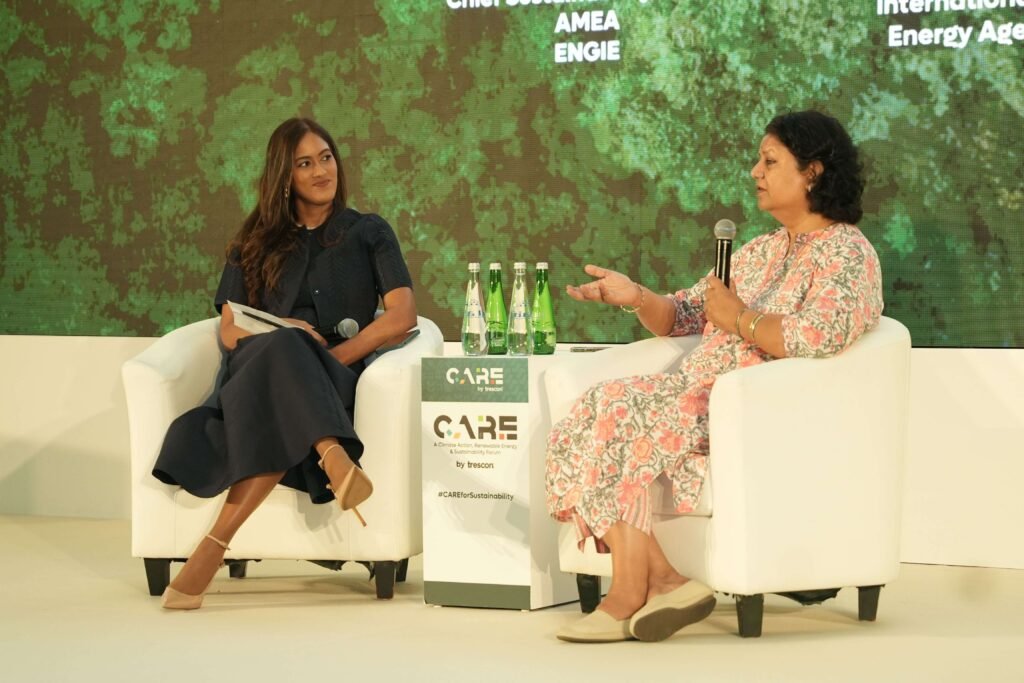
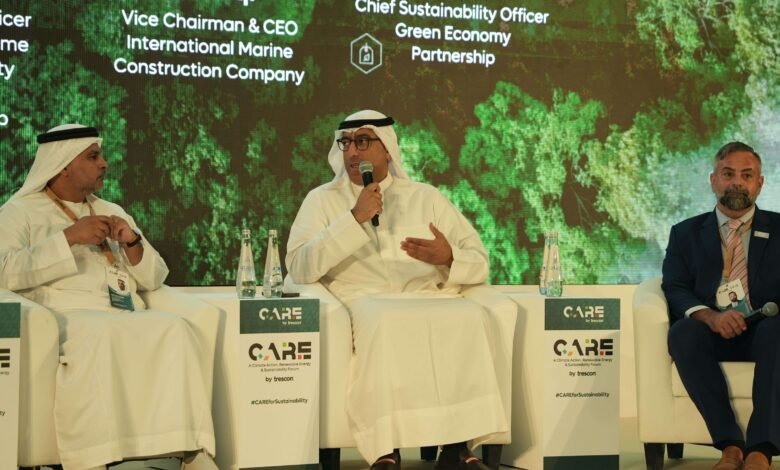
The CARE MENA 2025 forum at Madinat Jumeirah in Dubai showcased state-of-the-art breakthroughs that speed up clean energy adoption across the Middle East and North Africa. Policymakers, investors, and tech pioneers came together to explore solutions that tackle the region’s unique climate challenges.
New solar PV technologies designed for desert conditions
Morocco’s Mohammed First University researchers stole the show with their “Desert Module” prototype. Their innovative design achieved a 5.8% improvement in performance ratio and a 1.95% increase in efficiency compared to standard modules. The technology showed a 0.85% reduction in temperature sensitivity – a crucial advancement for desert installations where heat substantially affects panel performance.
These modules use special materials that can withstand harsh desert conditions. They feature 3.2 mm anti-reflective coated solar glass and polyolefin encapsulants known for their “high resistance and stability against intense UV radiation”. Experts at the exhibition pointed out that standard testing doesn’t work well for desert environments, where dust alone can drop electrical efficiency by up to 60%.
Smart grid platforms enabling real-time energy balancing
The forum highlighted how digital intelligence transforms traditional electrical systems through advanced smart grid technologies. These platforms let energy flow both ways, which helps automate delivery and gives users better control over their electricity usage and costs.
The exhibition featured various smart grid components. These included advanced metering infrastructure (AMI) to track energy usage, systems that manage demand response during peak times, and phasor measurement units that watch electrical waves with synchronized timing. Live sensors and self-healing features showed how smart grids spot and fix problems early, which reduces downtime and makes operations better.
AI-powered forecasting tools for renewable variability
AI and renewable energy created some of the most exciting innovations at CARE 2025. New forecasting tools showed how AI models can work around data limitations in renewable-heavy systems. These solutions delivered 15-20% reductions in root mean square error for solar irradiance forecasting.
The forum also featured time-series GAN-LSTM hybrid models that improved demand forecasting accuracy in nonlinear conditions. VAE-driven dispatch models achieved 9-12% gains in energy efficiency and reduced curtailment. System operators can now predict generation needs more precisely, which helps balance supply and demand despite renewable energy’s natural variations.
Startups and Investors Drive Climate Innovation
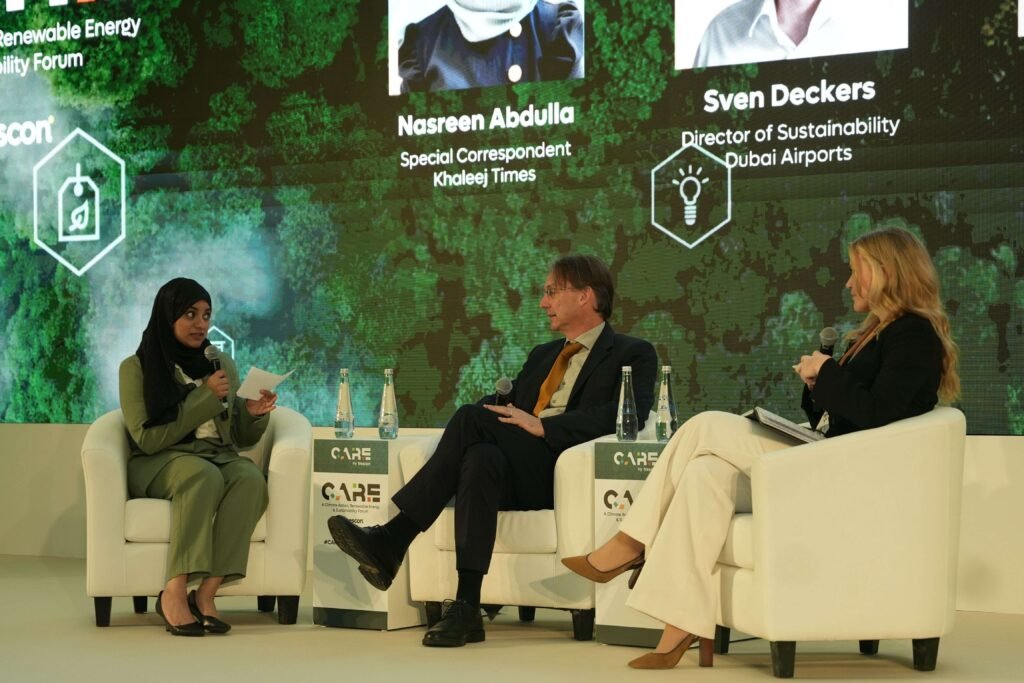
Climate tech investment in the MENA region paints a mixed picture of opportunities and hurdles. The funding landscape started strong but took a sharp downturn to AED 418.60 million in 2024. This represents a 41% drop from the previous year. Middle Eastern investors put in a modest AED 253.36 million – nowhere near 2% of their worldwide climate tech investments.
Climate tech startups pitch expandable solutions
CARE 2025 brought together several innovative startups with solutions to regional climate challenges. FortyGuard showed how their AI technology cools overheated outdoor spaces. Their cloud-based tools stream high-resolution heat maps to identify hot spots. Space Biotech developed satellite-based AI tools that map irregular waste dumps rich in organic material. These maps help support biogas production. EcoHub creates urban furniture from recycled materials, while Schaduf has built more than 9,600 square meters of green walls. These installations span across Egypt, Saudi Arabia, UAE, and the UK.
Investor appetite grows for early-stage clean energy ventures
Investment patterns tell different stories across the region. UAE climate tech startups have achieved a compound annual growth rate of about 120% from 2018-2022. This is a big deal as it means that Turkey’s growth rate of 60% during the same period. Saudi Arabia has gained momentum under Vision 2030 plans to broaden the economy and expand renewables and green hydrogen. The MENA region raised a record AED 88.13 billion through green, social, and sustainability bonds in 2023 – marking a 155% increase from 2022.
Public-private partnerships emerge as key enablers
The Saudi-UAE Clean Energy Fund, worth AED 7.34 billion, is a vital cooperative initiative that funds regional projects. It makes technology available and helps build the startup ecosystem. Private investors have stepped up too. BlackRock manages an AED 3.67 billion renewable energy fund, while Brookfield Asset Management commits AED 2.94 billion to infrastructure. Quantum Energy Partners focuses AED 1.84 billion on GCC clean energy. Islamic finance institutions add strength to the mix with over AED 11.02 billion through Sharia-compliant green sukuk and project financing frameworks.
MENA Faces Challenges in Scaling AI for Energy
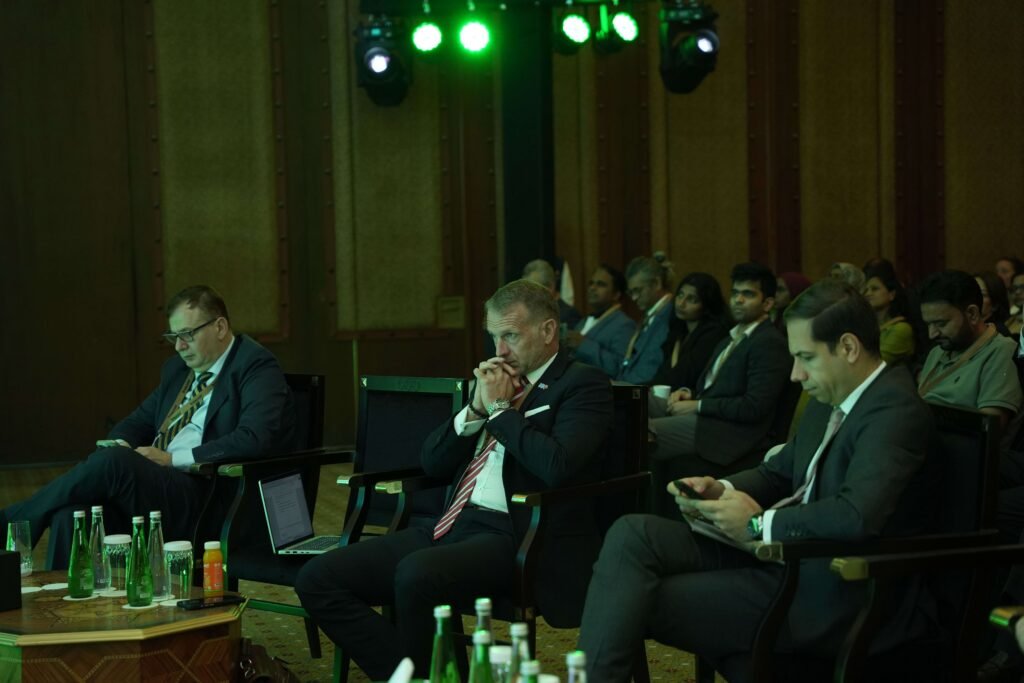
AI initiatives in MENA are ambitious, but significant roadblocks could slow down the energy transition. Recent studies show key challenges that make it hard to fully implement AI solutions in the region’s energy sector.
Data problems and poor infrastructure slow AI adoption
Organizations in the Middle East can’t seem to get their data systems working together, and the quality isn’t consistent. Even big companies that are growing their tech still have data trapped in separate systems that don’t talk to each other. The region’s utilities also don’t have enough sensors and regular data logging that AI models need to work reliably.
AI’s carbon footprint raises green concerns
AI’s impact on the environment is a big deal. Training just one large model like GPT-3 used up 1,287 MWh of electricity and released carbon equal to 502 metric tons. Data centers now create 2.5-3.7% of greenhouse gasses worldwide – that’s more than the aviation industry. AI systems alone might use 0.5% of the world’s electricity by 2027.
Laws can’t keep up with tech advances
Saudi Arabia and the UAE are the only ones with detailed personal data protection laws that tell you what to do when there’s a breach. Other GCC countries just patch together rules for different sectors. None of the Gulf countries have created complete AI laws like the EU AI Act yet.
Progress varies between Gulf and North African countries
The numbers tell a clear story. Middle Eastern nations score 51.14 on the Government AI Readiness Index, while North African countries lag behind at 38.59. This gap might create an “AI energy divide” in the region.
Policy and Collaboration Shape the Energy Transition

MENA governments are building strategic collaborations that speed up clean energy transition through state-of-the-art policy frameworks and shared initiatives.
Pilot projects in UAE, Morocco, and Saudi Arabia show promise
The region’s commitment to diversification shines through its renewable energy investments. Saudi Arabia’s Al Shuaibah Solar Development stands as the largest single-site installation at 2.6 GW, which pairs well with the 400 MW Dumat Al Jandal Wind Farm. The UAE’s Al Dhafra Solar PV plant generates 2 GW and has set a world-record low tariff of $0.0135 per kWh. Morocco’s Khalladi Wind Farm produces 120 MW of energy that powers a city equivalent to 400,000 residents.
Regional cooperation on data sharing and AI labs
MENA’s energy innovation grows stronger through cross-border teamwork. The Abu Dhabi Department of Energy has joined forces with Presight and AIQ to create the AD.WE platform that delivers live analytics for the emirate’s energy sector. This platform features an “AI Lab-as-a-Service” where companies can test and implement artificial intelligence solutions in their operations. These collaborations help bridge regional infrastructure gaps through data-sharing agreements.
Green AI strategies line up with Net Zero goals
GCC countries now pursue ambitious climate targets. Bahrain, Kuwait, Oman, Saudi Arabia, and the UAE have all set net-zero emission goals. Their approach rests on three pillars: infrastructure investment, sound policies, and institutional capacity development. ADNOC showed plans to combine autonomous agentic AI with energy operations through collaborations with G42, AIQ, and Microsoft.
Lessons from Asia and North America guide MENA’s path
Global experiences shape MENA’s transition journey. North America’s energy shift demonstrates how policy incentives paired with private sector flexibility can spark innovation. Japan and South Korea’s approach to hydrogen imports and fuel cell technologies provides valuable lessons. Success across regions comes from resilient infrastructure, mixed financing models, and modern power grids.
The first CARE MENA 2025 forum has become a crucial meeting point where technology, investment, and policy join to tackle the region’s energy challenges. The event showcased desert-optimized solar panels, smart grid platforms, and AI-powered forecasting tools that paint a picture of affordable and reliable renewable energy. In spite of that, major obstacles block these breakthroughs from expanding throughout the region.
Limited data continues to hold back AI implementation, and gaps in infrastructure create uneven development between Gulf states and North African countries. The carbon footprint of AI itself raises questions about sustainability in the digital world. Investment dropped to AED 418.60 million in 2024, but mutually beneficial alliances like the Saudi-UAE Clean Energy Fund show a growing push toward regional clean energy development.
Working together across borders emerges as maybe even the best path forward. Projects in UAE, Morocco, and Saudi Arabia show that MENA has the natural resources and technical skills to drive global energy breakthroughs. Mutually beneficial alliances that focus on sharing data and AI labs help close infrastructure gaps and create opportunities for local startups and entrepreneurs.
Without doubt, CARE MENA 2025 showed how technology drives climate action in the Middle East and North Africa. AI combined with renewable energy technologies creates a powerful vision to reach net-zero goals. Current challenges exist, but MENA’s abundant natural resources, growing support from institutions, and innovative solutions could make it a global clean energy leader for decades ahead.