
The Divine Story of Isra Wal Miraj: When Heaven’s Gates Opened

Isra wal Miraj is the second greatest miracle in Islamic tradition after the revelation of the Qur’an itself. This miraculous night experience happened when Prophet Muhammad (PBUH) faced one of his most challenging times, bringing him divine solace.
What is Isra wal Miraj exactly? This miraculous event has two parts: Isra, the night travel from Makkah to Jerusalem’s Masjid Al-Aqsa, and Miraj, the ascension through the heavens. The Prophet (PBUH) traveled from al-Masjid al-Haram to al-Masjid al-Aqsa and ascended to heaven from there. Muslims celebrate this most important event on the 27th night of Rajab in the Islamic calendar. The complete story has Prophet Muhammad (PBUH) meeting earlier prophets and receiving the greatest gift—the commandment of the five daily prayers. This sacred experience came after the Year of Sorrow (ʻAam al-Huzn), a time when the Prophet had lost his beloved wife Khadijah (ra) and his uncle Abu Talib.
The Hardship Before the Miracle

Before the miraculous night of Isra wal Miraj, Prophet Muhammad (PBUH) faced a period of profound hardship that tested human endurance limits. The backdrop of sorrow and rejection makes this miraculous night journey deeply meaningful in Islamic tradition.
The Year of Sorrow and personal loss
The tenth year of prophethood, around 619 CE, became the “Year of Sorrow” (ʻAam al-Ḥuzn). This pivotal year brought two devastating losses that shook the Prophet’s life and mission.
His beloved wife Khadijah died at about 65 years of age. She remained his only wife for 25 years and showed steadfast dedication throughout his early prophethood challenges. Khadijah, the first person to accept Islam, became his refuge from troubles and his closest confidante.
The Prophet’s uncle Abu Talib died shortly after. Though Abu Talib never accepted Islam, he protected Muhammad from the hostile Quraysh tribe. His role as chief of Banu Hashim made his protection sacred under Meccan custom, which shielded Muhammad from physical harm despite growing opposition.
These deaths likely stemmed from hardships during the social boycott against Muhammad’s clan, which created severe food shortages. Muhammad became vulnerable under Meccan custom after Abu Talib’s death—others could harm him without consequences.
Rejection at Ta’if and emotional toll
Growing hostility in Mecca led the Prophet to Ta’if, a city about 70 kilometers away, as he searched for support. He met with cruel rejection that became one of his life’s darkest moments.
The Prophet approached the three brothers who led the Banu Thaqif tribe in Ta’if. They rejected his message and ordered their slaves and servants to drive him out. They instructed young boys to throw stones at him, making him bleed as he fled.
The Prophet later described this violent rejection as his life’s most painful day—even more distressing than losing his loved ones. He found refuge in an orchard outside the city, wounded physically and emotionally. He offered a heartfelt prayer that expressed his weakness and complete dependence on Allah’s mercy.
Why this context matters for understanding Isra wal Miraj
Isra wal Miraj’s timing—shortly after these profound losses and rejections—reveals its deeper meaning. Most scholars place this miraculous journey about one year before the Hijrah, on Rajab’s 27th night.
This divine gift arrived when the Prophet needed it most, showing a fundamental principle in Islamic spirituality: “With every hardship [there will be] ease” (Surah 94:5). The journey served as both personal consolation and powerful proof of Allah’s support when human support vanished.
Allah gave spiritual rejuvenation through Isra wal Miraj at this critical moment, turning the Prophet’s deepest sorrow into a chance for unprecedented closeness to the divine. Believers learn that divine intervention often comes during greatest need, turning hardship into a path toward spiritual elevation.
The Night Journey (Isra): From Makkah to Al-Aqsa
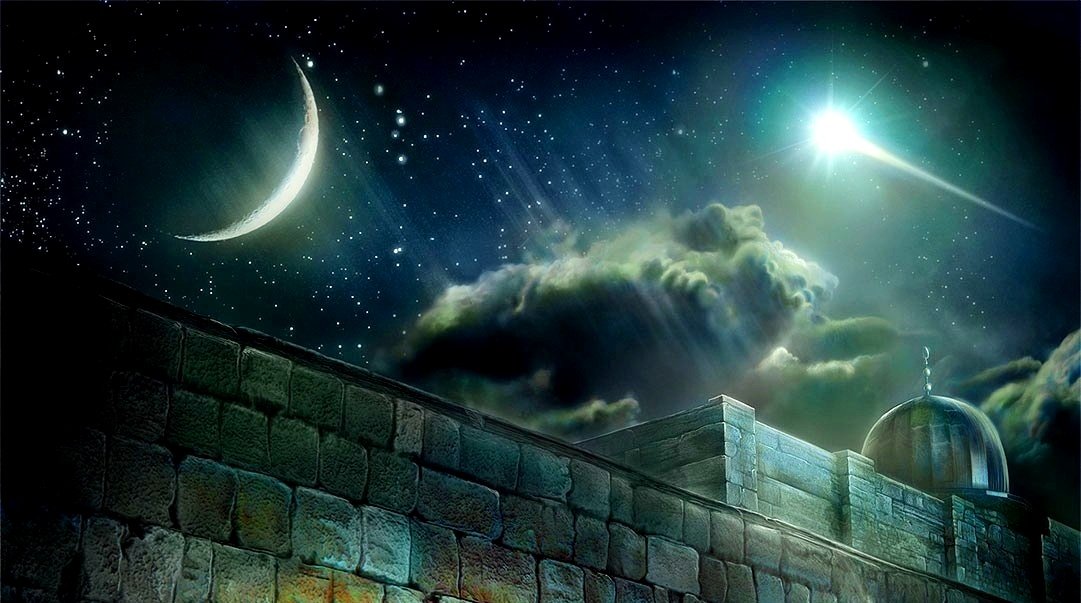
“When I was going to al-Isra, I passed by the grave of Musa AS and I saw him standing and praying.” — Prophet Muhammad, Final messenger of Allah – central figure of Islam
The extraordinary night trip started in Makkah’s sacred grounds. This event would become one of the most remarkable spiritual experiences in Islamic history.
The arrival of Jibreel and the preparation
The Prophet Muhammad (PBUH) slept in Umm Hani’s house in Makkah when this incredible trip began. “The roof of my house was opened and the Angel Jibril descended,” he later shared. Scholarly accounts that combine various narrations tell us the Prophet went to the Hijr, the Ka’bah’s semi-circular wall.
A deep spiritual preparation unfolded there. The Angel Jibreel opened the Prophet’s chest and cleaned it with Zamzam water. He brought “a golden tray full of wisdom and faith, and having poured its contents into my chest, he closed it”. This cleansing strengthened Muhammad’s (PBUH) spiritual essence and readied him for the amazing trip ahead.
Riding Buraq: The miraculous steed
A remarkable celestial mount appeared after the preparation. “I was then brought a white beast which is called al-Buraq, bigger than a donkey and smaller than a mule. Its stride was as long as the eye could reach,” the Prophet described. This heavenly creature carried him across great distances at miraculous speed.
Buraq seemed hesitant about its special passenger at first. Jibreel spoke to the creature: “Is it from Muhammad that you do this? For nobody has ridden you who is more honorable to Allah than him!”. Buraq recognized the Prophet’s status and accepted its sacred purpose after these words.
Scholars believe the name “buraq” comes from the Arabic word bariq, meaning “shine” or “brilliance,” or possibly from barq, meaning “lightning” – referring to the creature’s incredible speed.
Stops along the way: Madinah, Sinai, Bethlehem
Jibreel asked the Prophet to stop at several sacred places on their way to Jerusalem. Each stop held deep meaning within the isra trip.
They first stopped at Taybah – which would become Madinah – where the Prophet would later move. Mount Sinai came next, the holy place where Allah gave the Torah to Moses. Bethlehem was their third stop, honoring Prophet Isa’s (Jesus) birthplace. The Prophet saw Moses praying in his grave during their fourth stop.
These meaningful stops connected Muhammad’s message to earlier prophets’ legacy and showed how divine guidance continues through generations.
Leading the Prophets in prayer at Al-Aqsa
The Prophet reached Jerusalem and secured Buraq. True accounts tell us Jibreel “pointed with his finger causing a crack in the rock, and he tied the Buraq to it at the western wall of the noble sanctuary”.
All 124,000 prophets waited inside Masjid Al-Aqsa. Jibreel guided Muhammad (PBUH) to the front in an unmatched moment. The Prophet then led all prophets in prayer. This powerful event showed Muhammad’s role as the final messenger and leader of all prophets.
Imam Ibn Kathir explains, “his honorable status and superiority to them was shown when he was made to go forward to lead them in prayer”. This historic gathering – the only time all prophets prayed together – made Al-Aqsa the sole place on earth where such an amazing event happened.
Jibreel offered the Prophet two vessels after the prayer – one with milk and one with wine. The Prophet picked the milk, and Jibreel said: “You have chosen the natural thing (fitra)”. His choice represented the pure path that would guide his followers.
The Ascension (Mi’raj): Journey Through the Heavens

Prophet Muhammad (PBUH) led the prophets in prayer at Al-Aqsa. The second phase of his miraculous experience—the Mi’raj—began as he rose through the seven heavens with Angel Jibreel by his side.
Meeting the Prophets in each heaven
Each heaven revealed a different prophet in a celestial hierarchy. Adam greeted Muhammad (PBUH) in the first heaven, welcoming him as “the righteous son and Prophet.” Prophets Yahya (John) and Isa (Jesus) appeared in the second heaven, while Prophet Yusuf (Joseph) dwelled in the third. The fourth heaven was Prophet Idris’s (Enoch) dwelling place, and Prophet Harun (Aaron) resided in the fifth. Prophet Musa (Moses) welcomed him in the sixth heaven. The seventh heaven revealed Prophet Ibrahim (Abraham) leaning against al-Bayt al-Ma’mur—the heavenly Ka’bah where 70,000 angels perform their daily circumambulation.
These meetings reinforced the prophetic brotherhood and showed how divine guidance flows through human history.
The Sidrat al-Muntaha and the Divine Presence
Muhammad (PBUH) reached Sidrat al-Muntaha beyond the seventh heaven. This magnificent tree marked creation’s boundary. Its leaves were “like elephant ears” and fruits resembled “clay jugs.” Here, he saw Jibreel’s true form with 600 wings.
Jibreel stopped at this point. “My wings would burn if I went any further,” he said. Muhammad (PBUH) then entered the Divine Presence alone, where Allah spoke to him directly.
The gift of Salah and its reduction from 50 to 5
Allah prescribed 50 daily prayers during this divine meeting. When Muhammad (PBUH) descended and met Moses, he asked about the prescription. Moses advised him after hearing about the 50 prayers: “Your followers cannot bear this burden. Go back to your Lord and ask for a reduction.”
This exchange continued until the prayers became five daily prayers. Allah declared: “These are five prayers, and they are all (equal to) fifty (in reward).” This shows Allah’s mercy within obligation—five prayers in practice carry the spiritual reward of fifty.
The symbolism of choosing milk over wine
During this cosmic experience, the Prophet’s choice of milk over wine symbolized his preference for natural purity (fitra) over temporary pleasure and intoxication. This decision showed Islam’s balanced path for humanity—avoiding extremes of strictness or indulgence.
This miraculous night journey, the isra wal miraj, created a bridge between heaven and earth, physical and spiritual realms, human limits and divine possibilities. It made prayer the believer’s personal pathway to spiritual elevation.
The Test of Faith and the Role of Abu Bakr
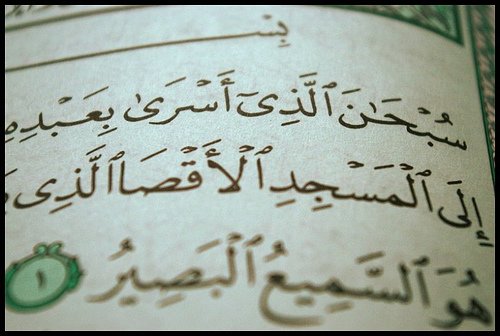
The miraculous experience of Isra wal Miraj became an unexpected test of faith for the early Muslim community. It separated those with genuine conviction from those with superficial belief.
The reaction of the Quraysh
The Quraysh ridiculed the Prophet’s night journey account immediately. “It takes us a month by camel to reach Jerusalem and a month to come back, yet Muhammad claims he went there and returned in a single night!” they exclaimed mockingly. Many people couldn’t believe the story. They thought it was beyond human comprehension. So, some Muslims left their faith because they couldn’t accept what seemed logically impossible.
Abu Bakr’s steadfast belief
The Meccans rushed to Abu Bakr. They were certain they could use this extraordinary claim to create a rift between the Prophet and his closest companion. Abu Bakr’s response was immediate and definitive when he learned about Muhammad’s (PBUH) journey: “If he said it, then it is true.” People pressed him about believing such an impossible tale. Abu Bakr replied, “I believe him in something even more extraordinary than that—that news from heaven comes to him in the morning or afternoon.”
Why this moment defined true faith
The Prophet himself gave Abu Bakr the honorable title “As-Siddiq” (The Truthful) after this incident. In fact, this moment showed the essence of true faith perfectly—believing without seeing, trusting without questioning. Abu Bakr showed that authentic faith starts right where logical understanding ends.
Spiritual Lessons and Modern Reflections

“Fifty prayers were obligated upon the Prophet, peace and blessings be upon him, when he was taken on his night journey.” — Anas ibn Malik, Companion of Prophet Muhammad – reliable hadith narrator
The spiritual lessons from Isra wal Miraj still strike a chord with Muslims worldwide, going far beyond its historical importance.
Hope after hardship: A timeless message
The Prophet received this miraculous experience at his moment of deepest despair. It happened after he lost his beloved family members and faced cruel rejection at Ta’if. This divine timing shows a core principle of Islamic spirituality: “Surely, with hardship, there is ease”. Allah used this event to prepare Muhammad (PBUH) and deepen his commitment before the challenging phase of his prophethood.
The centrality of prayer in Islam
Prayer stands unique among Islamic obligations because Allah ordained it in heaven, not on earth. This heavenly decree highlights prayer’s essential role in Islam. Allah first prescribed fifty daily prayers, then reduced them to five while keeping the reward of fifty. Prayer serves as the Muslim’s spiritual ascension—their personal mi’raj—creating a direct link with Allah.
The importance of Jerusalem in Islamic tradition
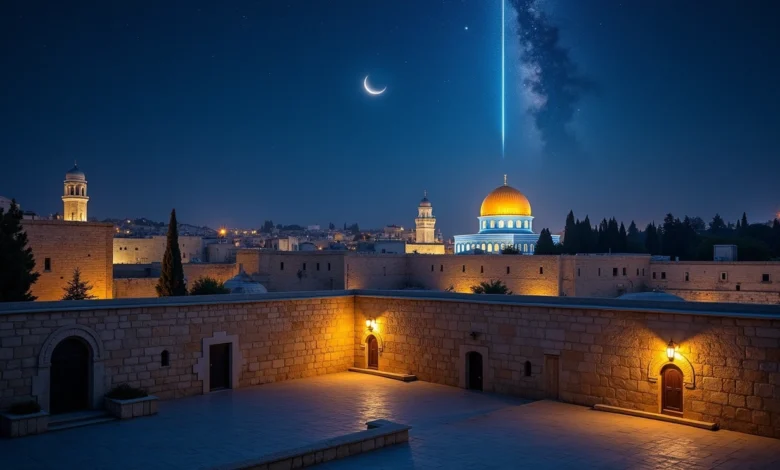
Jerusalem holds its place as Islam’s third-holiest city after Mecca and Medina. The city’s sacred status comes from Muhammad’s Night Journey, its role as the first qiblah (direction of prayer), and its deep connections to earlier prophets. Muhammad’s heavenly ascension from the Dome of the Rock solidifies Jerusalem’s significance in Islamic tradition.
How Muslims commemorate the night today
Muslims across the globe celebrate Isra wal Miraj on Rajab’s 27th night. They spend time in optional prayers, read the Quran, and share stories about this significant event. Many Muslim cities light up with candles and decorative lights during this time. The story of Gabriel purifying Muhammad’s heart and filling it with knowledge and faith remains a favorite tale parents share with their children.
The miraculous experience of Isra wal Miraj is proof of divine mercy and spiritual upliftment. Prophet Muhammad (PBUH) traveled from Makkah to Jerusalem and ascended through the seven heavens that night. He witnessed what no other human has ever seen. This experience came at the time when the Prophet faced his greatest trials—after losing his beloved wife Khadijah and protective uncle Abu Talib. He also endured cruel rejection at Ta’if.
This divine gift shows a basic principle in Islamic spirituality without doubt: light follows darkness, and ease follows hardship. The celestial prescription of prayer during this experience made Salah the life-blood of Muslim worship. Allah first decreed fifty daily prayers but reduced them to five while preserving the reward of fifty. This shows divine compassion along with obligation.
Abu Bakr’s quick acceptance of the Prophet’s account shows the essence of true faith—believing without seeing and trusting without questioning. His steadfast dedication earned him the title “As-Siddiq” (The Truthful) and set a lasting example for believers of all generations.
Jerusalem became forever important in Islamic tradition. The Prophet led all prophets in prayer at this site before ascending to the divine presence. This sacred bond makes Jerusalem Islam’s third holiest city after Makkah and Madinah.
Muslims around the world still celebrate this miraculous experience each year on the 27th of Rajab. They celebrate through prayers, Quran recitation, and storytelling. This is not just a historical event but a living spiritual legacy. The night journey reminds believers that divine support often comes during the toughest trials. It turns hardship into a chance to get closer to Allah.
The story of Isra wal Miraj continues to inspire Muslims with its timeless message. Just as the Prophet ascended to heaven, each prayer represents the believer’s personal mi’raj—a sacred moment to commune directly with the Divine, five times daily, until the end of time.