

UAE Opens New Chapter in Arctic-Antarctic Exploration

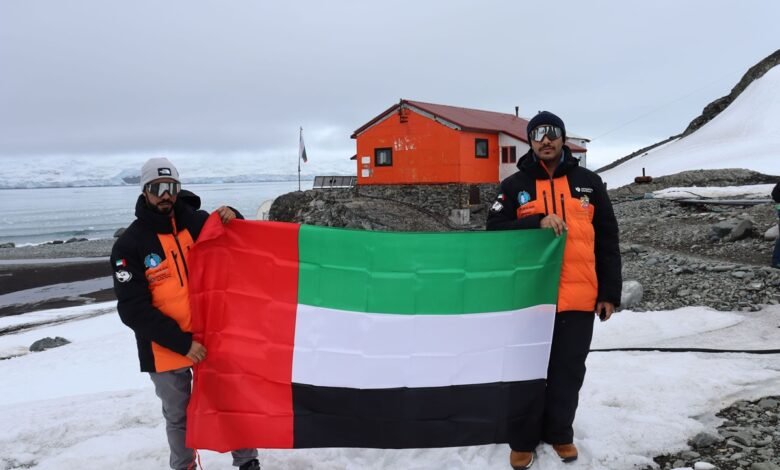
The UAE has expanded its Arctic and Antarctic science footprint through treaty access, research deals and record expeditions. The nation formally strengthened its role in polar science in 2024 by joining the Antarctic Treaty System under Federal Decree No. 165. It also secured observer status on the Arctic Council under Federal Decree No. 164. This strategic position now enables the UAE to take part in consultative meetings and propose national research initiatives among international climate agencies.
The country’s scientific presence in these remote regions has grown faster. Emirati meteorology and seismology specialists worked with the Bulgarian Antarctic Institute in February to install two advanced monitoring stations in Antarctica. These stations now collect vital data on atmospheric and seismic activities. The UAE’s commitment to polar research led to strategic collaborations with Argentina and New Zealand in 2025 to improve cooperation in Antarctic research[-3].
The UAE’s polar achievements include 18-year-old Fatima Abdulrahman Al Awadhi, who became the youngest Arab woman to reach Mount Vinson, Antarctica’s highest peak. Another milestone came from Ibrahim Sharaf Al Hashemi, who completed the first circular flight around Antarctica – a 19,050-kilometer expedition from December 4th, 2024, to January 17th, 2025[-4]. These accomplishments mark the beginning of a new chapter in UAE’s scientific exploration of Earth’s most extreme environments.
UAE expands Arctic and Antarctic science footprint with treaty access

Image Source: British Antarctic Survey
The UAE has taken a major step into polar research by gaining treaty access to both Arctic and Antarctic regions. Under Federal Decree No. 165, the UAE joined the Antarctic Treaty System in December 2024. This move created a legal framework that supports the nation’s polar science goals. The nation can now attend Antarctic Treaty Consultative Meetings, submit research proposals, and set up facilities on the continent.
The UAE team made history at the 47th Antarctic Treaty Consultative Meeting in Milan, Italy. H.E. Abdulla Balalaa, Deputy Chair of the Emirates Polar Program Steering Committee, led the UAE’s delegation. The meeting drew over 400 delegations from 29 consultative parties and 28 non-consultative parties.
The nation also gained observer status on the Arctic Council through Federal Decree No. 164. The UAE Polar Mission Steering Committee’s Chair, Mariam AlMheiri, highlighted that these treaty memberships support the nation’s goal of working together to tackle climate change.
The Emirates Polar Program has built strong ties with New Zealand, India, Argentina, Bulgaria, and Turkey. These partnerships help with logistics, training, and access to polar facilities. Such support helps the UAE handle the challenges of conducting research in these distant regions effectively.
UAE builds scientific infrastructure through research missions
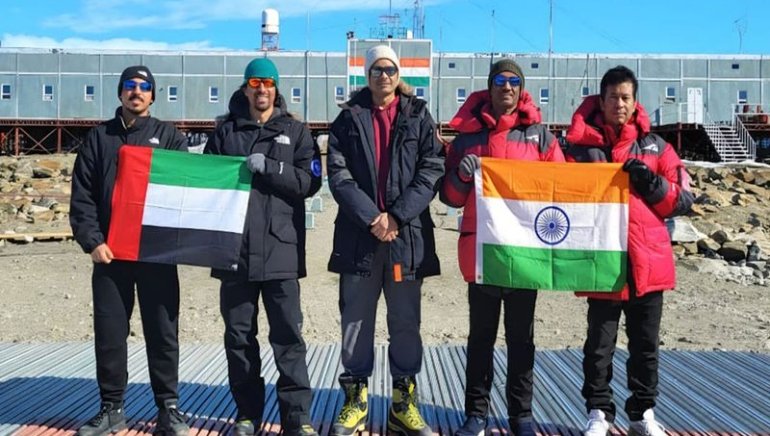
The UAE has built scientific infrastructure faster in polar regions by deploying specialized monitoring equipment. Scientists from Khalifa University’s Environmental and Geophysical Sciences laboratory made history in 2020. They became the first UAE team to deploy operational instruments in Antarctica. The team installed the Snow Ice Mass Balance apparatus that studies ice formation and melting processes, which provides critical data on sea level rise risks.
Emirati specialists installed two advanced monitoring stations in Antarctica through collaboration with the Bulgarian Antarctic Institute in February 2024. They set up an eight-sensor meteorological station and seismological equipment, marking the first such installations from the UAE and Arab region.
The UAE laboratories at the Bulgarian base in Antarctica continue to expand their infrastructure. The Bulgarian research vessel carries weather research stations, tide and sea level monitoring stations, and advanced methane measurement tools.
The UAE will establish a state-of-the-art research base that can house over 50 scientists. The country’s officials have shown interest in acquiring a dedicated ice-breaker vessel to transport researchers and laboratory equipment. These initiatives are part of the UAE Polar Program launched in 2024. The program wants to build national capabilities in polar science and deepen the country’s contribution to global climate research.
Exploration milestones inspire national interest in polar science

Image Source: Semafor
Emirati explorers’ recent polar expeditions have generated significant national interest in Arctic and Antarctic science. Fatima Abdulrahman Al Awadhi made history in January 2026 as the youngest Arab to reach Mount Vinson’s summit. She conquered Antarctica’s highest peak at 4,892 meters at just 18 years old. This achievement marked her third milestone toward completing the Seven Summits challenge.
Ibrahim Sharaf Al Hashemi achieved another milestone with the first circular flight around Antarctica. He piloted two helicopters and covered 19,050 kilometers from December 2024 to January 2025. Abdullah Al-Ahbabi also earned recognition as the first Emirati to complete the prestigious “polar hat-trick.” He skied unsupported to the North Pole (2018), South Pole (2019), and across Greenland (March 2025).
These achievements created lasting impact beyond personal records. Expedition members now share their experiences with local communities. Dr. Khansaheb returned from Antarctica and started speaking at schools. She aims to inspire climate advocacy and support the UAE’s Net Zero by 2050 initiative.
The Emirates Polar Program cultivates this growing interest through educational events. Students learn about polar environments through hands-on activities. Dubai Holding launched the National Sustainability Champion program to equip a new generation of Emirati sustainability leaders.
“It gives a lot of hope,” said Loulia Al Khatib of the Emirates Polar Program. “I wish there had been something like this when I was in school − when I was trying to figure out what I wanted to study. It opens so many horizons”.
The UAE has emerged as a key contributor to polar research through diplomatic achievements and scientific initiatives. The nation’s scientific ambitions reached new heights with Federal Decrees that granted accession to the Antarctic Treaty System and observer status on the Arctic Council. Strategic collaborations with polar research countries have helped UAE scientists conduct vital research in these extreme environments.
The nation has built resilient infrastructure to support its polar missions. Scientists now use meteorological and seismological monitoring stations, and plans are underway for a research base that will house more than 50 researchers. These initiatives help the global scientific community better understand climate change indicators.
Emirati explorers continue to set remarkable records that spark national pride. Fatima Abdulrahman Al Awadhi reached Mount Vinson’s summit while Ibrahim Sharaf Al Hashemi completed a circular Antarctic flight. Their expeditions have done more than personal records – they have sparked widespread interest in polar science throughout Emirati society.
The Emirates Polar Program takes an integrated approach that combines scientific research, international cooperation, and national growth. The program’s educational outreach has turned these achievements into inspiration, especially when young Emiratis think about careers in science and sustainability. These diverse efforts have positioned the UAE to advance our knowledge of Earth’s most extreme and sensitive regions while inspiring the next generation of Emirati scientists and explorers.