
World Bank Predicts UAE’s Robust 5% Growth Surge

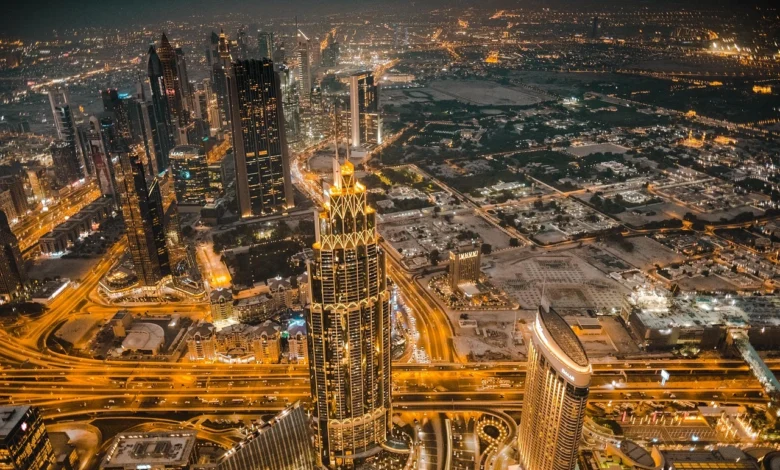
The World Bank projects UAE’s economy will grow by 5% in 2026. This growth makes the Emirates stand out as a top performer in today’s challenging digital world. The 2020s might become the slowest decade for global growth since the 1960s, yet UAE’s economic future looks bright. The country’s growth should reach 5.1% in 2027, which shows its economy remains strong and stable.
Global growth numbers tell a different story. Most countries will see modest growth of 2.6% in 2026 and 2.7% in 2027, while UAE’s economy keeps outpacing other nations. The gap between UAE’s economic health and worldwide trends becomes clear when we look at the slow progress that has created bigger gaps in global living standards. UAE’s economy should get an extra boost from its neighbors. The Gulf Cooperation Council (GCC) states expect growth rates of 4.4% in 2026 and 4.6% in 2027. These positive signs for UAE emerge at a time when all but one in four developing economies still haven’t reached their 2019 per capita income levels.
World Bank forecasts 5% UAE growth in 2026
The World Bank projects promising growth for the UAE economy, with 5% growth in 2026 and a slight uptick to 5.1% in 2027. This assessment from the bank’s detailed Global Economic Prospects report shows the UAE’s continued lead over regional and global growth averages.
UAE’s reliable economic outlook stems from its successful diversification strategy. Non-oil sectors now make up 75.5% of the UAE’s total GDP of AED 1.776 trillion. The major contributors include wholesale and retail trade (16.8%), manufacturing (13.5%), finance and insurance (13.2%), construction (11.7%), and real estate (7.8%).
The World Bank report also highlights broader regional growth. Gulf Cooperation Council economies should expand by 4.4% in 2026 and reach 4.6% in 2027. Growth in the Middle East and North Africa, Afghanistan and Pakistan (MENAP) region will likely hit 3.6% in 2026 and improve to 3.9% in 2027.
Developing economies worldwide show a different trend. They will likely see a slight dip to 4% in 2026 from 4.2% in 2025, before climbing to 4.1% in 2027. Low-income countries paint a brighter picture with projected growth averaging 5.6% over 2026–2027.
UAE’s economic strength comes from key programs like Vision 2021. This initiative puts state-of-the-art research, science and technology at the heart of building a knowledge-based economy. The country also boasts one of the world’s most open economies, with business-friendly free zones that pull in significant foreign investment.
Global economy shows resilience despite weak decade
Recent World Bank assessments reveal the global economy’s unexpected resilience. Growth remains on track to hit its lowest point since the 1960s. Projections show global output growth will slow to 2.7% in 2026 and rise slightly to 2.9% in 2027. These numbers fall short of the pre-pandemic average of 3.2%.
The global growth outlook shows more strength than first predicted. Trade tensions, fiscal limits, and policy uncertainty still cast shadows over its future. Global GDP growth will likely ease to 2.6% in 2026 from 2.7% in 2025. The United States’ better-than-expected performance accounts for about two-thirds of the upward revision from earlier forecasts.
Different regions tell different economic stories. The US economy should grow from 2.1% in 2025 to 2.2% in 2026. The European Union’s growth will likely drop to 1.3% in 2026 from 1.5% in 2025. China expects moderated growth at 4.4% in 2026, down from 4.9% in 2025.
Global inflation keeps cooling down. Headline inflation should fall to 3.1% in 2026 from 3.4% in 2025. In spite of that, high prices keep eating away at real incomes, hitting low-income households hardest.
Lower interest rates have improved financial conditions. Many developing economies still struggle with heavy debt burdens. Then, without stronger policy coordination, today’s pressures could trap the world in a lower growth path.
GCC and developing regions face mixed outlooks
Economic growth patterns show sharp differences between regions. GCC economies show promise for strong expansion while developing markets face various challenges. These GCC nations should achieve 4.4% growth in 2026 and 4.6% in 2027. Their non-hydrocarbon activity continues to expand steadily with rising oil production.
Qatar stands out among individual countries with a predicted growth of 5.3% in 2026, which jumps to 6.8% in 2027. The UAE maintains its economic strength with a 5% growth forecast. Saudi Arabia’s economy should grow by 4.3% in 2026 and 4.4% in 2027. Other GCC nations complete the positive outlook for 2026, with Oman at 3.6%, Bahrain at 3.5%, and Kuwait at 2.6%.
The MENAAP region’s economy should grow by 3.6% in 2026 and 3.9% in 2027. This optimistic outlook contrasts with other regions’ challenges. Growth in developing economies will likely decrease to 4% in 2026 from 4.2% in 2025.
Low-income countries show more promise with average growth reaching 5.6% over 2026-2027. However, developing economies’ per capita income growth should hit just 3% in 2026—which falls one percentage point below its 2000-2019 average. This pace means developing economies’ per capita income will stay at only 12% of advanced economies’ levels.
The UAE shines as a remarkable economic success story in today’s challenging global economy. The 2020s remain the weakest decade for global growth since the 1960s, yet the Emirates has blazed its own trail. UAE’s projected growth of 5% for 2026 and 5.1% for 2027 makes it a regional and global leader. This stellar performance comes from successful diversification efforts. Non-oil sectors now make up 75.5% of the total GDP.
The GCC region also shows strong potential with 4.4% growth expected in 2026 and 4.6% in 2027. Developing economies worldwide might slow to 4% in 2026, but the UAE keeps moving upward. Qatar tops regional projections at 5.3% for 2026, while Saudi Arabia follows the UAE at 4.3%.
UAE’s economic strength stands out against global trends. Many nations grapple with slow growth that widens living standards gaps. The UAE, however, pushes forward steadily. Programs like Vision 2021 have strengthened the country’s economic resilience by focusing on innovative technology as the foundation for a knowledge-based economy.
Global challenges persist – trade tensions, fiscal limits, and policy uncertainty affect the digital world. Yet the UAE’s economy remains strong and ready for sustained growth. Smart economic planning, business-friendly policies, and strategic diversification have turned the UAE into an economic powerhouse. It continues to thrive while other nations struggle with economic uncertainty.