How Tokenisation is Securing the Digital Asset Economy at Institutional Scale

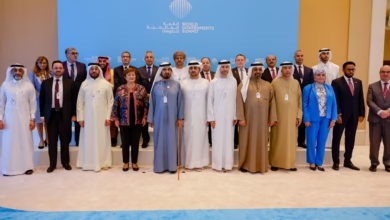
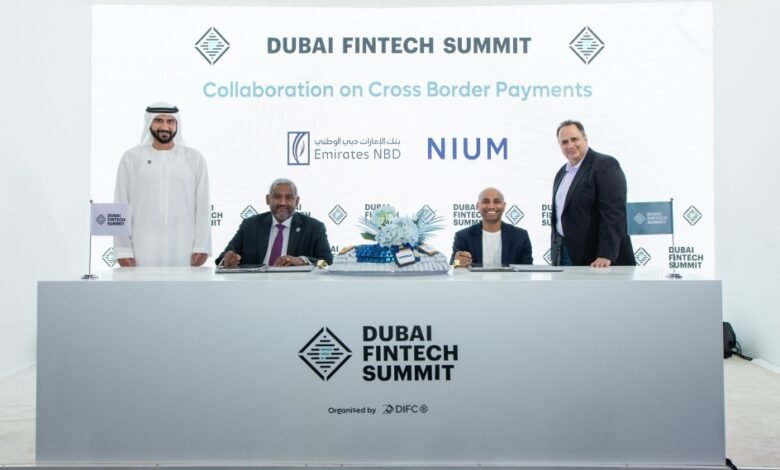
DUBAI, United Arab Emirates – For the better part of a decade, the overarching narrative surrounding digital assets was entirely hijacked by retail speculation, extreme volatility, and a relentless pursuit of unregulated yield. It was an era of technological exceptionalism where the underlying cryptographic architecture was often overshadowed by the chaotic noise of consumer token trading. But as the global financial elite, comprising sovereign wealth architects, central bankers, and venture builders prepare to converge on Madinat Jumeirah for the 2026 Dubai FinTech Summit, that speculative era has been definitively closed.
We have entered the era of institutional-grade programmable trust. The primary discourse driving the summit, and the closely aligned Future Tokenisation Forum taking place days later, is no longer about the theoretical possibilities of blockchain. It is entirely focused on the rigorous, unglamorous, and highly lucrative mechanics of migrating physical, real-world assets (RWAs) onto regulated digital ledgers. The trillion-dollar question defining global capital markets today is not whether tokenisation will occur, but who will own the secure, compliant infrastructure that allows it to operate at scale.
The Regulatory Crucible: Engineering Legal Certainty
Institutional capital does not move without legal certainty. Trillions of dollars in sovereign and pension liquidity cannot be deployed into digital ecosystems based purely on the promises of open-source code; it requires robust, multi-jurisdictional legal scaffolding.
This is precisely why the United Arab Emirates has emerged not merely as a participant in the digital asset economy, but as its undisputed global architect. While Western jurisdictions spent the last few years paralyzed by regulatory ambiguity and enforcement-led governance, the UAE systematically constructed the world’s most comprehensive regulatory trilogue.
As of 2026, the UAE operates three distinct, highly sophisticated regulatory environments that are facilitating this institutional migration. In Dubai, the Virtual Assets Regulatory Authority (VARA) has established a gold-standard framework specifically designed to mandate risk assurance and anti-money laundering (AML) protocols for digital asset service providers. Concurrently, the Dubai Financial Services Authority (DFSA) within the DIFC, operating under revised crypto token rules implemented in January 2026, and the Financial Services Regulatory Authority (FSRA) in Abu Dhabi (ADGM) are providing the English common-law foundations necessary for the tokenisation of complex fund units, hedge funds, and private venture capital.
This regulatory clarity is the bedrock of institutional trust. When a global asset manager tokenises a $500 million private credit fund in the DIFC today, they are not operating in a gray area; they are executing within a legally binding, mathematically provable framework that governs investor disclosures, algorithmic valuation methodologies, and legally enforceable custody arrangements. The UAE has successfully translated the abstract concept of cryptographic consensus into the enforceable language of international commercial law.
Tokenisation at Scale: Unlocking the Illiquid Economy
With the regulatory scaffolding firmly in place, the financial industry is now aggressively moving to tokenise the illiquid economy. The focal point of the “Digital assets and tokenisation: building trust at scale” sessions at the Dubai FinTech Summit will be the profound transformation of capital markets infrastructure.
Historically, investing in private equity, commercial real estate, or complex infrastructure projects in the Global South required massive capital lock-ups, extensive manual paperwork, and reliance on heavily siloed clearing houses. Settlement times dragged on for days, exposing counterparties to significant systemic risk.
Tokenisation obliterates this friction. By representing physical assets or private fund units as programmable tokens on a distributed ledger, financial institutions are transitioning from legacy T+2 (trade date plus two days) settlement cycles to near-instant, atomic settlement.
But the implications extend far beyond mere settlement speed. Tokenisation enables the seamless fractionalisation of high-value assets. A $50 million commercial logistics hub in Jebel Ali, or a portfolio of agricultural yield contracts in West Africa, can be mathematically divided into thousands of high-yield, tokenised digital securities. This democratizes access to institutional-grade yield for mid-market investors and family offices, while simultaneously providing real estate developers and venture builders with a vastly deeper, more dynamic pool of global liquidity.
The Architecture of Security: Custody, Vaults, and Cryptographic Hashing
However, issuing a digital token is relatively simple; securing the underlying economic value across a decentralized network is a monumental engineering challenge. As the digital asset economy scales, the attack surface expands exponentially. Therefore, the transition to tokenised finance requires a fundamental upgrade in cryptographic security and institutional custody.
We are moving rapidly beyond the concept of basic digital wallets into the realm of programmable, conditional vaults. In the context of global commercial payouts and trade finance, these conditional vaults act as autonomous, cryptographic escrow agents. Capital is locked within a smart contract and is only released when a highly specific set of external data parameters verified through secure, decentralized oracle networks are mathematically satisfied. If a logistics shipment arrives at a port and the digital bill of lading is verified, the vault instantly executes the commercial payout across multiple currencies. If the conditions fail, the capital is autonomously routed back to the treasury.
Furthermore, to protect the vast amounts of proprietary data, intellectual property, and proprietary trading algorithms interacting with these ledgers, financial architects are deploying military-grade cryptographic protocols. Utilizing advanced frameworks like SHA-256 IP hashing, institutions can securely record the exact timestamp and ownership of an algorithmic model or a syndicated loan agreement on the blockchain without ever exposing the underlying sensitive data to the public ledger. The hash serves as an immutable, mathematically unforgeable fingerprint of the truth.
This combination of conditional vaults, multi-signature institutional custody, and zero-knowledge cryptographic hashing creates an environment where trust is no longer delegated to a fallible human intermediary; it is mathematically guaranteed by the architecture itself.
Rewiring the Global South: The Stablecoin Imperative
The most immediate and transformative impact of this secure, tokenised infrastructure will not be felt on Wall Street, but across the emerging markets of the Global South. For the Middle East-Africa trade corridor, the digital asset economy is not a speculative luxury; it is a macroeconomic necessity.
Cross-border trade in these regions has historically been severely handicapped by extreme currency volatility and the punitive costs of correspondent banking. At the Dubai FinTech Summit, the integration of regulated, fiat-backed stablecoins into cross-border commercial corridors will be a dominant theme. Stablecoins bridge the critical gap between the cryptographic efficiency of blockchain and the price stability of sovereign fiat.
By utilizing regulated digital dollars or tokenised dirhams, African merchants and UAE-based logistics platforms can completely bypass the fractured legacy banking system. They can execute peer-to-peer, cross-border commercial settlements in seconds, at a fraction of a cent in transaction fees, without exposure to the underlying volatility of native cryptocurrencies. This programmable, tokenised liquidity is the fundamental requirement for scaling the decentralized digital lending models and micro-credit platforms that are currently rewriting the economics of emerging markets.
The Executive Mandate
As the 2026 Dubai FinTech Summit approaches, the overarching narrative is clear: the digital asset economy has fully matured. The experimental sandbox phase has ended, replaced by an era of rigorous compliance, institutional capital deployment, and advanced cryptographic engineering.
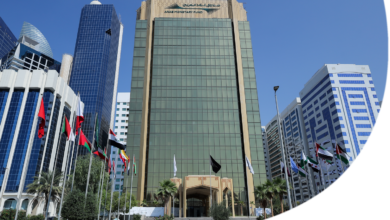
For the global CEOs, central bankers, and platform architects converging on Dubai, the strategic mandate is stark. Institutional trust is no longer derived simply from a legacy brand name or a towering glass headquarters; it is derived from the mathematical resilience of your digital infrastructure and your ability to operate within the new, tokenised frameworks.
The institutions that fail to integrate conditional vaults, robust digital custody, and automated tokenised settlement will find themselves operating on the obsolete, high-friction rails of the 20th century. The future of global capital markets is programmable, it is tokenised, and its foundational architecture is currently being finalized in the United Arab Emirates.