AI-Native Banking Takes Shape at Commercial Bank of Dubai

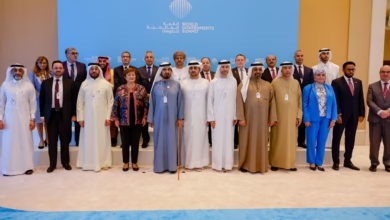
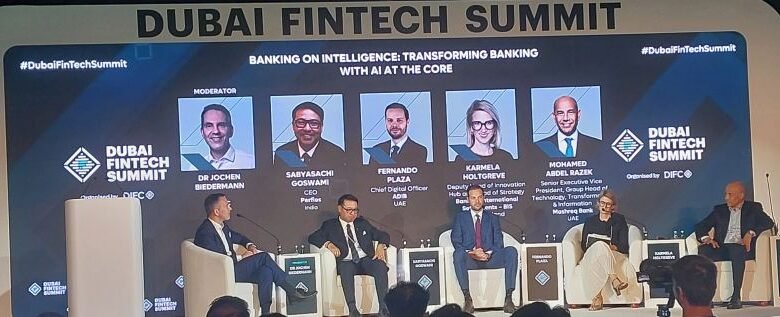
DUBAI, United Arab Emirates – The hallways of the Madinat Jumeirah complex hummed with a distinct, high-stakes energy this week as the global financial elite converged for the Dubai FinTech Summit 2026. Amid the sprawling exhibition floors and closed-door policymaker dialogues, a fundamental shift in the architecture of modern banking was not just discussed, but codified. For decades, traditional financial institutions have approached technological innovation as an additive process, bolting new software onto legacy mainframes in a perpetual game of digital catch-up. But as the summit concluded, it became undeniably clear that the era of the “digitized” bank is over. We have now entered the epoch of the AI-native bank.
Nowhere was this paradigm shift more evident than in the strategic maneuvers of the Commercial Bank of Dubai (CBD), which served as the Strategic Banking Partner for the two-day mega-event. Rather than unveiling a solitary application or a superficial rebranding of existing services, the prominent UAE lender announced a sweeping, multi-faceted automation pivot. Through a sequence of aggressive Memoranda of Understanding (MoUs) signed during the summit, the bank laid out a comprehensive blueprint for integrating artificial intelligence into the deepest layers of its operational, legal, and compliance infrastructure. It is a move that signals a profound realization among legacy institutions: survival in the next decade of finance will not be dictated by the size of a bank’s physical branch network, but by the velocity and intelligence of its underlying code.
The bedrock of this transformation begins in the cloud. During the event, CBD announced a pivotal agreement with Microsoft to develop and enable innovative AI use cases across its various business functions. Microsoft, a global technology giant whose cloud and AI infrastructure increasingly underpins the digital shifts of the modern economy, is a ubiquitous presence in the region’s technological evolution. By aligning with Microsoft, CBD is not merely upgrading its servers; it is fundamentally rewiring how the institution processes data, interacts with consumers, and deploys capital. This partnership underscores a broader industry consensus that proprietary, on-premise infrastructure is no longer sufficient to handle the computational demands of agentic AI-systems that do not just analyze data but take autonomous actions at machine speed.
Yet, moving at machine speed introduces a perilous new variable for financial institutions: the risk of compliance failure. In an increasingly fragmented geopolitical landscape, the burden of anti-money laundering (AML) protocols, Know Your Customer (KYC) regulations, and global sanctions enforcement have become an astronomical cost center for banks. The traditional approach to name-screening and transaction monitoring relies heavily on human analysts sifting through thousands of false positives, a slow, error-prone, and deeply inefficient process. To solve this complex financial crime challenge, CBD entered into a strategic agreement with Silent Eight, a specialized technology firm renowned for utilizing artificial intelligence to navigate the labyrinth of global compliance. This AI-powered name-screening solution is specifically designed to improve operational efficiency while simultaneously strengthening the bank’s rigorous governance frameworks. By delegating the initial layers of compliance screening to intelligent algorithms, the bank frees its human capital to focus on nuanced risk assessment rather than rote data processing.
The ambition of CBD’s technological overhaul extends far beyond the back office, reaching directly into the highly lucrative, yet rapidly changing, domain of wealth management. For generations, bespoke investment advice and portfolio curation were exclusive services reserved for ultra-high-net-worth individuals, delivered in mahogany-paneled rooms. Today, the democratization of alpha requires sophisticated, scalable digital platforms. Addressing this shift, CBD signed a strategic collaboration with Comarch AI Wealth. This partnership is tailored to support the ongoing development of the bank’s investment platform and its broader digital offerings. By leveraging specialized digital wealth management solutions, the bank aims to provide personalized, data-driven investment strategies to a wider demographic, effectively blending the bespoke nature of traditional private banking with the frictionless scale of modern fintech.
If cloud infrastructure is the brain and digital wealth management is the public face of this transformation, the internal operations and legal frameworks constitute the bank’s central nervous system. Operational transformation emerged as a critical priority for CBD, highlighted by a new partnership with Zamp. This collaboration is sharply focused on intelligent automation and AI-driven solutions engineered to streamline internal processes. But perhaps the most intellectually fascinating aspect of the bank’s strategic pivot is its approach to the law. Finance is, at its core, a complex web of contractual obligations. Managing these obligations across thousands of institutional and retail clients is a monumental task. To address its legal and governance infrastructure, CBD signed a strategic agreement with three distinct players in the legal technology space: Harvey, Sirion, and Flank. These sophisticated solutions are intended to dramatically enhance contract lifecycle management and legal operations. The deployment of AI in parsing, drafting, and managing legal contracts represents a massive leap forward, transitioning the legal department from a traditional cost center into a hyper-efficient, risk-mitigating engine.
The comprehensive nature of these announcements paints a picture of an institution that is aggressively self-disrupting before external forces can do it for them. Together, these partners ranging from established enterprise leaders like Microsoft to niche AI specialists like Silent Eight and Comarch AI Wealth, represent a diverse cross-section of the global tech industry. They have been assembled with a singular, unified goal: to modernize the infrastructure of one of the UAE’s most prominent lenders.
However, a truly AI-native bank cannot exist in a vacuum; it requires a thriving ecosystem of external innovation to continuously feed it new ideas and agile technologies. Acknowledging this, CBD has positioned itself not just as a consumer of financial technology, but as an active incubator and kingmaker within the startup ecosystem. Ahead of the summit, the bank hosted the CBD FinTech World Cup Qualifier, creating a high-stakes arena where six emerging fintech firms presented their solutions in payments and digital innovation. Out of this competitive cohort, a company named DeFa by InvoiceMate was selected as the winner. Consequently, they progressed to the FinTech World Cup Grand Final, a marquee event held during the summit itself, where top start-ups battled live for global recognition and venture capital.
This ecosystem approach is vital. It acknowledges that the most disruptive ideas often originate on the fringes of the financial system, rather than within the legacy walls of the institutions themselves. By actively scouting, validating, and elevating startups like DeFa by InvoiceMate, CBD is building a proprietary pipeline of future technologies that can eventually be integrated into its own tech stack. It is a symbiotic relationship where the bank provides the regulatory umbrella and the capital, while the startups provide the raw, unfiltered innovation.
The strategic posture adopted by the Commercial Bank of Dubai is deeply reflective of the broader macro-economic ambitions of the city it calls home. Dubai has relentlessly positioned itself as the crossroads of global capital, serving as the connective tissue between the established financial markets of the West and the rapidly expanding economies of the Global South. The Dubai FinTech Summit itself, operating under the patronage of H.H. Sheikh Maktoum bin Mohammed bin Rashid Al Maktoum, is a physical manifestation of this ambition.
“Dubai FinTech Summit continues to strengthen the UAE’s position as a global center for financial innovation by bringing together the organizations and individuals shaping the future of finance,” remarked Dr. Bernd van Linder, Chief Executive Officer of CBD, during the event. His statement captured the essence of the bank’s participation. “As Strategic Banking Partner, we are proud to play an active role in these conversations and to contribute to the advancement of a more connected, intelligent and inclusive financial ecosystem”.
Dr. van Linder’s emphasis on an “intelligent” ecosystem is the key takeaway from the 2026 summit. The financial industry has spent the last decade obsessed with user interfaces, making apps prettier, transactions slightly faster, and onboarding a bit smoother. But underneath that polished glass, the plumbing remained largely identical to what it was in the late 1990s. What CBD’s announcements signify is the beginning of the great infrastructural rewrite. By integrating generative AI, large language models, and intelligent automation into compliance, wealth management, internal operations, and legal frameworks, the bank is fundamentally altering its cost-to-income ratio and its capacity for scale.
As the summit concluded and the thousands of delegates departed Madinat Jumeirah, the narrative had irrevocably shifted. The question facing global bank executives is no longer whether they should adopt artificial intelligence, but whether they can rewrite their core systems fast enough to survive in an era where software handles the thinking. The Commercial Bank of Dubai has laid its cards on the table, proving that the transition from a traditional lender to a technology company with a banking license is not just theoretical, it is actively being built, deployed, and scaled in the heart of the Middle East.