From Chatbots to Autonomous Capital: How Agentic AI is Rewiring the Core of Global Banking

DUBAI, United Arab Emirates – For the past three years, the financial industry’s relationship with Artificial Intelligence has been largely superficial, defined by a rapid deployment of generative language models that served primarily as glorified conversational interfaces. Banks rushed to integrate sophisticated chatbots that could soothe irate retail customers, summarize sprawling internal policy documents, or draft routine compliance reports. It was an era characterized by localized efficiency gains at the extreme periphery of finance, while the heavily regulated, mission-critical core of banking remained stubbornly reliant on exhaustive human intervention, fragmented databases, and legacy procedural code.
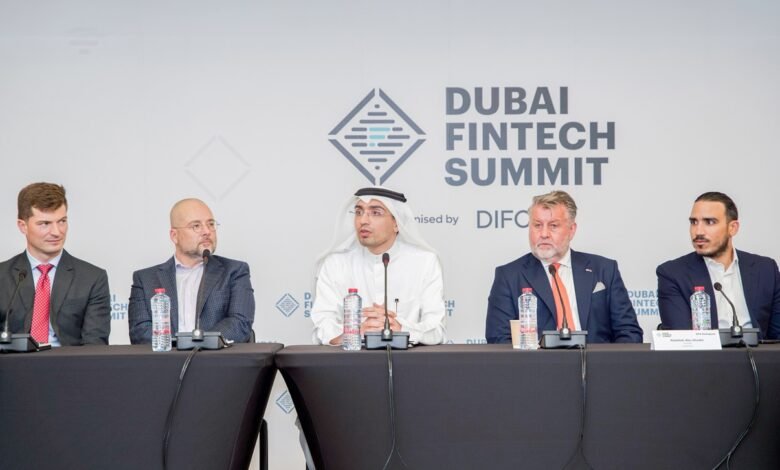
Next week, as the global financial elite, sovereign wealth architects, and tier-one regulators convene at the Madinat Jumeirah for the 2026 Dubai FinTech Summit, it will become unequivocally clear that this preliminary era of AI experimentation has abruptly concluded. The architectural discourse has fundamentally pivoted. The central focus is no longer on conversational AI; it is entirely consumed by the meteoric rise of “Agentic AI” autonomous, goal-seeking systems granted not just the cognitive ability to converse, but the institutional authority to execute. We are witnessing the rapid migration of artificial intelligence from the customer service desk to the institutional treasury, a shift that is fundamentally rewiring the DNA of core banking.
The Evolution of the Agentic Coworker
To grasp the sheer magnitude of this structural shift, one must precisely delineate between generative AI and Agentic AI. Traditional Large Language Models (LLMs) operate within a strictly read-only environment; they analyze, summarize, draft, and suggest. Agentic AI, conversely, possesses “write” access to a financial institution’s core operating systems. These are autonomous agents capable of chaining together highly complex workflows, making probabilistic decisions under uncertainty, interacting directly with other digital agents across different organizations, and executing binding financial transactions without requiring continuous human prompting or approval.
In the high-stakes corridors of corporate banking, trade finance, and cross-border settlement, these advanced systems are being deployed as “agentic coworkers.” This represents a paradigm shift away from traditional robotic process automation (RPA), where a bot blindly follows a rigid, rules-based script. Agentic systems apply dynamic, contextual reasoning to unstructured problems. They are actively engineered to independently monitor global liquidity thresholds, parse real-time macroeconomic and geopolitical signals, and autonomously move capital across borders to optimize yield, mitigate currency exposure, or ensure regulatory compliance.
This transition represents the most significant architectural overhaul in commercial banking since the advent of electronic high-frequency trading in the late 20th century. It permanently shifts the primary operational bottleneck from human cognitive capacity to cryptographic governance and system design.
Autonomous Treasury Management and the Death of Batch Processing
Perhaps the most profound application of Agentic AI on display in Dubai will be its disruptive impact on global treasury management. Historically, corporate treasurers at multinational enterprises have relied on historical data and batch-processed, end-of-day reports to manage global liquidity. They frequently executed vital hedging strategies, currency conversions, or intercompany transfers hours or even days after a precipitating market event.
Agentic AI eliminates this dangerous latency. Modern autonomous treasury agents connect directly via secure APIs to enterprise accounting systems, diverse global banking feeds, and massive operational data lakes to construct dynamic, real-time cash flow models. These agents continuously run millions of Monte Carlo simulations, project financial runway under a vast array of macroeconomic stress conditions, and alert human finance leadership only when risks approach mathematically defined critical thresholds.
Crucially, these systems are being authorized to act. When a logistics platform operating across the volatile UAE-Africa trade corridor faces a sudden, unexpected spike in currency volatility, an agentic treasury system can autonomously execute targeted micro-hedges, optimizing dynamic currency conversions in real-time to preserve profit margins. By automating these immensely complex, multi-step financial workflows, AI is transforming the treasury from a reactive, defensive reporting function into a proactive, autonomous profit center.
Rewiring Core Banking: From Underwriting to Institutional Reconciliation
Moving beyond the treasury, Agentic AI is aggressively attacking the most friction-heavy, labor-intensive processes embedded within core banking operations. The highly anticipated sessions at the Dubai FinTech Summit focused on “The Intelligent Bank” and scaling AI solutions will reveal precisely how deeply these systems are penetrating the middle and back offices of tier-one institutions.
Consider the historically archaic and painfully slow process of commercial loan underwriting and credit decisioning. Agentic systems are now capable of instantly absorbing massive, unstructured data sets, ranging from supply chain velocity metrics and digital payment flows to alternative platform data, and structuring it to perform instantaneous, highly accurate credit risk assessments. They can autonomously evaluate complex corporate ownership structures, verify hundreds of pages of legal documentation without fatigue, and orchestrate the entire origination workflow from application to funding. For highly complex, syndicated commercial loans, the AI intelligently assembles a comprehensive, risk-weighted package for final human review, effectively reducing processing times by up to 60 percent while drastically improving the mathematical consistency of credit decisions.
Similarly, in the traditionally grueling realm of institutional reconciliations, AI agents are systematically replacing entire floors of analysts. Reconciling millions of transactions across disparate legacy systems, distributed ledgers, and international counterparties is inherently error-prone and soul-crushing work. Agentic AI automates the matching logic across massive datasets, flags unmatched items with detailed, natural-language contextual explanations, and intelligently routes only the genuine, complex exceptions for human resolution. This allows human capital to be redeployed toward high-value strategic initiatives rather than basic data entry.
The Cryptographic Governance of Autonomous Capital
However, granting software the unprecedented autonomy to move institutional capital and approve corporate credit introduces entirely new vectors of regulatory, systemic, and operational risk. How does a central bank audit a lending decision made by a self-optimizing neural network? This critical question of governance will rightfully dominate the regulatory tracks at the summit.
The safe deployment of Agentic AI at institutional scale requires a completely new paradigm of risk management and compliance. Visionary financial architects are implementing robust “agent gateways” sophisticated middleware that serves as the fundamental infrastructure for systemic trust. Every single prompt, data request, action, and external tool call initiated by an AI agent must route through this centralized gateway, which rigidly enforces data privacy policies, applies strict tool restrictions, and centralizes all telemetry.
This telemetry creates an immutable, cryptographically secure audit trail. When financial regulators inevitably demand to know precisely why a specific cross-border transaction was flagged, delayed, or approved, the gateway provides the definitive, mathematically provable answer. Furthermore, leading banks are establishing strict technical protocols for “agent-to-agent” trust, utilizing advanced frameworks like the Model Context Protocol (MCP) to ensure that internal AI agents only accept instructions from cryptographically verified, authorized external systems, preventing malicious cascading actions across the financial network.
Under these new frameworks, every “agentic coworker” deployed within a regulated institution requires a unique cryptographic identity and a named, legally accountable human owner. Accountability cannot default to an abstract IT department or a generalized “Center of Excellence”; it must reside with a specific, named risk officer who bears ultimate responsibility for the agent’s business outcomes.
Revolutionizing Financial Crime Prevention
This robust governance framework allows Agentic AI to take on one of the most critical and complex functions in global finance: Anti-Money Laundering (AML), Know Your Customer (KYC) compliance, and financial crime prevention. Traditional rules-based monitoring systems are notorious for generating overwhelming volumes of false positives, exhausting compliance teams, inflating operational costs, and delaying legitimate cross-border trade.
Agentic AI fundamentally alters this punitive dynamic. These sophisticated systems monitor global transaction flows continuously, applying advanced behavioral analytics and deep pattern recognition to flag genuine anomalies in real-time. Crucially, before raising an alert, an AI agent autonomously builds deep context around the suspicious transaction. It instantaneously reviews historical account behavior, cross-references unstructured global watchlist data, analyzes related behavioral patterns, and calculates dynamic risk scores. It only escalates cases that genuinely require human intervention, providing the compliance analyst with a comprehensive, audit-ready dossier rather than a raw, context-free alert.
Because these models learn continuously, each resolved case refines the agent’s underlying logic, dramatically reducing false positives while identifying highly sophisticated, previously undetectable financial crime typologies. In the complex, multi-jurisdictional regulatory environment of Middle East-Africa trade, this capability is not merely an operational efficiency play; it is an existential regulatory requirement.
The Strategic Imperative for Global Finance
As the 2026 Dubai FinTech Summit prepares to open its doors to the world, the long-term implications for the global financial ecosystem are profound. The Middle East, guided by the aggressive regulatory foresight and digital-first mandates of the UAE, is positioning itself not simply as a wealthy consumer of financial technology, but as the primary architect of the autonomous financial future.
For the CEOs, venture builders, and central bankers navigating the exhibition halls at Madinat Jumeirah, the strategic mandate is absolute. The competitive moat in the next decade of finance will no longer be defined by the sheer size of a bank’s balance sheet, its historical relationships, or the geographical footprint of its physical branch network. It will be defined entirely by the sophistication of its AI orchestration layer and the secure autonomy of its agentic systems.
Institutions that fail to transition from reactive, human-constrained workflows to proactive, agentic architectures will find themselves structurally incapable of operating at the speed of modern global commerce. The integration of Agentic AI into the core of banking is no longer a speculative innovation reserved for innovation labs; it is the new, uncompromising baseline for global financial operations.