Rewiring the Global Financial Architecture: Why the 2026 Dubai FinTech Summit is the Crucible for the New Silk Road

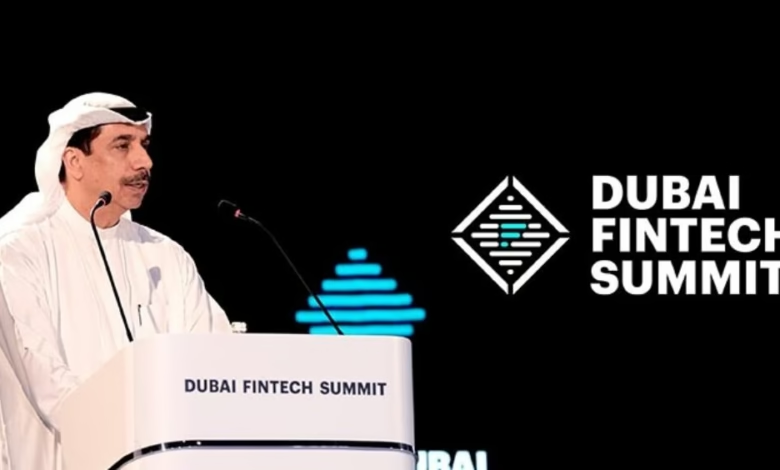
DUBAI, United Arab Emirates – For more than a half-century, the arteries of global trade have been governed by a highly fragmented, profoundly antiquated financial architecture. The movement of capital across borders, particularly between the hyper-liquid financial hubs of the Middle East and the rapidly industrializing markets of Africa, has historically required navigating a Byzantine labyrinth of correspondent banks, delayed settlements, opaque fee structures, and trapped liquidity. But as global policymakers, sovereign wealth architects, and venture builders converge on Madinat Jumeirah next week for the 2026 Dubai FinTech Summit, the macroeconomic narrative has fundamentally shifted. The global financial industry is no longer merely attempting to digitize legacy systems; it is actively, and aggressively, replacing them.
At the very center of this year’s summit, which arrives at a critical geopolitical inflection point is a trillion-dollar question that will define the next decade of international commerce: How quickly can emerging technologies eradicate the remaining friction in cross-border trade, and who will control the new infrastructure? The answer is currently being engineered not in the traditional financial capitals of the West, but in the regulatory sandboxes and innovation hubs of the United Arab Emirates.
To understand the sheer scale of the transformation on display at the summit, one must first examine the collapse of the traditional correspondent banking monopoly. Historically, the financial infrastructure connecting the Gulf to the Global South was built on institutional gatekeeping. Banks relied on Nostro and Vostro accounts, a system requiring institutions to hold dormant capital in foreign currencies across multiple jurisdictions simply to facilitate international transfers. Following the implementation of stringent Basel III capital requirements and the subsequent wave of institutional “de-risking,” tier-one Western banks systematically abandoned emerging market corridors. This retreat created a severe liquidity vacuum in regions like Sub-Saharan Africa, driving up the cost of trade finance and leaving mid-market enterprises, social entrepreneurs, and regional logistics platforms starved of operational capital.
Today, that archaic model is being rapidly dismantled by programmable payment rails and interoperable decentralized networks. The upcoming summit sessions focusing on borderless payments will serve as a crucial barometer for this transition, highlighting a move away from batch-processed SWIFT transactions toward instantaneous, atomic settlement. We are witnessing the mainstream adoption of conditional vaults, multi-currency settlement protocols, and API-driven clearing systems that allow commercial payouts to execute in seconds rather than days. For enterprise platforms operating across the Middle East-Africa corridor, this is not just an incremental operational upgrade it is the wholesale unlocking of trapped liquidity that can be instantly redeployed into the real economy.
The timing and location of the 2026 Dubai FinTech Summit are a reflection of a broader geopolitical realignment. The UAE has aggressively positioned itself as the definitive regulatory proving ground for the digital economy, effectively capitalizing on the regulatory hesitation that has paralyzed Western markets. Through forward-thinking mandates on digital assets, the establishment of the Virtual Assets Regulatory Authority (VARA), and comprehensive open banking frameworks championed by the Dubai Financial Services Authority (DFSA), the Emirates have provided the legal and operational scaffolding required for programmable trust to scale safely.
This institutional maturity will be vividly apparent across the summit’s main stages. The overarching conversations have definitively moved past the theoretical hype of blockchain and tokenization to address the rigorous, unglamorous realities of commercial deployment. Institutional leaders and state-backed funds are no longer looking for disruptive concepts; they are actively seeking battle-tested, high-fidelity solutions capable of handling institutional-grade transaction volumes. They demand architectural blueprints that integrate seamlessly with advanced databases like PostgreSQL, utilize dynamic frontend portals, and deploy SHA-256 level cryptographic hashing for unassailable intellectual property and data integrity protection.
The Middle East-Africa trade corridor stands as the most critical proving ground for these new technologies. Bilateral trade and investment between the GCC and Africa have surged exponentially, driven by investments in renewable energy, logistics, and digital infrastructure. Yet, the financial rails facilitating this trade have lagged severely behind the commercial ambition. The platforms that succeed in capturing this market will be those that engineer solutions specific to its unique frictions: currency volatility, fragmented regulatory environments, and a lack of unified credit scoring.
Here, the integration of autonomous technologies is proving revolutionary. A major focal point for media coverage at the summit will be the evolution of Artificial Intelligence within core banking and trade finance. AI is rapidly moving beyond the rudimentary customer service chatbots of the early 2020s to become the central nervous system of autonomous treasury management. Agentic AI workflows are now being deployed to actively manage dynamic currency conversions, assess supplier compliance risks in real-time, and execute complex smart contracts based on pre-defined geopolitical and financial triggers. By automating compliance and mitigating counterparty risk without the need for traditional human intermediaries, these AI systems are drastically reducing the operational overhead of cross-border enterprise.
Furthermore, this technological leap is facilitating the rise of decentralized trade finance and private credit platforms tailored for the Global South. By utilizing alternative data points, ranging from mobile money velocity to digital supply chain metrics, new venture builders are successfully underwriting cross-border merchants and platform workers who have historically been ignored by legacy banks. Merit-based ecosystems are replacing relationship-based lending, democratizing access to capital for founders who can mathematically prove their traction and unit economics.
As media partners documenting this transition, the most critical developments to watch at Madinat Jumeirah will not solely be the headline memorandums of understanding or the multi-million dollar funding announcements. The true story lies in the underlying shifts in infrastructure. It is found in the technical exhaustion and eventual triumph of developers building secure API bridges between UAE-based neo-banks and African mobile money networks. It is evident in the sophisticated, cinematic user interfaces that translate immensely complex cryptographic settlements into seamless, intuitive executive dashboards.
The platforms and protocols that gain structural traction during the 2026 Dubai FinTech Summit will effectively dictate the flow of private capital and the architecture of international trade for the next generation. The mandate for the founders, investors, and policymakers walking the floors next week is starkly clear: the future of global finance belongs entirely to those who can build the most seamless, architecturally sound, and borderless infrastructure. The new Silk Road is currently being rewired, and the operational switch is being flipped in Dubai.