Sovereign AI: The Gulf’s High-Stakes Battle for Compute

As artificial intelligence transitions from consumer software to vital national security infrastructure, Gulf sovereign wealth is mobilizing hundreds of billions to build localized data centers, navigate US export controls, and secure absolute computational sovereignty.
For the past decade, the global narrative surrounding artificial intelligence has been overwhelmingly dominated by Silicon Valley. It was framed as a fierce, corporate arms race between trillion-dollar American software conglomerates racing to build the most sophisticated consumer chatbots and generative algorithms. But by the final quarter of 2026, the macroeconomic reality of AI has fundamentally shifted. Artificial intelligence is no longer viewed merely as a disruptive commercial technology; it has been reclassified by governments across the Global South as a matter of absolute national security and macroeconomic survival.
Nowhere is this paradigm shift more evident than in the Arabian Gulf. The governments of the United Arab Emirates and Saudi Arabia have recognized that in the twenty-first century, computational power or “compute” is the new strategic reserve. Just as securing domestic oil production defined geopolitical sovereignty in the twentieth century, securing domestic AI infrastructure will define the economic hierarchy of the next fifty years. Recognizing the existential threat of relying on foreign servers to process their most sensitive national data, Gulf states are executing one of the most aggressive capital mobilizations in modern history. They are pouring hundreds of billions of dollars into sovereign AI ecosystems, forcing a radical realignment of global technology supply chains and pioneering a high-stakes brand of silicon diplomacy.
The New Strategic Reserve: Mobilizing Sovereign Capital
The scale of the capital being deployed to build out the Middle East’s AI infrastructure is unprecedented, dwarfing the venture capital funds of Silicon Valley and directly competing with the state-backed initiatives of Beijing and Washington. Gulf sovereign wealth funds are no longer content with acting as passive, minority investors in Western tech startups; they are restructuring themselves to become the apex architects of the global AI hardware ecosystem.
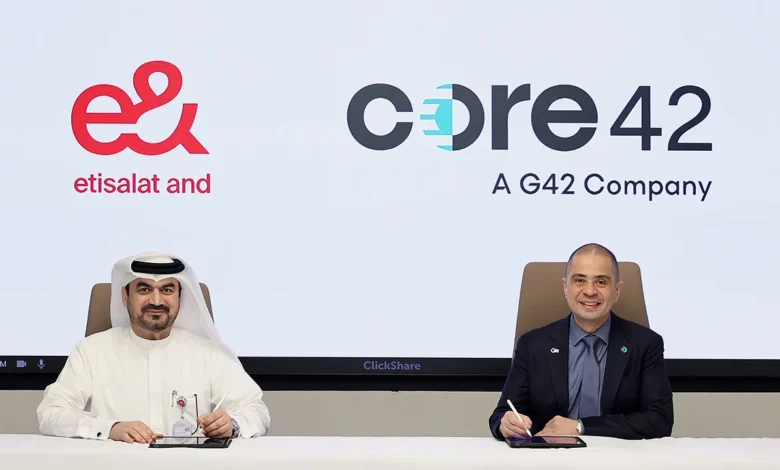
In Abu Dhabi, the creation of specialized investment vehicles like MGX a massive technology fund launched to target AI infrastructure, semiconductors, and core technologies, signals a structural pivot from traditional asset management to sovereign capacity building. Backed by the immense liquidity of Mubadala and the technological operational expertise of the G42 conglomerate, Abu Dhabi is systematically acquiring the physical building blocks of the AI revolution. Similarly, in Riyadh, the Public Investment Fund (PIF) has established dedicated, multi-billion-dollar technology funds specifically designed to aggressively court global semiconductor manufacturers, data center architects, and machine learning engineers to build within the borders of the Kingdom.
This capital is not being deployed to build regional competitors to consumer applications like ChatGPT. Instead, it is actively funding the heavy, physical infrastructure required for localized machine learning: the procurement of tens of thousands of advanced graphics processing units (GPUs), the construction of massive, hyperscale data centers, and the laying of proprietary submarine fiber-optic cables. The strategic mandate is clear: the Gulf will not merely rent software from American cloud providers; it will own the physical compute upon which the software runs.
The Diplomatic Tightrope: Navigating US Export Controls
Acquiring the hardware necessary to achieve computational sovereignty, however, requires navigating the most treacherous geopolitical minefield of the modern era. The advanced semiconductors required to train cutting-edge AI models, specifically the H100 and next-generation Blackwell B200 chips manufactured by Nvidia, have been effectively weaponized by the United States government. Viewing advanced AI as a dual-use military technology, the US Commerce Department has imposed draconian export controls, explicitly designed to prevent these chips from reaching the People’s Republic of China.
Because the Middle East historically maintained deep, lucrative technology partnerships with Chinese firms like Huawei for 5G infrastructure and logistics software, the region initially found itself caught in the crosshairs of Washington’s export blockades. To secure the chips necessary for their sovereign AI ambitions, Gulf nations have had to walk an agonizingly precise diplomatic tightrope, executing a deliberate and calculated “de-risking” strategy.
The watershed moment in this silicon diplomacy occurred with the strategic restructuring of Abu Dhabi’s premier AI holding company, G42. To secure a historic, multi-billion-dollar investment and partnership with Microsoft, G42 agreed to systematically strip Chinese hardware and software from its networks, aligning its data security protocols entirely with Washington’s geopolitical demands. This was a profound geopolitical concession, but a highly calculated one. By explicitly choosing the American technological ecosystem over the Chinese, the UAE secured guaranteed, prioritized access to the world’s most advanced semiconductor supply chains.
Saudi Arabia is navigating a similar geopolitical calculus, leveraging its immense capital to assure Washington that its domestic data centers will operate as impenetrable digital fortresses, fully compliant with US intellectual property and national security regulations. For the Gulf swing states, the strategic alignment with Washington is a pragmatic necessity: without the chips, there is no compute, and without compute, there is no economic sovereignty.
The Fortress of Data: Why Sovereignty Matters
The willingness of Gulf nations to overhaul their diplomatic alliances to secure AI hardware underscores the terrifying vulnerability of the modern digital economy. As governments rapidly digitize their health records, genomic databases, state financial ledgers, and critical infrastructure blueprints, the sheer volume of highly sensitive national data being generated is staggering.
Historically, developing nations were forced to store and process this data in hyperscale cloud centers located in Northern Virginia, Dublin, or Frankfurt, owned by Western tech monopolies. In an era where financial sanctions and data blockades are routinely used as geopolitical weapons, allowing a foreign government to retain ultimate legal jurisdiction over a nation’s core data is viewed by Gulf leaders as an unacceptable national security risk.
Sovereign AI is the definitive antidote to this vulnerability. By building localized data centers that operate exclusively within their own legal jurisdictions, the UAE and Saudi Arabia are ensuring that their national data can never be seized, monitored, or suddenly cut off by a hostile foreign legislature. Furthermore, by training their own foundational large language models such as Abu Dhabi’s open-source Falcon model or G42’s Arabic-centric Jais, the region is actively preventing the cultural and linguistic erasure that occurs when a society is forced to rely on AI systems trained exclusively on Western datasets and American cultural biases.
Macroeconomic AI: Beyond the Chatbot
The true value of this sovereign compute, however, lies in how it is being deployed. The Gulf is not investing hundreds of billions of dollars to optimize search engine algorithms or automate customer service. They are deploying artificial intelligence at the macroeconomic level to run the administrative and financial machineries of the state.
Finance ministries are utilizing advanced machine learning models to radically optimize state treasuries. By feeding localized AI models decades of global trade data, maritime shipping manifests, and geopolitical risk assessments, Gulf states are transitioning to predictive macroeconomic forecasting. These models are being designed to anticipate violent fluctuations in global commodity prices from crude oil to critical minerals and wheat, allowing state-owned enterprises and sovereign wealth funds to hedge their positions and deploy capital with unprecedented, algorithmically enhanced precision.
Furthermore, sovereign AI is becoming the operating system for the region’s ambitious physical infrastructure projects. In Saudi Arabia’s NEOM and the UAE’s Masdar City, localized AI models are required to manage the dizzying complexity of next-generation smart grids. These algorithms monitor millions of data points in real-time, instantly balancing the power output of solar farms with the cooling demands of urban centers, predicting maintenance failures in desalination plants before they occur, and automating the logistics of highly integrated, automated seaports. This level of infrastructural orchestration is mathematically impossible for human operators to manage, and relying on latency-heavy, foreign cloud servers to run the electrical grid of a nation is a non-starter.
The Energy Edge: Powering the AI Revolution
Ultimately, the Gulf’s ambition to become a global superpower in sovereign compute is backed by an undeniable physical advantage: abundant, deeply subsidized energy. The single greatest bottleneck facing the global expansion of artificial intelligence is electricity. The gigawatt-scale data centers required to house tens of thousands of advanced GPUs consume as much power as mid-sized cities, and they require immense amounts of water or advanced cooling infrastructure to prevent the chips from melting down.
While American and European tech firms are currently facing crippling regulatory hurdles, aging electrical grids, and fierce environmental pushback against the energy demands of their data centers, the Gulf states are uniquely positioned to solve the power equation. The UAE and Saudi Arabia possess some of the most robust, rapidly expanding energy infrastructures on the planet.
By co-locating hyperscale data centers directly adjacent to massive, uninterrupted power sources—such as the Barakah Nuclear Energy Plant in Abu Dhabi or the sprawling Al Dhafra Solar photovoltaic project—the Gulf can guarantee the cheap, reliable, and increasingly low-carbon baseload power that AI infrastructure demands. They are effectively converting their historic dominance in the global energy market into dominance in the global compute market.
As the global economy fractures and the digital iron curtain descends, the massive mobilization of capital across the Arabian Peninsula marks a permanent shift in the global technological order. The Gulf states have clearly signaled that they will no longer passively consume the digital architecture of the West. By navigating complex export controls, building localized infrastructure, and treating computational power as the ultimate sovereign asset, the Middle East is actively writing the code for its own economic future, ensuring that the wealth of the next half-century remains firmly rooted in its own silicon.