Inside the 50-Year History of the Arab Monetary Fund

In the spring of 1976, the global financial order was undergoing a seismic realignment. The world was still reeling from the aftershocks of the 1973 oil crisis, the collapse of the Bretton Woods system of fixed exchange rates, and soaring global inflation. For the nations of the Arab world, the era presented a stark paradox: while oil-exporting states were accumulating unprecedented wealth, non-oil-exporting Arab nations were grappling with severe balance-of-payments deficits, heavy reliance on foreign aid, and crippling poverty.
Recognizing that regional stability required a unified economic safety net, finance ministers and central bank governors from across the Arab League convened in Rabat, Morocco, in April 1976. It was there that they signed the Articles of Agreement establishing the Arab Monetary Fund (AMF), a bold institutional experiment designed to insulate the Middle East and North Africa from the volatility of global markets. When the agreement officially entered into force in February 1977, it signaled a historic pivot. The Arab world was no longer content to rely exclusively on Western-dominated multilateral institutions like the International Monetary Fund (IMF) or the World Bank; it was building its own financial architecture.
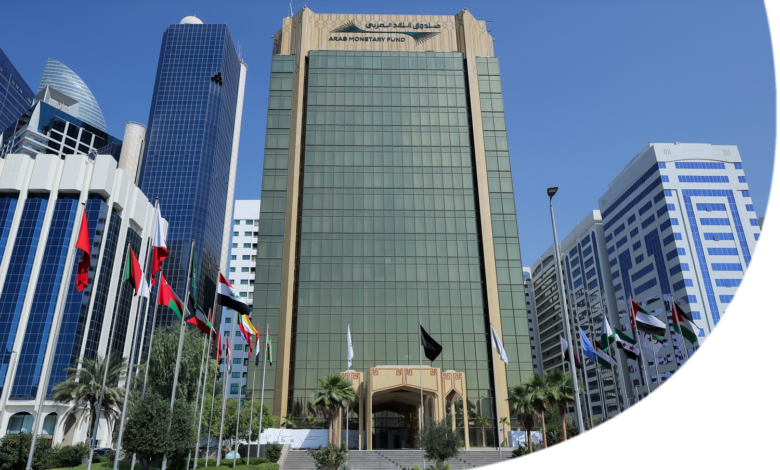
Today, operating out of its permanent headquarters in Abu Dhabi, the AMF encompasses 22 member states, ranging from the hyper-wealthy economies of the Gulf Cooperation Council (GCC) to developing nations grappling with conflict and chronic debt. Over the past five decades, the AMF has quietly served as the region’s ultimate financial shock absorber, deploying billions of dollars to stabilize collapsing currencies, fund structural overhauls, and modernize the Arab banking sector.
The Genesis and The Pioneers
The creation of the Arab Monetary Fund was an exercise in high-stakes diplomacy, requiring the reconciliation of wildly disparate national interests. The wealthy oil-producing states—led by Saudi Arabia, the United Arab Emirates, and Kuwait—provided the bulk of the initial capital, recognizing that their own security was inextricably linked to the economic stability of their regional neighbors.
The institutional design of the AMF was heavily influenced by a cohort of pioneering Arab economists and technocrats who sought to adapt international monetary mechanisms to the specific realities of the Middle East. Chief among them was Dr. Jawad Hashim, a prominent Iraqi economist and former Minister of Planning, who was elected as the inaugural Director-General and Chairman of the Board of Executive Directors. Serving from 1977 to 1982, Hashim was tasked with translating the lofty ambitions of the Rabat agreement into a functional lending institution. Under his tenure, the Fund established its operational protocols, defined its quota system, and began the delicate process of assessing the macroeconomic vulnerabilities of its member states.
The United Arab Emirates played a foundational role not just as a primary financier, but as the geographic and logistical anchor for the institution. By hosting the AMF in Abu Dhabi, the UAE leadership, under the late Sheikh Zayed bin Sultan Al Nahyan, reinforced the nation’s commitment to joint Arab action—a philosophy that continues today under the patronage of President Sheikh Mohamed bin Zayed. This stability allowed the Fund to operate uninterrupted through the Iran-Iraq War, the Gulf War, the Arab Spring, and a multitude of regional crises that repeatedly shattered the political consensus of the Arab League.
The Mechanics of Sovereign Lending
Unlike commercial banks or development funds that finance specific infrastructure projects like dams or highways, the Arab Monetary Fund is primarily concerned with the macroeconomic health of the state itself. Its mandate is to correct balance-of-payments disequilibria, stabilize exchange rates, and eliminate trade restrictions. To achieve this, the AMF utilizes a highly structured, tiered lending architecture designed to provide immediate liquidity while enforcing long-term fiscal discipline.
The Fund’s interventions are broadly divided into unconditional and conditional facilities. The “Automatic Loan” allows member states to quickly draw up to 75 percent of their paid-in capital in convertible currencies to plug sudden holes in their balance of payments. However, deeper structural crises require more invasive interventions.
When a nation exhausts its automatic limits, it must negotiate an “Ordinary Loan” or an “Extended Loan,” which are strictly conditional upon the borrowing government implementing rigorous macroeconomic stabilization programs. These programs often dictate politically sensitive reforms, such as reducing public sector wage bills, rationalizing energy subsidies, or floating fixed exchange rates. In 1998, the AMF expanded its arsenal by introducing the Structural Adjustment Facility, a mechanism specifically engineered to modernize the banking sectors of borrowing nations. In 2005, the facility was expanded to encompass deep reforms in public finance, including tax collection and government expenditure management.
The AMF’s agility is one of its defining characteristics. During the 2008 global financial crisis, the Fund rapidly introduced a Short-Term Liquidity Facility in 2009 to assist nations that were cut off from freezing global credit markets. That same year, the AMF extended critical structural and automatic loans to Jordan, Morocco, and Mauritania, injecting over $440 million to stabilize their financial sectors at a moment of acute global panic.
Interventions in the Modern Era
The true test of the AMF’s effectiveness has been its interventions over the past decade, a period characterized by plummeting oil prices, the COVID-19 pandemic, and soaring global inflation.
In Sudan, the AMF played a critical role during the volatile transition period of 2019 and 2020. As the country faced severe foreign currency shortages and hyperinflation following the ousting of Omar al-Bashir, the Fund injected hundreds of millions of dollars to stabilize the transitional government’s budget. This balance-of-payments support was vital in preventing a complete collapse of the Sudanese import market, allowing the state to secure essential trade facilities for food and medicine.
Egypt, historically one of the heaviest borrowers from regional and international institutions, has frequently turned to the AMF during times of macroeconomic stress. In mid-2023, as Cairo grappled with mounting debt burdens, severe currency devaluations, and the economic fallout of the war in Ukraine, the AMF approved a massive $615.8 million loan. This intervention was not a mere cash handout; it was tethered to sweeping structural and financial reforms designed to stabilize the Egyptian banking sector, increase financial inclusion, and streamline the nation’s sprawling public enterprise footprint.
The Fund’s pandemic response further highlighted its capacity for rapid deployment. When the COVID-19 crisis paralyzed global trade in 2020, Tunisia faced a catastrophic loss of foreign direct investment and tourism revenue. The AMF stepped in with a $98 million loan—equivalent to 125 percent of Tunisia’s paid-up capital share—to shield the nation’s financial sector and accelerate the rollout of digital financial inclusion tools for citizens isolated by lockdowns. Across the broader Arab world, the AMF streamlined its procedures in 2020 and 2021, deploying over $600 million in emergency liquidity loans to various member states while anchoring an $8.6 billion regional relief package through the Arab Coordination Group.
In Jordan, the Fund’s interventions have been intensely focused on long-term structural resilience. Facing chronic fiscal deficits exacerbated by regional refugee crises, Jordan utilized a $96 million AMF loan under the Structural Adjustment Facility in 2018 and 2019 to overhaul its banking supervision. The mandated reforms forced the Central Bank of Jordan to aggressively expand credit access for small and medium-sized enterprises (SMEs), attempting to stimulate private sector growth in an economy historically dominated by the state.
Beyond Bailouts: The Next Phase of Arab Integration
As the Arab Monetary Fund celebrates its 50th anniversary, its leadership recognizes that the challenges of the next half-century cannot be solved by balance-of-payments loans alone. The global economy is rapidly digitizing, and the AMF is pivoting from a traditional lender of last resort into a primary engine of technological and institutional capacity building.
The most ambitious manifestation of this new era is the launch of the “Buna” payment platform. Spearheaded by the AMF, Buna is a centralized, cross-border payment system that allows Arab financial institutions to clear and settle transactions in multiple global and Arab currencies in real-time. By bypassing traditional correspondent banking networks heavily reliant on Western clearinghouses, Buna reduces the cost and time of intra-Arab trade, directly advancing the Fund’s foundational goal of regional economic integration.
Furthermore, the Fund is deeply involved in training the next generation of Arab economic policymakers. Through its Economic Policy Institute in Abu Dhabi, the AMF trains hundreds of central bankers, tax authorities, and finance ministry officials every year in advanced econometrics, artificial intelligence integration, and green finance.
The story of the Arab Monetary Fund is ultimately one of institutional endurance. In a region deeply scarred by political fragmentation, the AMF has remained a remarkably functional venue for collective action. By insisting on rigorous macroeconomic standards while providing a sovereign financial lifeline, the Fund has spent the last fifty years proving that Arab economic integration is not merely an ideological slogan, but a highly complex, daily operational reality.