How Hemings Descendants Preserved the Thomas Jefferson Truth

In the winter of 1873, a 68-year-old carpenter living in southern Ohio sat down with a journalist from the Pike County Republican. His name was Madison Hemings, and the memoir he dictated that day remains one of the most explosive and consequential documents in the American archive.
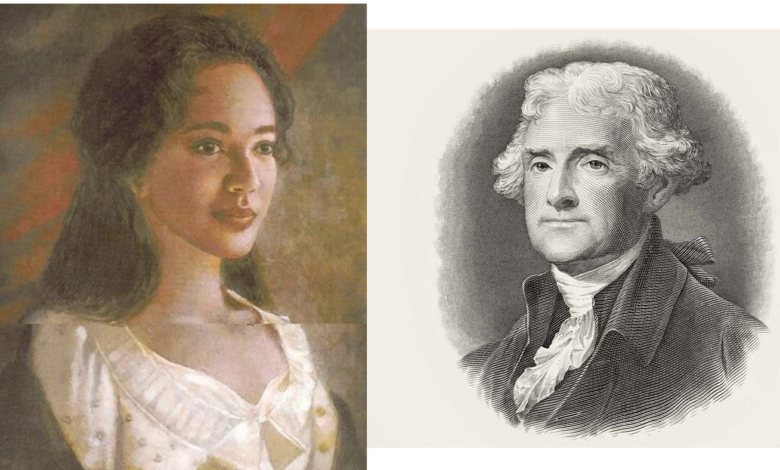
With quiet, methodical detail, Madison recounted his birth at Monticello, the daily routines of the Virginia plantation, and his eventual emancipation. But it was his parentage that shocked 19th-century readers: Madison publicly named his mother as Sally Hemings and his father as Thomas Jefferson, the third President of the United States.
For over a century, Madison’s interview was largely dismissed by the white American historical establishment as a fabrication. Yet, within the Hemings family, his testimony was not a revelation, it was a deeply guarded lineage passed down through generations. The survival of this oral history, preserved against a tidal wave of institutional denial, highlights the enduring power of Black family memory and the fractured nature of American identity.
Key insight: The descendants of Madison and Eston carried the burden of preserving the family’s historical truth, while the older siblings’ branches lost the history as a matter of survival.
The Great Divergence at Monticello
The preservation of the Hemings lineage is fundamentally a story of two divergent paths. Following Thomas Jefferson’s death in 1826, the children of Sally Hemings navigated a racially codified America in vastly different ways, dictated largely by their physical appearance.
Because the Hemings children were seven-eighths European by descent, they possessed very light skin. According to Madison Hemings’s account, his two older siblings, Beverly and Harriet, were permitted by Jefferson to essentially “walk away” from Monticello when they came of age in 1822.
Leaving Virginia, Beverly and Harriet moved to Washington, D.C., and assimilated entirely into white society. To survive and thrive in a nation built on racial hierarchy, they had to sever all ties to their past. They married into white families, and their descendants grew up completely unaware of their enslaved ancestry or their connection to the Founding Father. For these branches of the family, the truth was not passed down; it was intentionally buried as a matter of survival.
The Keepers of the Oral History
The burden of preserving the family truth fell to the younger brothers, Madison and Eston, who were freed by Jefferson’s will and left Monticello in the 1820s. Both brothers initially settled in Ohio.
While Eston eventually moved to Wisconsin, changed his name to Eston Hemings Jefferson, and integrated into the white community, Madison Hemings proudly lived his life within the free Black community of southern Ohio. It was Madison’s descendants who became the fierce, uncompromising custodians of the oral history.
Generation after generation, the story of their Monticello origins was treated not merely as folklore, but as a sacred family ledger. The narrative was remarkably consistent: Sally Hemings was Thomas Jefferson’s concubine, they lived in Paris, she negotiated her return in exchange for her children’s freedom, and the Hemings children were Jefferson’s direct flesh and blood.
Another prominent Black family, the Woodsons, also maintained a fierce oral tradition claiming descent from Jefferson and Hemings through a first-born son named Thomas. While subsequent DNA testing in 1998 did not establish a genetic link between the Woodson line and the Jefferson Y-chromosome, the Woodson family’s unwavering commitment to their oral history underscores how deeply these narratives were woven into Black identity and resistance.
Confronting the Wall of Denial
For the Hemings descendants who held onto the truth, the 20th century was defined by relentless institutional pushback. The gatekeepers of American history, prominent biographers, historical societies, and the curators of Monticello, erected a massive wall of denial.
These historians often weaponized Thomas Jefferson’s meticulously curated letters and public image, arguing that a relationship with an enslaved woman was entirely contradictory to his Enlightenment ideals. Madison Hemings’s 1873 interview was routinely characterized as an opportunistic lie, and the Black oral tradition was dismissed as historically illegitimate because it existed outside the formal, written archives of white institutions.
The psychological toll on the Hemings descendants was profound. They were telling the truth about their own bloodline, only to be branded as liars by the highest historical authorities in the nation.
The DNA Validation and Reunification
The dam finally broke in 1998, when a landmark genetic study published in the journal Nature matched the Y-chromosome of the Jefferson male line to the male descendants of Eston Hemings. For the descendants of Madison and Eston, the DNA test was not a discovery; it was a long-overdue, scientifically irrefutable apology from the historical establishment.
The genetic validation triggered a profound reckoning at Monticello itself. The Thomas Jefferson Foundation, which operates the estate, formally acknowledged the relationship and launched comprehensive efforts to integrate the lives of the enslaved community into the primary historical narrative.
Today, the preservation of the Hemings lineage has come full circle. In recent years, Monticello has hosted massive reunions, bringing together the descendants of Thomas Jefferson and Martha Wayles with the descendants of Thomas Jefferson and Sally Hemings. These gatherings represent a startling portrait of the modern United States: a sprawling, biracial family attempting to reconcile a shared, complicated bloodline.
By refusing to let their history be erased, the descendants of Sally Hemings did more than just prove their own parentage. They forced a nation to confront the agonizing paradox of its founding, proving that oral history can outlast even the most entrenched archival silence.