How the DIFC Academy’s Massive Expansion is Solving Finance’s Billion-Dollar Bottleneck

DUBAI – In the high-stakes theater of global finance, executives are historically conditioned to obsess over two primary metrics: the cost of capital and the burden of regulatory compliance. For generations, the competitive advantage of any major financial institution or indeed, any sovereign financial district, was derived almost entirely from its ability to manipulate these two levers. However, as the 2026 Dubai FinTech Summit definitively illustrated, the fundamental calculus of international commerce has ruptured. Today, capital is highly commoditized and hyper-mobile, capable of crossing borders in milliseconds. Regulatory frameworks, while complex, are increasingly standardized by global treaties and smart-contract automation.
The ultimate chokepoint in the modern financial architecture is no longer money or law. It is the severe, crippling scarcity of elite technological human capital.
Across Wall Street, the City of London, and the legacy banking corridors of Europe, institutions are currently engaged in a silent, desperate war for talent. The transition from analog banking to the era of agentic artificial intelligence, decentralized liquidity pools, and cryptographic compliance requires a fundamentally different workforce. Banks no longer simply need MBAs and chartered accountants; they require quantitative algorithmic risk modelers, machine-learning engineers, and blockchain architects. Yet, the traditional pipelines that supply Western financial centers, legacy universities and restrictive immigration systems are structurally incapable of producing or retaining this specialized talent at the required velocity.
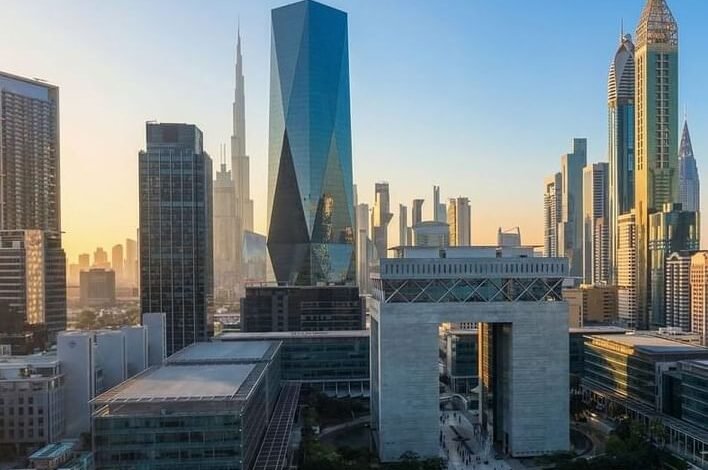
It is within this macroeconomic vacuum that the Dubai International Financial Centre (DIFC) has executed what may be its most profound strategic maneuver to date. Moving far beyond the realm of real estate and tax incentives, the DIFC Authority has announced a staggering, tenfold physical expansion of the DIFC Academy. Slated to transition into a sprawling, 370,000-square-foot campus spread across three purpose-built structures in the new Zabeel District, the Academy is being engineered to train and deploy 50,000 specialized learners annually by the year 2030.
This is not a mere educational upgrade; it is the construction of an industrial-scale talent supply chain, designed to fundamentally alter the geopolitical balance of financial innovation.
The Structural Failure of the Western Talent Pipeline
To understand the genius of the DIFC’s strategy, one must dissect the crisis paralyzing its Western competitors. The global tech talent shortage in finance is not an accident; it is the result of a profound structural misalignment.
First, the traditional academic institutions that have long fed Wall Street and the Square Mile are struggling to modernize their curricula at the speed of software. Academic accreditation is a slow, bureaucratic process. By the time a four-year university finalizes a syllabus on decentralized finance (DeFi) or generative AI compliance, the underlying technology has already iterated three times over.
Second, the financial sector is no longer the undisputed apex predator for top-tier mathematical and computer science minds. The brightest engineers in the world are increasingly siphoned off by the trillion-dollar technology monopolies of Silicon Valley, drawn by equity packages and the intellectual prestige of building foundational AI models. Banks are left fighting for the remaining fraction of a shrinking talent pool, driving up compensation to unsustainable levels and artificially inflating the cost of digital transformation.
Finally, political friction has severely compromised the mobility of the global workforce. As legacy financial capitals grapple with populism and increasingly hostile immigration policies, the frictionless movement of elite technologists has ground to a halt. A brilliant machine-learning engineer from Lagos, Bangalore, or Jakarta often faces insurmountable visa hurdles when attempting to relocate to London or New York.
The DIFC Academy’s expansion is specifically designed to exploit these exact vulnerabilities. By anchoring an elite, agile educational infrastructure directly inside the world’s most progressive financial free zone, Dubai is effectively bypassing the legacy bottlenecks of Western talent production.
Internalizing the Supply Chain: The Sovereign Ecosystem
For two decades, the DIFC Academy has operated as a highly effective, yet relatively quiet, intellectual engine, producing over 51,620 alumni and bridging the gap between theoretical finance and practical application. But the mandate of the Dubai Economic Agenda (D33) which aims to double the emirate’s economy and position it as the undisputed global capital of the new digital economy requires a vastly different scale of operation.
Scaling to a 370,000-square-foot footprint in the Zabeel District transforms the Academy from a supplementary training center into a core pillar of sovereign infrastructure. It is the human equivalent of building a massive domestic semiconductor foundry. By possessing the capacity to train 50,000 individuals annually, Dubai is internalizing the production of its most critical resource.
The strategic brilliance lies in the symbiotic loop created between the Academy and the broader DIFC ecosystem. As reported during the summit, the DIFC onboarded a record-shattering 2,200 new active companies in the first nine months of 2026 alone-with nearly 500 of those originating directly from the AI and deep-tech sectors. This historic influx of corporate entities represents massive, immediate demand for specialized labor.
In a traditional financial center, these newly minted startups and relocating global enterprises would immediately face a brutal hiring bottleneck, cannibalizing each other’s staff and stalling their growth trajectories. In Dubai, the DIFC Academy functions as a captive, highly calibrated talent reservoir. The curriculum is not dictated by insulated academics; it is co-authored in real-time by the very institutions, regulators, and venture capitalists operating in the surrounding towers. If a consortium of newly registered fintechs requires 500 engineers proficient in the Central Bank of the UAE’s Open Finance API protocols, the Academy can pivot its instructional modules to generate that precise capability. It is a closed-loop system of bespoke human capital generation.
Bridging the Regulatory and Technological Divide
Perhaps the most potent competitive advantage of the expanded DIFC Academy is its unique positioning at the intersection of technological innovation and regulatory compliance. The next frontier of finance is defined by the tension between these two forces. How does an institution deploy agentic artificial intelligence, systems that execute autonomous trades or approve credit in milliseconds, while remaining compliant with stringent anti-money laundering (AML) and capital adequacy frameworks?
Traditional computer science programs teach engineers how to build powerful software. Traditional law schools teach compliance officers how to interpret financial regulations. Rarely do the two disciplines meaningfully intersect before individuals enter the corporate workforce, resulting in the notorious friction between a bank’s innovation lab and its compliance department.
The DIFC Academy dismantles this siloed approach. Because it operates within a jurisdiction governed by the Dubai Financial Services Authority (DFSA) and English common law, the Academy possesses the unique ability to intertwine deep-tech engineering with advanced regulatory theory. Learners are not just taught how to train a large language model; they are taught how to architect that model to inherently satisfy the cryptographic reporting requirements of a sovereign regulator. This produces a rare breed of “bilingual” professionals, technologists who speak the language of financial governance, and compliance officers who understand the underlying architecture of the blockchain.
For the 2,200 new companies that just set up operations in the DIFC, access to this hybridized talent pool is an unparalleled commercial advantage. It dramatically reduces the time-to-market for new financial products, as the engineers building the systems already possess a native understanding of the legal guardrails.
The Human Moat
As the global economy transitions deeper into the AI-native era, the traditional incentives used to attract foreign direct investment—zero-tax regimes, luxury infrastructure, and geographic connectivity are shifting from unique selling propositions to baseline prerequisites. To truly dominate the next century of international commerce, a jurisdiction must offer something that cannot be easily replicated by a competing sovereign state.
That definitive advantage is a high-density, perpetually self-renewing ecosystem of genius. Capital will always flow to the path of least resistance, but it will permanently anchor itself where the talent resides.
The DIFC Academy’s tenfold expansion is the ultimate manifestation of this reality. By committing to the physical and institutional infrastructure necessary to train 50,000 advanced practitioners every year, Dubai is engineering a sovereign “human moat.” It is ensuring that when a global financial powerhouse or a unicorn fintech evaluates where to establish its global headquarters in 2030, the decision will not be based solely on the absence of corporate tax. The decision will be dictated by the absolute certainty that in Dubai, and only in Dubai, they will find the hyper-specialized, regulatory-fluent engineering talent required to build the future of their enterprise.
The battle for the future of global finance is currently being waged. But as the architecture of the Zabeel District rises, it is becoming abundantly clear that this war will not be won on the trading floors of Wall Street. It will be won in the classrooms of the DIFC.