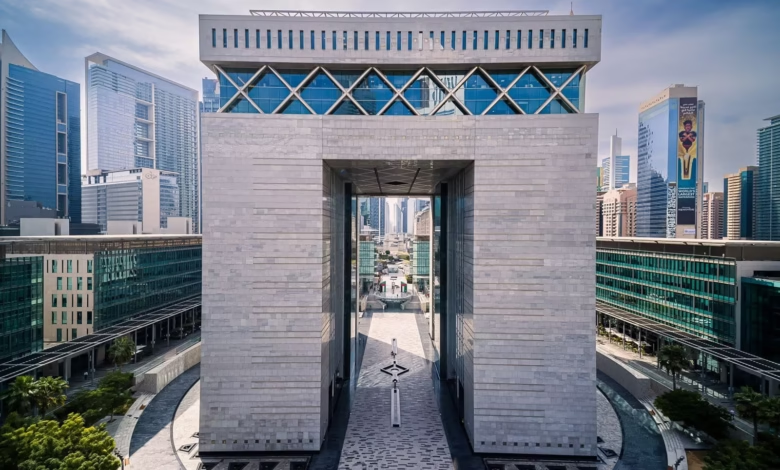
Momentum at Scale: DIFC Smashes Records with 2,200 New Companies Ahead of D33 Deadlines

DUBAI – For the better part of two centuries, the gravitational center of global finance was dictated by a handful of established capitals in the West. Cities like London and New York did not merely host the world’s banking institutions; they authored the fundamental rules of international commerce. Their dominance was assumed to be an immutable law of economics, insulated by deep liquidity pools, centuries of legal precedent, and a monopoly on top-tier human capital. Yet, as the global financial elite departed the Madinat Jumeirah following the conclusion of the Dubai FinTech Summit this week, a palpable realization settled over the delegates. The geopolitical and economic inertia that long protected those legacy financial centers is fracturing, and the momentum of international capital has decisively shifted eastward.
The evidence of this migration is no longer anecdotal; it is strictly quantifiable, and it is moving at an astonishing velocity. Addressing a packed auditorium of global chief executives, sovereign wealth managers, and venture capitalists on the summit’s opening day, His Excellency Essa Kazim, Governor of the Dubai International Financial Centre (DIFC), presented a statistical reality that underscores a historic realignment of corporate geography. During the first nine months of 2026 alone, the DIFC registered more than 2,200 new active companies.This figure represents an all-time high for the financial free zone over a three-quarter period, translating to a staggering 26 percent increase compared to the exact same window in 2025.
To properly contextualize the sheer scale of this influx, one must look at the historical baseline. Throughout the entirety of 2025, the DIFC added a total of 2,525 new active companies, which was itself considered a record-breaking achievement by industry standards.Simple arithmetic reveals that by the close of September 2026, the hub had already achieved 87 percent of its total corporate acquisitions for the previous year. This is not the organic, incremental growth typical of mature financial districts; it is the aggressive, exponential scaling of a jurisdiction that has successfully engineered a regulatory and commercial vacuum, pulling in enterprises seeking refuge from the bureaucratic gridlock of older markets. Earlier in the year, the center crossed a historic psychological threshold, surpassing 10,000 active registered companies for the first time in its two-decade history.
However, the true macroeconomic significance of the DIFC’s expansion lies not in the aggregate volume of these registrations, but in their precise sectoral composition. The capital flowing into the emirate is highly targeted, heavily weighted toward the deep-tech and artificial intelligence sectors that will undoubtedly dictate the next epoch of the global economy. Over the past twelve months, the DIFC’s dedicated AI, fintech, and innovation ecosystem expanded by nearly 500 net new firms.By the midpoint of 2026, this specific technological cohort had grown by 39 percent year-on-year, cementing Dubai’s ambition to transition into a fundamentally AI-native financial center capable of generating tens of thousands of specialized tech jobs.
Simultaneously, the jurisdiction is successfully capturing a massive migration of generational wealth. As global tax regimes grow increasingly punitive and geopolitical instability threatens traditional safe havens in Europe, ultra-high-net-worth individuals and influential family offices are rapidly restructuring their global footprints. During the first half of 2026, family business-related entities operating within the DIFC surged by 36 percent, while specialized wealth management foundations spiked by an unprecedented 67 percent. This dual influx, cutting-edge technological innovators arriving alongside vast pools of private, generational capital creates a potent, self-sustaining financial ecosystem. The early-stage startups have direct geographic proximity to liquid capital, and the family offices have front-row access to high-yield venture opportunities, all safely contained within a zero-tax, English common law jurisdiction.
This coordinated corporate immigration is a central pillar of the Dubai Economic Agenda (D33), an ambitious, state-mandated blueprint designed to double the overall size of the emirate’s economy by 2033. But such aggressive expansion inevitably places an enormous strain on physical infrastructure. Unlike software applications, a sovereign financial district cannot be scaled entirely in the cloud; it requires premium commercial real estate, high-security data infrastructure, and physical connectivity. Anticipating this architectural bottleneck, the DIFC Authority has aggressively accelerated its infrastructural master plan.
The recent launch of the Zabeel District expansion marks a critical evolution in the center’s physical footprint. Demand for Grade-A commercial space has reached such a fever pitch that new developments are being absorbed by the market before the concrete has even cured. DIFC Square, a massive new development encompassing 600,000 square feet of premium commercial space, achieved a 100 percent pre-lease rate well ahead of its final completion. This relentless absorption of real estate is a powerful leading indicator of long-term corporate commitment. Global enterprises do not sign multi-year leases for hundreds of thousands of square feet in a new district if they are merely testing the waters; they do so only when they are establishing permanent, strategic regional headquarters.
Yet, as His Excellency Arif Amiri, Chief Executive Officer of the DIFC Authority, has frequently recognized, concrete, glass, and steel are ultimately commodities. The true structural chokepoint for any modern financial hub is its access to specialized, elite human capital. The next generation of quantitative finance, algorithmic risk modeling, and cryptographic compliance requires a workforce that is perpetually upskilling at the speed of software. Recognizing this critical vulnerability, the DIFC utilized the momentum of the summit to outline an initiative of profound structural importance: the massive, tenfold expansion of the DIFC Academy.
For two decades, the Academy has served as the quiet intellectual engine of the free zone, successfully producing over 51,620 graduates and bridging the crucial gap between academic theory and rigorous financial practice. However, the new D33 mandate requires a fundamentally different scale of operation. The Academy is slated to transition from its current three-floor footprint into a sprawling, 370,000-square-foot campus comprising three dedicated buildings within the newly developed Zabeel District.Programmed to come fully online to support the coming decade of exponential growth, this educational leviathan will possess the capacity to train more than 50,000 learners annually by the year 2030. By internalizing the production of top-tier technological and financial talent, Dubai is actively insulating itself against the severe global skills shortage that currently plagues Western banking institutions.
The international financial community has not been blind to these structural maneuvers. If the internal performance metrics provided by the DIFC represent the jurisdiction’s self-assessment, the ultimate validation of this strategy arrived just weeks before the summit via the latest edition of the Global Financial Centres Index (GFCI 40), published in September 2026. The closely watched index, which serves as the definitive barometer of competitiveness and influence among international financial jurisdictions, delivered a landmark verdict: industry professionals ranked Dubai first in the world for FinTech.
This is a seismic achievement in the world of global finance. To successfully claim the absolute number one global ranking in financial technology requires superseding deeply entrenched giants like New York, London, Singapore, and the venture capital hubs of Silicon Valley. It is an irrefutable acknowledgment that Dubai has definitively transcended its historical reputation as a regional conduit for oil wealth, successfully engineering the most progressive, frictionless, and secure regulatory sandbox on the planet. In the overall global rankings, Dubai further solidified its position in the elite upper echelon, placing ninth worldwide across all financial metrics. This external validation serves as a powerful psychological catalyst for further institutional investment, permanently transforming the emirate from an “emerging market option” into a mandatory, structural allocation for the world’s largest portfolios.
As the 2026 Dubai FinTech Summit concluded and the exhibition halls emptied, the overarching narrative was unmistakable. The world is currently witnessing a rare, generational transfer of economic gravity. While legacy financial capitals in Europe and North America remain increasingly bogged down by regulatory fragmentation, domestic political friction, and aging infrastructure, the Dubai International Financial Centre is operating with the ruthless efficiency and scale of a hyper-growth technology firm. With 2,200 new companies seamlessly integrated in just nine months, a sprawling physical expansion that is selling out before it is built, and a massive talent academy preparing to train the workforce of tomorrow, Dubai is no longer just participating in the future of global finance. It is actively designing the blueprint.