IMEC vs Belt and Road: The New Era of Swing State Trade

As the United States and Europe aggressively erect tariff walls against Chinese overcapacity, a massive realignment of global trade routes is empowering a new bloc of non-aligned nations across the Middle East and Africa.
The era of laissez-faire globalization, defined by the relentless pursuit of the lowest possible manufacturing costs across frictionless borders, has been decisively buried. By the final quarter of 2026, the global macroeconomic architecture has fundamentally fractured into competing, heavily fortified blocs. The United States and the European Union have aggressively erected unprecedented tariff walls, specifically targeting Chinese overcapacity in electric vehicles, solar infrastructure, and legacy semiconductors. This is no longer merely a trade dispute; it is a profound structural rewiring of the global economy where national security has officially eclipsed market efficiency. Yet, amid this superpower decoupling, the true victors are not located in Washington or Beijing. The ultimate beneficiaries of this fractured world order are the geopolitical “swing states” of the Middle East and Africa.
For decades, the strategic value of the Global South was largely viewed through a binary, extractive lens: nations were either staunch allies of the West, or they were absorbed into the gravitational pull of the East, primarily serving as exporters of raw hydrocarbons and unrefined minerals. The trade wars of 2026 have shattered that paradigm. Nations such as the United Arab Emirates, Saudi Arabia, Morocco, and South Africa have recognized the immense leverage generated by the US-China bipolarity. Rather than picking a definitive side in this new Cold War, these nations are actively exploiting the friction, leveraging their geographic positioning and capital surpluses to dictate the terms of global supply chains.
The foundation of this new economic nationalism rests on the aggressive renegotiation of transit corridors and manufacturing hubs. As Western capitals seek to “de-risk” and “friend-shore” their supply chains away from Chinese dominance, and as Beijing simultaneously scrambles to bypass Western tariffs by setting up intermediary manufacturing bases, the swing states are perfectly positioned to act as the world’s indispensable tollbooths and assembly lines. They are no longer accepting the historical role of mere transit points or raw material quarries; they are demanding, and receiving, sovereign technology transfers, localized industrial bases, and joint-venture equity.
The Battle of the Mega-Corridors
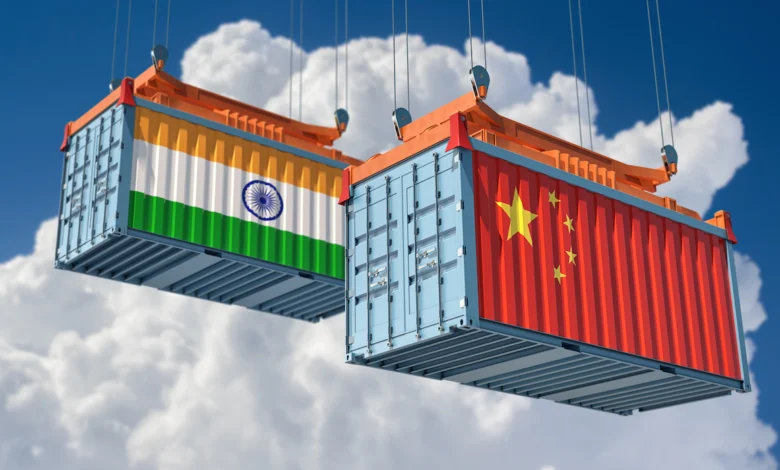
The physical manifestation of this geopolitical maneuvering is playing out across continental mega-infrastructure projects, most notably the clash between the India-Middle East-Europe Economic Corridor (IMEC) and China’s rapidly adapting Belt and Road Initiative (BRI).
Announced with immense fanfare as a strategic counterweight to Beijing, IMEC is one of the most ambitious logistical undertakings of the 21st century. The corridor is designed to seamlessly link the industrial capacity of India to the consumer markets of Europe via a multimodal network of shipping lanes and rail lines slicing directly through the United Arab Emirates, Saudi Arabia, Jordan, and Israel. However, IMEC is much more than a transit route for consumer goods; it is a comprehensive geopolitical umbilical cord. The blueprints include the laying of massive undersea digital data cables and transnational pipelines designed to export Middle Eastern green hydrogen directly to European industrial centers, effectively bypassing the maritime vulnerabilities of the Red Sea and the Suez Canal.
For the United States and Europe, IMEC is an existential necessity to prevent China from monopolizing the infrastructure of the Eastern Hemisphere. For India, it is the logistical key to realizing its ambition as the world’s alternative manufacturing floor. But for the Middle Eastern swing states hosting the corridor, IMEC is an instrument of sovereign leverage. Saudi Arabia and the UAE are utilizing the corridor to accelerate their own post-oil diversification agendas, demanding that Western and Indian firms build local logistics hubs, data centers, and advanced manufacturing facilities along the rail routes in exchange for their participation and sovereign wealth financing.
Simultaneously, China has not remained static. Facing a hostile regulatory environment in the West and the strategic threat of IMEC, Beijing has fundamentally adapted its Belt and Road Initiative. The era of the “massive infrastructure debt-trap”—where China financed sprawling, economically dubious ports and highways in developing nations—has been replaced by a highly targeted, venture-driven strategy.
Beijing’s new approach to the BRI is defined by establishing localized manufacturing within the borders of geopolitical swing states. As the European Union imposes crushing tariffs on electric vehicles manufactured in mainland China, Chinese automotive giants are pouring billions of dollars into nations like Morocco and Egypt to build massive, state-of-the-art EV gigafactories. Because these North African nations hold free-trade agreements with Europe and the United States, Chinese companies can assemble their vehicles locally, label them as Moroccan or Egyptian exports, and legally bypass Western tariff walls. In return, these African swing states secure thousands of high-tech jobs, deep domestic industrial capacity, and the coveted technology transfers that Western nations historically guarded with intense protectionism.
The Sovereign Tech Transfer
This dynamic extends far beyond the automotive and logistics sectors; it is actively reshaping the global architecture of critical minerals and advanced technology. The African continent contains the world’s most vital reserves of cobalt, lithium, copper, and rare earth elements—the indispensable building blocks of the global energy transition and advanced military hardware. Historically, these raw materials were extracted by foreign multinationals and shipped to Asia or the West for refining and battery cell manufacturing, leaving the African nations with minimal economic value.
The era of raw extraction is ending. African swing states, increasingly backed by Gulf sovereign wealth, are utilizing the desperation of the superpower tech war to force industrial localization. Nations possessing critical minerals are implementing strict export bans on unrefined ores, demanding that Chinese and Western tech conglomerates build multibillion-dollar refining facilities and battery manufacturing plants directly at the source. If an American tech giant or a Chinese battery manufacturer wants access to the lithium necessary to power their next generation of hardware, they must now agree to build out the domestic industrial capacity of the host nation.
The Middle East is executing a similar strategy in the realm of artificial intelligence and advanced computing. The Gulf states have amassed unparalleled capital surpluses, but they recognize that long-term economic survival depends on controlling domestic AI infrastructure rather than renting compute from American or Chinese servers. As Washington tightly restricts the export of advanced legacy semiconductors and AI chips to prevent them from reaching Beijing, nations like the UAE and Saudi Arabia are walking a masterful diplomatic tightrope. They are negotiating deep strategic partnerships with American tech firms, guaranteeing data security and alignment with US export controls, in order to secure massive shipments of the world’s most advanced processors.
Simultaneously, they maintain robust, multi-billion-dollar trade relationships with China, utilizing Chinese telecom and logistics software to optimize their ports and smart cities. By successfully playing the middle, the Gulf states are building the most advanced, sovereign data centers in the world, ensuring that the computational power required to run the future of global finance, trade, and energy forecasting remains firmly under their sovereign control.
The Architecture of the Next Half-Century
The macroeconomic implications of this geopolitical realignment are staggering. Global institutional investors, long accustomed to deploying capital based on the frictionless models of the World Trade Organization, are being forced to drastically rewrite their risk models. Supply chain resilience has officially replaced cost-efficiency as the ultimate fiduciary mandate. Capital is flooding away from heavily sanctioned chokepoints and pouring directly into the infrastructure of the swing states.
The non-aligned nations of the Middle East and Africa have recognized that in a fragmented world, neutrality is highly lucrative. By refusing to be absorbed into a singular superpower bloc, they have transformed themselves into the indispensable bridge connecting a divided global economy. They are utilizing the panic of Western capitals and the strategic pivoting of Beijing to finance their own sovereign industrial revolutions.
As the mega-corridors of IMEC and the adapted Belt and Road slowly materialize across the deserts and coastlines of the Global South, they are laying the physical tracks for a new economic order. It is an order where power is no longer exclusively projected from Washington or Beijing, but is actively negotiated, tolled, and leveraged by the newly empowered swing states standing squarely in the middle of the fracture.