Aliko Dangote and the Mega-Refinery Powering an African Industrial Revolution

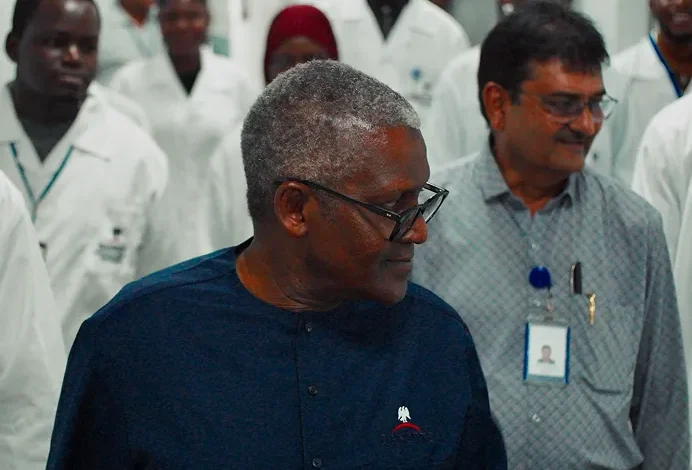
For decades, the narrative surrounding the African economy was one of immense potential consistently undermined by structural paradoxes. The continent extracted raw materials, shipped them abroad, and bought back finished goods at a staggering premium. It was a cycle of dependency that trapped developing nations in a perpetual state of economic vulnerability. But on a sprawling stretch of reclaimed swamp land east of Lagos, a sprawling industrial complex has emerged that fundamentally shatters this paradigm. It is the crowning achievement of Aliko Dangote, the Nigerian billionaire who has spent a lifetime rewriting the rules of African industrial growth.
By the autumn of 2026, Dangote’s vision had achieved its most profound vindication. As global energy markets reeled from geopolitical shocks in the Middle East, the 650,000-barrel-per-day Dangote Petroleum Refinery was not only meeting domestic fuel demand but was actively exporting refined petroleum across the Atlantic and throughout the African continent. In doing so, Dangote transformed Africa’s most populous nation from a vulnerable consumer to a strategic supplier, altering the macroeconomic calculus of the entire region. The legacy of Aliko Dangote is no longer just about personal wealth—though his fortune remains unparalleled—but about the audacious, unyielding push to industrialize a continent from within.
The scale of Dangote’s ambition was fully institutionalized on September 14, 2026, when Dangote Petroleum Refinery and Petrochemicals opened its initial public offering (IPO) on the Nigerian Exchange (NGX). The offering, which targeted the raising of billions of naira by making 4.1 billion ordinary shares available to the public, was a historic event. Valuing the colossal facility at approximately $40 billion, the IPO gave domestic and diaspora investors a direct stake in a project that has redefined the nation’s industrial capacity. Financial disclosures accompanying the public offering revealed the sheer, immediate profitability of the endeavor: in the first half of 2026 alone, the refinery reported an after-tax profit of $1.82 billion.
This financial triumph is the result of reversing Nigeria’s deepest, most infuriating economic contradiction. Despite holding some of the world’s largest reserves of crude oil, Nigeria had historically relied almost entirely on foreign refineries to fuel its economy, bleeding foreign exchange in the process. Early in 2025, the country was still spending trillions of naira importing petrol. Yet, the rapid ramp-up of the Dangote facility engineered a dramatic turnaround. By the second quarter of 2026, domestically refined petrol had become Nigeria’s seventh-largest export, generating ₦546.02 billion—equivalent to over two percent of the nation’s total exports. This is not merely an incremental improvement; it is a structural revolution in West African trade dynamics.
The timing of this transformation could not have been more critical. As international shipping lanes faced unprecedented disruptions—most notably the prolonged closure of the Strait of Hormuz due to the escalating conflict between the United States and Iran—global fuel flows were choked. Analysts noted that Dangote’s refinery was perfectly positioned to fill the void, giving the facility a distinct advantage in supplying African nations by drastically reducing freight distances and logistics costs. By decentralizing the world’s reliance on Middle Eastern refining, Dangote provided the African continent with a vital economic shock absorber at a moment of acute global crisis.
This monumental success has propelled Dangote’s personal wealth into the stratosphere, solidifying his undisputed rank as Africa’s richest individual. Estimates of his net worth in late 2026 place him in an elite global echelon; the Bloomberg Billionaires Index assessed his fortune at an estimated $35.5 billion in late September, while Forbes’ real-time tracker suggested an astronomical valuation of $51.7 billion linked heavily to the refinery’s surging equity value.
What makes this surge in wealth particularly remarkable is the turbulent macroeconomic environment in which it was achieved. Over the past few years, the Nigerian naira has experienced severe devaluations, fundamentally destabilizing the balance sheets of countless domestic enterprises. Indeed, in previous years, currency fluctuations had routinely shaved billions off Dangote’s net worth. Yet, the completion of the refinery insulated his empire. By exporting significant quantities of refined fuel, Dangote created a massive, dollar-denominated revenue stream that effectively hedged against local currency volatility. While other billionaires on the continent saw their wealth moderate due to weakened local markets, Dangote’s fortune surged forward with unrelenting momentum.
While the refinery dominates contemporary headlines, the blueprint for this success was drafted decades earlier. The foundation of the Dangote Group was built upon a fierce commitment to a strategy known as “backward integration.” Starting out as a trader importing commodities like sugar, flour, and cement, Dangote recognized early on that mere trading offered no long-term security. True power lay in controlling the means of production. In the late 1990s and early 2000s, he made the critical pivot from importation to large-scale domestic manufacturing.
Nowhere was this strategy more effective than in the cement industry. Dangote Cement, the bedrock of his empire, aggressively expanded its manufacturing capacity across Nigeria and eventually across the continent, crushing reliance on imported building materials. The strategy required navigating punishing bureaucratic hurdles, building proprietary power plants to bypass an unreliable national grid, and constructing thousands of miles of roads to transport goods. The payoff has been immense. The cement division doubled its profits in 2025, hitting a record one trillion naira, while operating facilities in over ten African nations. By proving that high-intensity, capital-heavy manufacturing could be sustained domestically, Dangote laid the psychological and logistical groundwork necessary to eventually tackle the petroleum sector.
Furthermore, Dangote’s industrial empire serves as the physical manifestation of the African Continental Free Trade Area (AfCFTA). While politicians and diplomats have spent years negotiating the legal frameworks required to integrate the economies of 54 disparate African nations, Dangote has been quietly building the infrastructure to actually make it happen. Cross-border trade in Africa has historically been stymied by a lack of regional supply chains and prohibitive tariffs. By producing world-class cement, fertilizer, and now petroleum products on the continent, Dangote has provided the essential raw materials required for African nations to trade with one another rather than looking to Europe or Asia.
His operations bypass the traditional colonial trade routes, which were designed exclusively to siphon resources out of the continent. Instead, a shipment of fertilizer from Dangote’s Lekki plant can now directly boost agricultural yields in neighboring Benin or Ghana, while his refined petrol powers the logistics networks of landlocked nations in the Sahel. This intra-African connectivity is the exact engine of economic growth that regional economists have dreamed of for over half a century.
Looking forward, the legacy of Aliko Dangote extends far beyond the soaring stock prices and the staggering net worth figures. He has forcibly altered the risk perception of the African continent. For years, foreign direct investment in Africa was heavily skewed toward fast-return sectors like telecommunications and financial technology, or the simple extraction of raw minerals. Massive, complex industrial projects were deemed too risky, too vulnerable to political instability, or too technically demanding for the local environment.
Dangote proved the skeptics wrong. He demonstrated that domestic capital, paired with an unyielding tolerance for operational friction, can execute mega-projects that rival anything built in Houston, Rotterdam, or Beijing. He fought through policy reversals, logistical nightmares, and intense global skepticism to construct physical assets that will outlast his lifetime.
Ultimately, the story of Aliko Dangote is the story of an industrialist who refused to accept the boundaries drawn by a historically unequal global economy. He looked at a continent overflowing with potential and decided that it was no longer sufficient to just participate in the global market; Africa had to build the tools to command it. By shifting his nation and his continent from consumption to production, Dangote has laid the most vital cornerstone for Africa’s long-term economic sovereignty. It is a legacy carved in concrete, steel, and refined crude—a permanent testament to the power of African self-determination.