BEYOND THE ATOMIZED HERO IN EMIRATI FEMALE LEADERSHIP

For decades, the dominant international discourse on female empowerment has been bound to a singular, hyper-individualist narrative: the lone disruptor breaking through an adversarial ceiling. In Western corporate and political theory, progress is frequently measured by the atomized hero, the singular woman who succeeds in spite of her surrounding structures, carving out personal agency through pure friction and self-assertion.
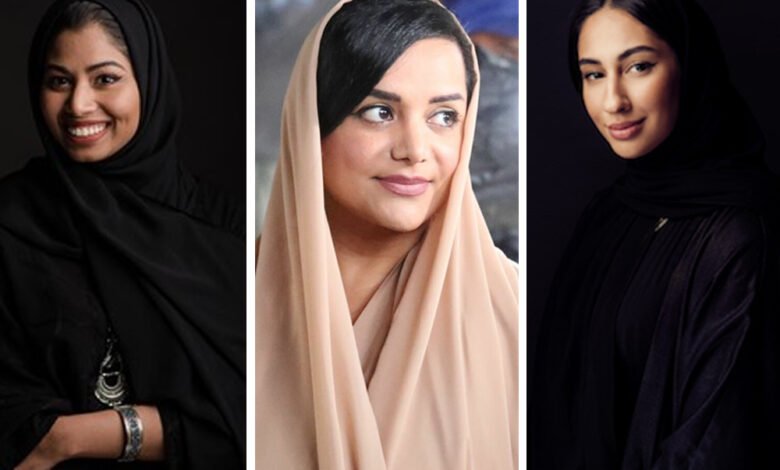
As the United Arab Emirates observes Emirati Women’s Day 2026 under the theme “Together, We Rise Stronger and Better,” a fundamentally different civilizational thesis comes into focus.
The Emirati model offers a deliberate rejection of this atomized ideal. Rather than celebrating isolated achievement won through structural friction, the UAE has constructed an institutional paradigm rooted in post-individualist leadership. Here, female agency is not conceptualized as a personal conquest over an ecosystem, but as the ultimate metric of the ecosystem’s collective health, stability, and long-term design.
The Intellectual Fallacy of the Lone Disruptor
To understand the intellectual depth of the 2026 national theme requires examining the limits of the traditional liberal-individualist framework.
In late-capitalist market economies, female workforce integration evolved largely as a struggle for individual accommodation within structures designed without women in mind. The resulting narrative elevated the “isolated trailblazer”—a model that often forced professionals to choose between institutional ambition and social cohesion, family stability, or cultural continuity. The cost of this model is increasingly visible globally: record rates of professional burnout, social fragmentation, and declining demographic sustainability.
The Emirati paradigm, initiated under the founding vision of Sheikh Zayed bin Sultan Al Nahyan and institutionalized over five decades by Her Highness Sheikha Fatima bint Mubarak (“Mother of the Nation”), bypassed this binary altogether.
By treating women not as isolated economic units seeking market entry, but as foundational pillars of the sovereign state, the UAE built a model where individual capability and collective cohesion are mutually reinforcing vectors.
The Ecosystem Ethos: Three Structural Pillars
The post-individualist framework rests on three intentional structural layers that route individual achievement back into collective capability:
- The Sovereign Policy Anchor: Top-down legislative alignment—such as federal equal pay mandates, mandatory board representation, and strategic placement via the Nafis initiative—ensures that women enter critical industries (deep tech, space exploration, nuclear engineering) not as isolated pioneers, but as critical mass.
- The Institutional Family Buffer: Workplace flexibility, parental leave frameworks, and state-backed childcare infrastructure are engineered to prevent the false choice between high-density executive contribution and family stability.
- The Intergenerational Social Fabric: Professional advancement is explicitly anchored in Arab and Islamic heritage, ensuring that technological progress strengthens, rather than erodes, community identity.
Symbiosis Over Competition: The 2026 Imperative
The 2026 theme: “Together, We Rise Stronger and Better” functions as an explicit critique of the hyper-competitive, zero-sum models of modern workplace dynamics.
When a woman leads a mission at the Mohammed Bin Rashid Space Centre, directs clinical trials in biotechnology, or manages sovereign capital allocation in Abu Dhabi, her leadership is structured as a node within a larger network. Her rise is designed to lift her peers, reinforce her family unit, and expand national capability.
| Strategic Dimension | Hyper-Individualist Model | Post-Individualist Emirati Model |
| Core Philosophy | Personal triumph over adversarial systems | Symbiotic advancement within a structured ecosystem |
| Primary Metric | Individual rank & solo achievements | Collective capability, mentorship & institutional depth |
| Social Cost | High risk of burnout & familial friction | Structural alignment between career & family stability |
| Cultural Stance | Modernization via cultural detachment | Modernization via civilizational synthesis |
A Blueprint for Modern Governance
As global institutions struggle with social atomization, labor fragmentation, and the erosion of community structures, the Emirati experience offers a compelling alternative. It demonstrates that rapid modernization does not require adopting the social friction of the West.
By engineering a system where individual brilliance is nurtured by, and reinvested into, the collective whole, the UAE has built a resilient model of human development. On this Emirati Women’s Day 2026, the message to the international community is clear: the most enduring form of human empowerment is not the rise of the solitary individual, but the elevation of the entire society together.