Emirati Women and the UAE’s Model of Cultural Sovereignty

In the hyper-accelerated momentum of the twenty-first century, nations racing toward frontier technologies often confront a profound civilizational dilemma: the erosion of cultural identity under the flattening pressure of Westernized globalization. For many emerging economies, rapid modernization has historically come at a steep cost—the dilution of indigenous values, the fragmentation of traditional family structures, and the adoption of external socio-cultural frameworks that alienate younger generations from their historical roots.
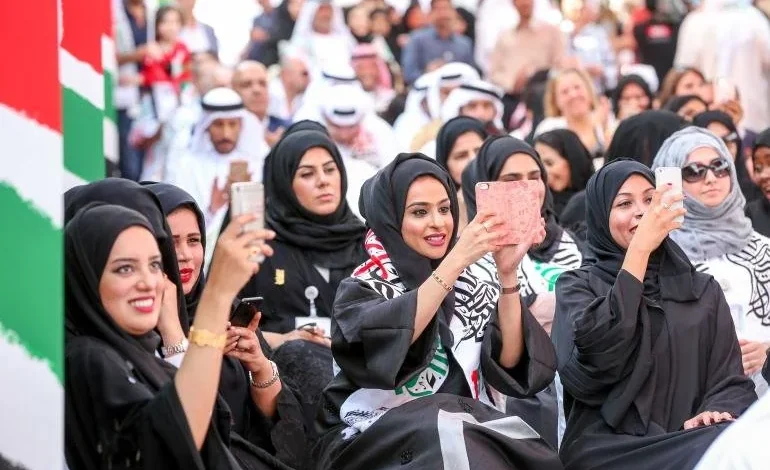
The United Arab Emirates has systematically dismantled this false dichotomy. As the nation celebrates Emirati Women’s Day 2026 under the theme “Together, We Rise Stronger and Better,” announced by Her Highness Sheikha Fatima bint Mubarak—Chairwoman of the General Women’s Union, President of the Supreme Council for Motherhood and Childhood, and Supreme Chairwoman of the Family Development Foundation—a fourth crucial angle of the Emirati model comes into sharp focus.
Beyond corporate boardrooms, sovereign deep-tech labs, and diplomatic corridors, Emirati women serve as the primary custodians of cultural sovereignty, intergenerational knowledge transmission, and national identity.
In the Emirati paradigm, cultural preservation is not treated as a static, passive archive or a nostalgic echo of the past. It is operationalized as a dynamic, sovereign asset—a living shield that grounds society as it navigates artificial intelligence, space commercialization, and rapid urban transformation.
By leading educational reform, linguistic preservation, heritage protection, and community welfare architectures, Emirati women ensure that as the nation leaps into the future, its civilizational compass remains firmly anchored in its Arab and Islamic heritage.
I. The Intellectual Legacy of the Mother of the Nation
To understand the institutional framework that safeguards Emirati identity requires analyzing the pioneering vision of Her Highness Sheikha Fatima bint Mubarak. Long before the UAE emerged as a global financial and technological epicenter, Sheikha Fatima recognized that a nation’s long-term resilience depends entirely on the strength and moral cohesion of its social foundation.
Starting in the early years of the Union alongside the founding father, Sheikh Zayed bin Sultan Al Nahyan, Sheikha Fatima launched targeted literacy campaigns, adult education initiatives, and women’s societies across the Seven Emirates. The strategic intent was foundational: equip women with modern knowledge while embedding them deeply in the values of community responsibility, ethical stewardship, and Islamic principles.
This intellectual blueprint established the Family Development Foundation and the Supreme Council for Motherhood and Childhood, transforming social care into an organized sovereign discipline. Under Her Highness’s guidance, family welfare was framed not as private domestic management, but as a critical domain of national security.
By building institutions that protect the family unit, support working mothers, and foster intergenerational dialogue, Sheikha Fatima created a protective buffer that prevents the social atomization commonly experienced by rapidly developing societies.
II. Strategic Pillars of Cultural and Educational Stewardship
The preservation of national identity in a hyper-connected world requires an active, multi-layered institutional architecture. Emirati women command the critical channels through which values, language, and historical memory are passed to future generations.
1. Educational Leadership and Curriculum Architecture
With women constituting the vast majority of educators, university faculty, and educational policy architects in the UAE, the transmission of knowledge is heavily shaped by female leadership. In primary, secondary, and higher education, female scholars and policymakers design curricula that pair rigorous STEM instruction with deep immersion in UAE history, Islamic ethics, and Arabic literature.
By steering national educational bodies and academic research centers, Emirati women ensure that students mastering robotics, quantum computing, or aerospace engineering do so with a sophisticated understanding of their national heritage and civic duty.
2. Safeguarding the Arabic Language and Intellectual Heritage
In an era where global digital platforms are dominated by English, the preservation of the Arabic language stands as a major priority for cultural sovereignty. Emirati female linguists, authors, and researchers lead state initiatives aimed at modernizing Arabic language pedagogy, digitalizing historical Arabic manuscripts, and producing high-caliber Arabic literature across scientific and humanities disciplines.
Through institutions such as the Abu Dhabi Arabic Language Centre and national publishing initiatives, female scholars are ensuring that Arabic remains a vibrant, evolving language of contemporary science, philosophy, and modern governance.
3. Heritage Preservation, Arts, and Cultural Diplomacy
Emirati women occupy central leadership roles across the nation’s cultural sector, directing major museums, heritage foundations, art biennials, and architectural archives. Entities such as the Dubai Culture and Arts Authority, Sharjah Art Foundation, and national heritage registries are heavily guided by female curators and cultural historians.
These leaders do not merely preserve ancient crafts, maritime history, and Bedouin traditions; they reinterpret them for modern global audiences. By positioning Emirati art and heritage on the international stage, female cultural leaders project an authentic image of Arab identity that commands respect worldwide while fostering deep national pride at home.
4. Community Cohesion and Intergenerational Mentorship
The 2026 theme “Together, We Rise Stronger and Better” places explicit emphasis on the social fabric that sustains individual achievement. Within local communities, Emirati women lead social welfare programs, volunteer networks, and intergenerational mentorship circles that connect youth with elder generations.
These networks ensure that the historical memory, oral traditions, and social ethics of the UAE’s founding generations are actively passed down. In times of rapid global change, this intergenerational continuity provides young Emiratis with psychological grounding, emotional resilience, and a clear sense of purpose.
III. The Modernity-Identity Synthesis: A Blueprint for the Global South
The Emirati model offers a compelling alternative to the Western developmental trajectory, which has historically assumed that modernization requires secularization, individualism, and the abandonment of traditional social structures.
The Emirati experience proves that a nation can achieve global excellence in frontier science, space exploration, and financial infrastructure without sacrificing its cultural soul. An Emirati woman leading a satellite team, managing a sovereign wealth portfolio, or negotiating an international treaty does so while maintaining her Arab-Islamic identity, her connection to her family, and her commitment to her community.
This synthesis provides a vital roadmap for nations across the Global South seeking to modernize without losing their cultural distinctiveness. It demonstrates that true progress is not measured by how closely a society imitates external cultural norms, but by its ability to innovate using its own civilizational strengths.
IV. The Next Fifty Years: Cultural Resilience in the Digital Age
As the UAE advances toward its Centennial 2071 objectives, the battle for cultural sovereignty will increasingly take place in the digital domain. Algorithms, synthetic media, virtual environments, and global streaming platforms present unprecedented challenges to local values and historical narratives.
In this digital frontier, Emirati women are stepping forward as the primary architects of digital cultural defense. Female software developers, content creators, media executives, and AI researchers are actively building localized algorithms, Arabic-first digital platforms, and immersive cultural archives.
By embedding UAE values into the digital infrastructure of tomorrow, they are ensuring that future generations of Emiratis navigate the metaverse and artificial intelligence with an unwavering sense of who they are and where they come from.
On Emirati Women’s Day 2026, the cultural footprint of the nation highlights a profound civilizational truth: the technological and economic achievements of the United Arab Emirates are only as strong as the cultural identity that anchors them—an identity nurtured, defended, and carried forward by Emirati women.