Emirati Women and the UAE’s Post‑Individualist Leadership Paradigm

The dominant Western paradigm of female empowerment has long been built upon an atomized, individualist framework. In this model, personal advancement is frequently framed as a zero-sum struggle against traditional social structures, where professional success requires the compartmentalization, or complete setting aside—of family life, community obligations, and collective identity. Progress is measured almost exclusively through individual autonomy, corporate career progression, and self-actualization detached from communal duty.
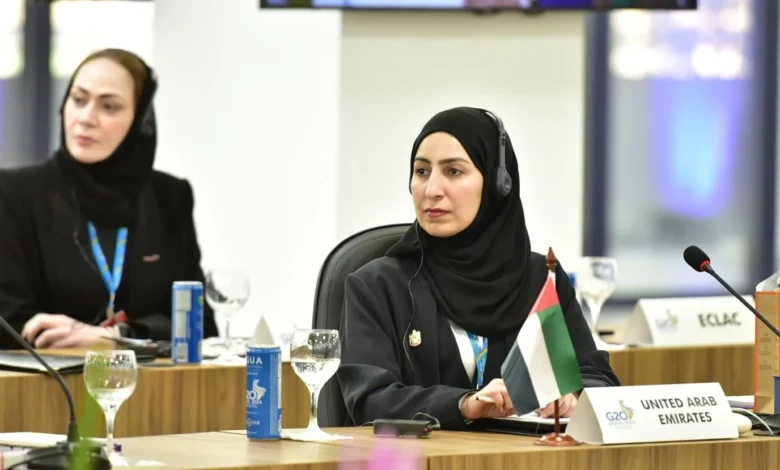
As the United Arab Emirates observes Emirati Women’s Day 2026 under the theme “Together, We Rise Stronger and Better,” announced by Her Highness Sheikha Fatima bint Mubarak, Chairwoman of the General Women’s Union, President of the Supreme Council for Motherhood and Childhood, and Supreme Chairwoman of the Family Development Foundation, a fifth, foundational angle emerges.
The UAE has authored a distinct, post-individualist leadership model. In this framework, female empowerment is not an exercise in social atomization, but a vital driver of civilizational well-being, family cohesion, and collective societal strength.
Emirati female leadership rejects the false choice between professional excellence and familial stewardship. Instead, it positions the family unit as the ultimate sovereign asset of the nation, and women as its primary architects. By aligning career achievement with deep rootedness in family, community, and social duty, the Emirati model provides a sustainable blueprint for societal longevity in an increasingly fragmented world.
The Vision of Sheikha Fatima: Family as a Sovereign Asset
The conceptual foundation of this post-individualist framework traces directly to the pioneering leadership of Her Highness Sheikha Fatima bint Mubarak. Recognizing early in the nation’s formation that economic growth without social stability produces fragile societies, Sheikha Fatima built an institutional ecosystem that protects and elevates the family as the core building block of the state.
Through the creation of the Family Development Foundation, the Supreme Council for Motherhood and Childhood, and national strategic initiatives for family empowerment, Sheikha Fatima operationalized family well-being into a public policy discipline. Rather than viewing caregiving and domestic stewardship as secondary or unpaid background tasks, the Emirati state recognizes them as essential investments in national human capital.
This philosophy embeds a profound truth: a nation’s long-term competitive edge depends on the psychological security, moral integrity, and social health of its children. By championing policies that support parental engagement, early childhood development, and intergenerational care, Sheikha Fatima ensured that as Emirati women rose to the highest echelons of government, science, and industry, the foundational integrity of the home remained uncompromised.
Institutional Architecture of Work-Life Integration and Family Policy
Translating a post-individualist philosophy into daily reality requires concrete legislative, structural, and institutional support. The UAE has systematically built a public policy framework designed to harmonize high-level professional contribution with family life.
1. Progressive Labor Policies and Flexible Work Frameworks
Federal labor regulations and public sector rules across the UAE actively support working mothers through generous maternity leave provisions, flexible working arrangements, remote work options, and state-subsidized workplace childcare facilities. These policies ensure that women do not face a “career cliff” when starting a family, allowing high-performing professionals to maintain their trajectory while fulfilling essential parental roles.
2. National Frameworks for Child Protection and Youth Well-Being
The UAE’s comprehensive child rights legislation, such as Wadeema’s Law, alongside national strategies for childhood and motherhood, creates a secure environment for youth development. Managed and implemented largely by female social policy experts, psychologists, and educators, these frameworks safeguard mental health, physical well-being, and moral education across schools and communities.
3. Elderly Care and Intergenerational Continuity
A key distinction of the Emirati family model is its commitment to extended family structures and elderly care. Rather than outsourcing eldercare to isolated commercial institutions, national policy supports home care, intergenerational living, and community integration. Emirati female leaders champion social initiatives that preserve the dignity of elders, ensuring their wisdom and values remain actively integrated into the daily life of the household.
4. Holistic Community Support Infrastructure
Entities like the Community Development Authority (CDA) and local social support centers provide proactive counseling, pre-marital education, financial literacy workshops, and family mediation services. These institutional safety nets mitigate marital stress, support healthy parenting practices, and reinforce social cohesion before challenges escalate into family disruption.
Reinterpreting Power: Collective Duty Over Hyper-Individualism
The Emirati post-individualist model redefines what it means to lead. In hyper-individualist frameworks, leadership is often associated with personal status, financial accumulation, and personal branding. In the Emirati context, leadership is intrinsically tied to stewardship, duty, and community elevation.
This relational model of leadership creates distinct social and organizational advantages:
- Sustainable Career Trajectories: By normalizing family leaves, extended support networks, and lifecycle flexibility, female leaders avoid burnout and maintain long-term professional engagement across their lives.
- Resilient Social Fabrics: Children raised within strong, extended family networks grow up with heightened emotional stability, clear moral grounding, and a strong sense of civic responsibility, protecting youth from the isolation and mental health crises prevalent in hyper-individualist societies.
- Corporate and Governance Empathy: Female leaders who remain deeply grounded in family and community affairs bring high levels of emotional intelligence, long-term thinking, and relational consensus-building to executive leadership and public policy.
- Preservation of Social Trust: By prioritizing communal harmony over adversarial individualism, society maintains high levels of institutional trust, social safety, and mutual support across generations.
A Global Blueprint for Societal Longevity
As developed nations around the globe confront declining birth rates, rampant loneliness, mental health epidemics, and the breakdown of traditional support systems, the limitations of hyper-individualist social models have become starkly evident. A society that optimizes purely for individual economic output at the expense of family structure risks systemic decline over the long term.
The Emirati model offers the global community a compelling alternative: proof that high-tech modernization, rapid economic growth, and high female labor participation can coexist with strong family units, high fertility rates, and deep social cohesion.
By honoring the home as a site of vital leadership and recognizing the family as a sovereign priority, the UAE demonstrates that true societal progress lifts the collective rather than isolating the individual.
On Emirati Women’s Day 2026, the civilizational footprint of the nation reveals a timeless truth: the ultimate strength of the United Arab Emirates lies in the health of its homes, the unity of its families, and the wisdom of the Emirati women who nurture, protect, and lead them.