Beyond the Monolith: Gulf-Raised Youth and the New Indian Diplomacy

The triumph of Third Culture Kid identity in global arenas reveals a fundamental evolution in how the global south projects identity, soft power, and cultural sovereignty.
The Shift in the Diaspora Narrative
For decades, the dominant cultural narrative surrounding the Indian diaspora was split into two neat, rigid categories. On one side stood the Western NRI experience—a journey often framed around assimilation in North America or Europe, where cultural preservation meant clinging to heritage through weekend language classes or traditional arts festivals. On the other side was the historical Gulf migration story: an economic narrative defined by temporary residency, labor contracts, and financial remittances sent home to Kerala, Telangana, or Punjab.
That binary is now obsolete.
A new generation of youth born and raised in the cosmopolitan centers of the Middle East—Abu Dhabi, Dubai, Riyadh, and Doha—is quietly dismantling those legacy assumptions.They are not transient economic actors, nor are they cultural outsiders struggling to adapt.Instead, they represent a distinct global identity: Third Culture Kids (TCKs) raised at the intersection of traditional South Asian heritage, Arab civic modernization, and hyper-globalized commerce.
This demographic evolution is altering how soft power, cultural diplomacy, and national identity are defined on the global stage.
The Anatomy of the Gulf-Indian Third Culture
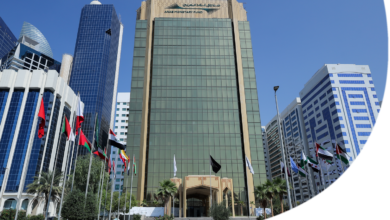
Growing up within the United Arab Emirates or the broader GCC offers an environment fundamentally different from growing up in the West. In cities like Dubai or Abu Dhabi, where expatriates make up over 80 percent of the population, multiculturalism is not an abstract policy goal—it is the operational baseline.
An Indian child raised in the Gulf typically attends international or Indian curriculum schools alongside peers from dozens of nationalities.They grow up fluent in English and Hindi, conversant in regional Indian mother tongues like Malayalam or Tamil, and comfortable with the cultural rhythms of the Arab world.
Crucially, they do not experience the traditional assimilation pressure to “Westernize” in order to succeed.Cultural pride in the Gulf is reinforced rather than suppressed.Classical arts, local language fluency, and traditional festivals coexist naturally alongside modern digital literacy, international legal studies, and global sports or pageantry.
This dynamic creates an unusual psychological advantage: unconditional cultural belonging.When a youth raised in Abu Dhabi or Dubai steps onto an international stage—whether a UN diplomatic floor, a tech accelerator pitch in London, or a global cultural pageant—they do not carry the defensive need to prove their “Indian-ness” or overcompensate for their global background.They view global spaces as their natural home.
Redefining Soft Power Beyond Traditional Hubs
For half a century, India’s official cultural identity was projected through traditional geographic hubs: the cinematic machine of Mumbai, the political corridors of New Delhi, or the academic institutions of Bengaluru.
Yet as trade corridors and diplomatic ties between India and the Middle East deepen, the Gulf has evolved into a strategic incubator for global Indian leadership.
The success of Gulf-raised Indian youth in global arenas underscores a broader institutional reality: cultural diplomacy is no longer centralized.
- Cross-Cultural Fluency as a Strategic Tool:Growing up in a global trade hub provides youth with a natural ability to navigate complex, multi-jurisdictional environments.They are as comfortable articulating legal advocacy before an international jury as they are performing classical dance or managing digital enterprises.
- The Bridge Between East and West: Raised at the crossroads of Asia, Africa, and Europe, Gulf-raised youth possess a perspective that moves beyond Western-centric worldviews. They understand the nuances of the Global South, enabling them to communicate across emerging markets with ease.
- Decoupling Identity from Geography:This generation demonstrates that “home” is not tied to a single geographic location or passport stamp.It is an internal anchor—a set of values, disciplines, and convictions carried wherever they operate.
The New Standard for Global Representation
As nations re-evaluate how they project identity in an interconnected world, the rise of the Gulf-raised youth offers a clear model.
They prove that true representation does not require choosing between local heritage and global ambition.By integrating the rigorous discipline of classical traditions with the cosmopolitan perspective of modern trade capitals, this generation is expanding what it means to be a global representative.
The narrative has shifted. The Gulf is no longer merely a place where workers travel to build futures back home.It has become an intellectual and cultural engine—producing a generation of confident, articulate, and audacious leaders ready to step onto the world stage and declare, without hesitation, that they belong.