
The economics of solar photovoltaics (PV) have undergone a radical shift across the Middle East. Driven by long-term sovereign mandates, expansive desert land, and unmatched solar irradiance, the region routinely generates world-record Power Purchase Agreements (PPAs) with tariffs dropping below $0.015 per kilowatt-hour.
However, translating low Levelized Cost of Electricity (LCOE) figures from paper to real-world performance requires solving a brutal engineering reality.
As utility-scale projects scale from megawatt installations to multi-gigawatt single-site complexes, operating in hyper-arid environments exposes solar assets to extreme environmental stress. Ambient temperatures exceeding 50°C, high ambient humidity along coastal regions, abrasive sandstorms, and heavy dust accumulation create severe operational challenges.
At the Intersolar Middle East Conference 2026, the discussion has moved beyond raw generation targets. The central focus is now asset resilience: how advanced cell architectures, specialized balance-of-system (BOS) engineering, and commercial framework innovations ensure that high-efficiency PV arrays maintain design capacity across a 30-year operational lifecycle.
HARSH-ENVIRONMENT ENGINEERING AND O&M SOLUTIONS
Deploying solar arrays in desert environments introduces twin performance threats: soiling loss and thermal degradation. If unmitigated, dust accumulation can reduce module power yield by over 30 percent within weeks, while excessive heat accelerates structural material breakdown.
Modern Operations and Maintenance (O&M) strategies rely on specialized engineering solutions tailored for desert conditions:
- Autonomous Dry-Cleaning Systems: Water scarcity makes traditional manual washing unsustainable. Desert utility sites now deploy autonomous, track-mounted robotic cleaning fleets that clear dust nightly. These systems operate without water, using specialized microfiber brushes and electrostatic discharge techniques to remove micro-particulates without scratching module surfaces.
- Specialized Surface Coatings: Next-generation module glass incorporates anti-reflective, hydrophobic, and anti-soiling coatings. These chemical layers minimize sand adhesion and reduce the frequency of mechanical cleaning cycles, protecting physical glass integrity against sandstorm abrasion.
- Thermal Dissipation and Tracker Durability: High operating cell temperatures lower voltage output and accelerate module aging. Developers utilize backsheets engineered for high thermal emissivity and specialized inverter cooling channels. Additionally, single-axis trackers are built with reinforced mechanical gearboxes, high-torque motors, and automated stow algorithms that lock panels into protective angles during severe wind events.
NEXT-GENERATION SOLAR PV CELL ARCHITECTURES
To maximize energy production per square meter, the Middle East solar sector is rapidly phasing out legacy P-type Passivated Emitter and Rear Cell (PERC) modules in favor of high-efficiency N-type silicon architectures.
- TOPCon (Tunnel Oxide Passivated Contact): TOPCon technology has become the commercial standard for new regional utility installations, offering production efficiencies around 24.5% alongside high bifaciality (80-85%). By adding an ultra-thin tunnel oxide layer, TOPCon modules lower recombination losses, achieve higher cell efficiencies, and provide a lower temperature coefficient than PERC panels—meaning they lose less power output as temperatures rise.
- HJT (Heterojunction Technology): Combining crystalline silicon with thin-film amorphous silicon layers, HJT modules deliver production efficiencies exceeding 25.0% and superior bifaciality factors above 85-90%. Their minimal thermal degradation profile makes them exceptionally well-suited for high-ambient-heat regions.
- Perovskite-Silicon Tandem Cells: Looking toward the future, research institutions like King Abdullah University of Science and Technology (KAUST) and Dubai’s Technology Innovation Institute (TII) are advancing commercial Perovskite-silicon tandem cells. By layering a perovskite top cell (tuned to absorb blue light spectrums) over a silicon bottom cell (absorbing red spectrums), tandem modules breach the theoretical physical efficiency limit of silicon, targeting commercial module efficiencies above 30 percent.
- Bifacial Modules and Desert Albedo: Deploying bifacial panels allows modules to absorb direct sunlight on the front side while capturing reflected light (albedo) from bright desert sands on the rear side. Optimizing ground clearance height and axis row spacing routinely adds a 10 to 15 percent energy yield boost without increasing the physical footprint.
THE RISE OF COMMERCIAL & INDUSTRIAL (C&I) DISTRIBUTED SOLAR
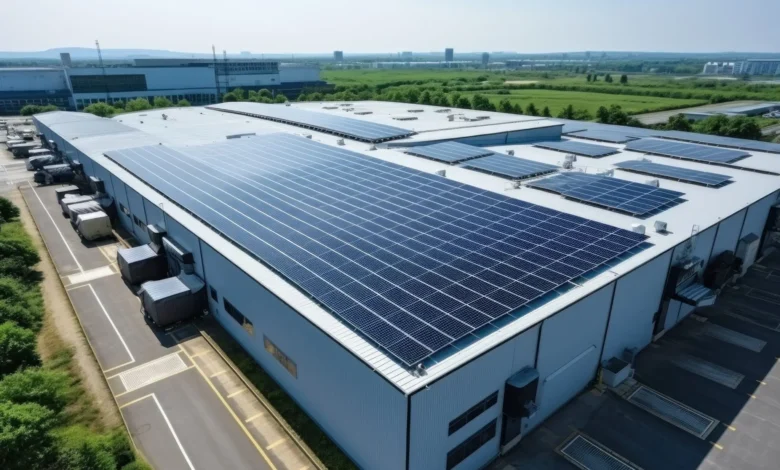
While gigawatt-scale utility plants dominate international headlines, a secondary solar revolution is taking place across commercial and industrial (C&I) sectors. Logistics parks, manufacturing facilities, desalination plants, and corporate campuses across the GCC are deploying rooftop and ground-mounted distributed solar arrays to manage operational energy costs.
This expansion is driven by evolving regulatory and commercial structures:
- Corporate Power Purchase Agreements (PPAs): Off-grid and grid-tied corporate buyers are entering multi-year PPA contracts with solar developers. Under these agreements, developers finance, construct, and maintain solar installations on corporate property, selling power back to the facility owner at guaranteed rates below utility tariffs.
- Grid Connection and Net Metering Frameworks: Regulatory bodies across the region are refining distributed generation policies. Clear self-consumption guidelines and net-metering regulations allow industrial plants to feed surplus daytime solar power back into the municipal grid, creating predictable financial returns for asset owners.
- Energy-Intensive Off-takers: High-consumption facilities—such as cold storage hubs, chemical manufacturing plants, and data centers—align naturally with solar generation profiles, using daytime solar peak yields to offset peak cooling loads.
THE ARID PHOTOVOLTAIC STANDARD
The rapid scaling of solar technology across the Middle East demonstrates that extreme desert conditions no longer present a barrier to clean energy generation. By pairing advanced N-type and tandem cell chemistry with autonomous robotics, high-albedo bifacial arrays, and robust corporate PPA structures, regional developers are turning harsh environments into an asset.
As engineering insights from the Intersolar Middle East Conference propagate globally, technologies developed to endure desert heat, sandstorms, and extreme solar irradiance are establishing a new baseline for global solar installation standards—proving that solar power can deliver reliable, long-term utility-scale energy under the world’s most demanding operational conditions.