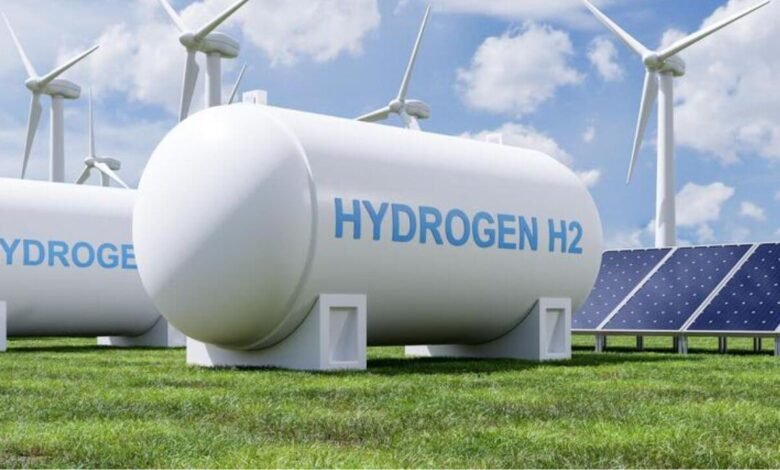
How Gulf Strategy and Green Hydrogen Are Transforming Global Energy Security

THE POST-OIL TRILEMMA
For nearly a century, the global energy playbook was straightforward: fossil fuel-rich nations extracted hydrocarbons to generate state revenues, while consumer nations balanced import costs against grid stability. Today, that legacy framework is being fundamentally rewritten from the desert capitals of the Gulf Cooperation Council (GCC).
At the heart of this transformation is the classic energy trilemma, the challenge of balancing energy security, social affordability, and environmental sustainability. Where Western industrial markets often struggle with regulatory fragmentation and political volatility, Gulf sovereign states are leveraging centralized policy frameworks to address all three pillars simultaneously.
National strategic blueprints, most notably the UAE Energy Strategy 2050 (updated to target a 30% clean energy capacity share and a 42–45% demand reduction by 2030) and Saudi Arabia’s Vision 2030 (backed by a cumulative 130 GW procurement pipeline through the National Renewable Energy Program) are no longer speculative vision documents. They represent structural economic mandates.
The core objective is clear: transition from a passive exporter of crude oil into a sovereign manager of clean energy capital, gigawatt-scale infrastructure, and green export corridors. By deploying state capital at scale, Gulf nations are proving that aggressive decarbonization can reinforce, rather than undermine, long-term national economic security.
CAPITAL ALLOCATION AND PROJECT FINANCE DYNAMICS
Executing gigawatt-scale energy transitions requires vast capital deployment a bottleneck that currently stalls infrastructure projects in many developing and Western economies. In the Middle East, sovereign wealth funds (SWFs) such as Saudi Arabia’s Public Investment Fund (PIF), Abu Dhabi’s Mubadala and ADQ, and the Qatar Investment Authority (QIA) act as sovereign cornerstones that de-risk massive capital investments.
Rather than relying purely on state balance sheets, regional project finance has evolved into a sophisticated hybrid model. Sovereign funds partner with regional utilities such as ACWA Power and Masdar to form joint ventures that secure international private capital, green bond issuances, and syndicated commercial bank debt at record-low costs.
Key structural mechanisms driving this capital influx include:
- Record-Low Power Purchase Agreements (PPAs): By combining state-provided land, streamlined permitting, credit-worthy state off-takers, and sovereign co-investment, Gulf solar and wind projects consistently achieve world-record low levelized costs of electricity (LCOE), dipping below $0.018 per kilowatt-hour.
- De-risking Foreign Direct Investment: International technology providers and hyperscale developers enter the market under long-term concession models, insulated from regulatory shifts by sovereign guarantees.
- Green Bonds and Sukuk Markets: Regional banking entities and sovereign vehicles are issuing targeted green bonds and Islamic fixed-income instruments to finance clean infrastructure, deepening local debt markets while meeting global ESG mandate requirements.
This institutional financing architecture allows Gulf states to build utility-scale solar complexes, high-voltage transmission networks, and industrial-scale storage systems at a speed unmatched in decentralized market models.
THE GREEN HYDROGEN EXPORT RACE
As global industrial centers in Europe and East Asia seek to decarbonize heavy sectors like steel, chemicals, and maritime transport, the limits of direct electrification have become obvious. Green hydrogen—produced by splitting water using renewable power, has emerged as the vital commodity of the post-carbon era. The Gulf is positioning itself to lead this market.
Leveraging vast land availability, year-round solar irradiance, strategic maritime logistics, and decades of experience operating complex gas and petrochemical export facilities, the region is rapidly scaling hydrogen production infrastructure.
Major regional developments demonstrate the scale of this ambition:
- Utility-Scale Production Hubs: Iconic developments like the $8.4 billion NEOM Green Hydrogen Facility at Oxagon—designed to integrate 4 GW of solar and wind power to produce up to 600 tonnes of green hydrogen daily—are moving from construction to operational reality.
- Ammonia Conversion and Maritime Corridors: Because raw hydrogen gas is difficult and expensive to transport across oceans, regional operators are building integrated ammonia synthesis plants. Converting green hydrogen to green ammonia allows existing liquid transport tankers and port terminals to serve as global export bridges to European and Asian distribution hubs.
- Sovereign Off-Take and Bilateral Agreements: GCC entities are securing long-term binding off-take agreements with industrial buyers in Germany, Japan, and South Korea, establishing the market pricing benchmarks and technical standards for international hydrogen trade.
By capturing a dominant share of the early green hydrogen export market, Gulf states ensure that even as global oil demand shifts, their status as essential primary energy suppliers remains intact.
SOVEREIGN POLICY AS A GLOBAL BLUEPRINT
The speed at which the Middle East’s clean energy ecosystem is expanding offers an instructive case study for global energy policy. In traditional market economies, clean energy deployment often encounters friction: fragmented municipal approvals, grid interconnection backlogs, judicial appeals, and shifting political mandates every few years.
In contrast, the Gulf’s sovereign policy model operates with singular alignment:
- Strategic Long-Horizon Planning: Energy transition goals are bound to multi-decade national development strategies rather than short election cycles, giving investors long-term regulatory visibility.
- Integrated Energy-Industrial Policy: Clean energy deployment is explicitly linked to domestic industrial growth. Local-content mandates (such as Saudi Arabia’s requirements exceeding 35% domestic supply chain sourcing) encourage international equipment manufacturers to build local factories, creating domestic green manufacturing jobs.
- Addressing High-Density Local Demand: Beyond export aspirations, the region faces explosive internal electricity demand driven by rapid population growth, industrial expansion, desalination requirements, and the construction of gigawatt-scale data center corridors for artificial intelligence compute engines. State-directed planning allows power utilities to construct both renewable supply and grid capacity in direct synchronization with these industrial demand shocks.
THE NEW SOVEREIGN ENERGY ARCHITECTURE
The evolution of the Middle East’s power sector marks a fundamental realignment in international geopolitics and energy economics. The challenge is no longer simply extracting fossil reserves from the ground, but mastering the complex integration of clean technology, global project capital, and green molecule logistics.
As global leaders gather at the Middle East Energy 2026 Leadership Summit, the region’s message to the world is unmistakable: the energy transition is not an exercise in economic compromise or forced restraint. Executed through bold sovereign policy, structured project capital, and world-scale clean infrastructure, decarbonization serves as the ultimate engine for economic diversification, industrial power, and enduring national resilience.