Middle East Energy 2026: How the Real‑Time Grid Crisis Is Reshaping Global Power

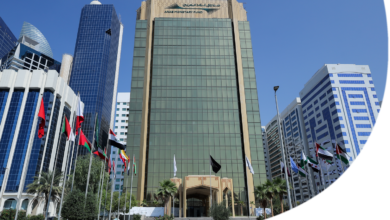
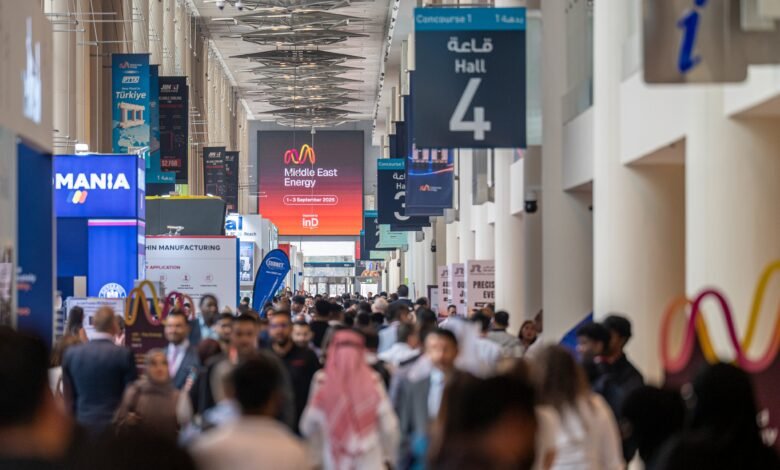
As the afternoon sun hits the glass facade of the Dubai World Trade Centre today, September 3, 2026, the floor of the 50th edition of Middle East Energy is reaching its operational crescendo. Across sixteen bustling exhibition halls, the atmosphere is charged with the unmistakable urgency of a closing session where billions of dollars in infrastructure deals are being finalized.
More than 35,000 global participants, ranging from African energy ministers and European grid operators to Gulf sovereign fund directors—have spent the past 72 hours locked in high-stakes negotiations. Their collective focus has not been on abstract long-term climate targets, but on the immediate, systemic crisis facing the global power grid.
For the past three days, MEE 2026 has served as an uncompromising mirror to the global energy industry. The central theme emerging from the final panel sessions today is direct: the global transition to clean energy is moving at a speed that physical power grids were never engineered to handle. Without massive, immediate investments in transmission cables, advanced substations, and software-driven grid management, the promise of gigawatt-scale renewable energy risks collapsing under the weight of outdated infrastructure.
The tone for this pragmatic pivot was set during the opening ceremony on September 1. His Highness Sheikh Ahmed bin Saeed Al Maktoum opened the summit alongside His Excellency Suhail bin Mohammed Al Mazrouei, UAE Minister of Energy and Infrastructure. Minister Al Mazrouei delivered a firm message to international delegates, grounding the debate in physical performance. Highlighting the 5.6-gigawatt output of the Barakah Nuclear Energy Plant alongside the UAE’s flagship 5.2-gigawatt solar array paired with 19 gigawatt-hours of battery storage, the Minister emphasized that clean power must guarantee continuous, unbroken industrial baseload or risk stalling global economic growth.
The Hardware Bottleneck: The Race for High-Voltage Equipment
Walking through the exhibition aisles in these final hours, the frantic activity around equipment manufacturing stands is evidence of a global hardware rush. Industrial developers and utility procurement heads are facing multi-year lead times for essential grid hardware, turning high-voltage cables, transformers, and switchgears into some of the world’s most sought-after industrial commodities.
This supply bottleneck has placed regional hardware manufacturers in the international spotlight. Red Sea Cables has drawn continuous crowds throughout the show with the live showcase of its 132-kilovolt High Voltage Cable line. Specially engineered to resist high thermal resistivity and ambient desert heat, the 132 kV infrastructure is being targeted by utility delegations from Sub-Saharan Africa, Central Asia, and the Middle East as a necessary component for connecting isolated solar parks directly into national transmission networks.
Simultaneously, distribution networks are facing immediate pressure to eliminate environmental liabilities within municipal substations. Heavy electrical manufacturer Lucy Electric made major waves at MEE 2026 with the launch of the Nuventura Nu1, an SF6-free switchgear operating at medium-voltage thresholds up to 36 kilonavolts. By utilizing primary dry air insulation instead of sulfur hexafluoride (SF6)—a greenhouse gas over 23,000 times more potent than carbon dioxide—the equipment allows municipal utilities to comply with strict new environmental standards across Europe and the Gulf while maintaining operational safety.
To bridge the financial gap for municipal buyers in emerging markets, strategic MoUs signed on the sidelines of MEE 2026 have linked industrial OEMs including Siemens, Honeywell, Schneider Electric, and Hitachi Energy with premier regional lenders, such as First Abu Dhabi Bank. These agreements establish flexible, structured equipment leasing models, allowing developing nations to modernize their physical power networks without taking on unsustainable upfront sovereign debt.
Artificial Intelligence and Real-Time Grid Control
With intermittent solar generation creating unpredictable power surges, human grid operators are increasingly turning to automated systems to keep national grids balanced. Throughout the three days in Dubai, artificial intelligence has emerged as the indispensible brain of modern energy systems.
Demonstrating this shift, exhibitors like Altamat Power Solutions Group showcased robotics-driven and AI-integrated generation management systems designed to automate legacy backup power fleets. Operating on edge computing hardware, these hybrid control systems monitor grid frequency in real time, automatically throttling backup gas and diesel engines up or down within milliseconds to instantly cushion sudden drops in solar generation caused by passing cloud cover.
In parallel, digital plant engineering software took top honors during the event’s official proceedings. Solar software pioneer PVFARM was awarded the Renewable Energy Innovation Award for its predictive plant modeling platform. By running real-time algorithms to optimize panel layout, tilt angles, and cable routing against local terrain and irradiance data, the software maximizes solar energy yield while reducing balance-of-system capital costs for project developers.
This software intelligence works in direct tandem with utility-scale energy storage. Belgian power conversion specialist CE+T Power was honored with the Power Resilience Award during the Middle East Energy Innovation Awards for its multidirectional power converters. Operating at ultra-high conversion efficiency, these advanced converters manage bi-directional power flows between solar arrays, battery banks, and industrial grids, enabling data centers and heavy industrial complexes to maintain continuous power resilience while participating in profitable grid-balancing programs.
Cross-Border Energy Networks and Geopolitical Realities
Inside the Leadership Summit rooms today, international delegates are wrapping up discussions on cross-border energy trade and regional grid interconnections.
The success of the Gulf Cooperation Council Interconnection Authority (GCCIA) grid served as a key blueprint throughout the conference. Bahrain’s Minister of Electricity and Water Affairs, Yaser Humaidan, detailed how regional power sharing allows member states to pool reserve capacity, handle peak summer air conditioning loads, and prevent rolling blackouts while saving billions in redundant power plant construction.
Taking this blueprint to a global audience, Nigeria’s Federal Minister of Power, Joseph Olasunkanmi Tegbe, delivered a key address calling for direct co-investment partnerships between Gulf sovereign wealth funds and African governments to build high-voltage direct current (HVDC) transmission lines across Africa. Minister Tegbe stressed that building cross-border grid infrastructure is the single most critical factor needed to eliminate industrial energy deficits across the continent.
European delegates attending the summit have echoed similar priorities, focusing on securing long-term subsea cable connections to import green electricity, clean hydrogen, and green ammonia directly from the Middle East and North Africa to replace aging fossil infrastructure in Europe.
The Mandate Moving Forward
As the 50th edition of Middle East Energy officially draws to a close this evening, the message emerging from Dubai is absolute. The global energy sector has permanently moved past the phase of unbacked commitments and theoretical decarbonization timelines.
The event has shown that the Middle East is actively positioning itself as the operational capital of the global energy transition—combining sovereign capital, nuclear baseload, giant solar-plus-storage projects, and heavy hardware manufacturing to build a working model for modern energy systems.
As international energy leaders depart the Dubai World Trade Centre tonight, the core consensus is clear: the success of the global energy transition over the coming decade will be decided on the factory floors and in the transmission corridors, driven by the companies that manufacture the cables, build the switchgears, write the AI algorithms, and deploy the storage systems that keep the modern world powered every single day.