Middle East Energy 2026 Put Grid Hardware and Capital at the Center of Power

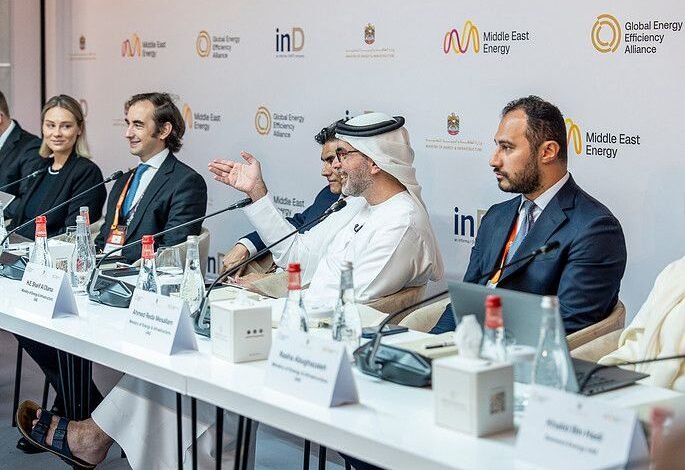
The ambient hum inside the sixteen sprawling halls of the Dubai World Trade Centre during the 50th edition of Middle East Energy felt markedly different from the ceremonial atmosphere of typical global summits. Over three intensive days from September 1 to September 3, 2026, more than 35,000 energy executives, sovereign wealth fund managers, utility leaders, and infrastructure ministers from 150 countries converged on a single floor. What transpired was not a forum for non-binding environmental pledges or abstract political posturing, but a high-yield institutional clearinghouse where the global energy industry came to allocate capital, finalize procurement, and re-engineer the physical backbone of the world’s power systems.
For more than two decades, international energy gatherings were dominated by high-level decarbonization targets and theoretical net-zero roadmaps. Middle East Energy 2026 marked a decisive, permanent break from that era. The central thesis governing the summit’s estimated $100 billion-plus pipeline discussions was grounded in a stark operational reality: the global energy transition cannot progress without a massive, immediate reinvestment in physical grid infrastructure, high-voltage hardware, utility-scale battery storage, and artificial intelligence.
The opening ceremony set the exact tone for this pragmatic pivot. Opened by His Highness Sheikh Ahmed bin Saeed Al Maktoum alongside His Excellency Suhail bin Mohammed Al Mazrouei, UAE Minister of Energy and Infrastructure, the inauguration bypassed standard greetings to deliver an operational mandate to the international community. Minister Al Mazrouei detailed the concrete milestones already driving the United Arab Emirates’ power landscape—specifically referencing the steady, zero-carbon output of the Barakah Nuclear Energy Plant alongside what is currently the world’s largest single-site, 24/7 solar-plus-storage project. Featuring 5.2 gigawatts of solar photovoltaic capacity coupled directly to an astounding 19 gigawatt-hours of battery energy storage systems, the facility stands as a real-world proof of concept that clean power can deliver uninterrupted baseload energy to industrial economies.
The macroeconomic signal broadcast from Dubai was unambiguous: the era of green speculation is over, replaced by an asset-allocation discipline where energy security, hardware manufacturing, and grid reliability serve as the ultimate arbiters of economic growth.
The Transition Bottleneck: Why Capital is Flooding Transmission & Distribution
While solar installations and wind farm developments historically capture the majority of public attention, the core focus of the capital deployed at Middle East Energy 2026 was directed squarely at the less glamorous, highly lucrative sector of Transmission and Distribution. Across the Middle East, North Africa, Europe, and South Asia, the explosive growth of renewable energy generation has exposed a critical vulnerability: legacy power grids were simply not engineered to absorb massive, variable, and geographically decentralized loads.
Without immediate, multi-billion-dollar upgrades to substations, switchgears, transformers, and high-voltage transmission corridors, gigawatts of planned clean power risk remaining stranded in desert solar parks and offshore wind farms. This engineering bottleneck has converted electrical grid hardware into one of the most sought-after asset classes in modern global finance. Institutional investors, sovereign funds, and private equity firms at MEE 2026 actively sought out equipment manufacturers who could guarantee supply chain delivery for critical high-voltage assets over the next decade.
The commercial activity across the exhibition floor reflected this urgent demand. Red Sea Cables made waves across the regional utility market with the commercial showcase of its new 132-kilovolt High Voltage Cable solution. Specifically engineered to operate under severe desert conditions, high thermal stresses, and sustained industrial loads, the cable represents a crucial link for inter-regional grid interconnectivity. Utility providers from across the Gulf Cooperation Council, Sub-Saharan Africa, and Central Asia held closed-door procurement meetings with the manufacturer to secure delivery slots for upcoming cross-border infrastructure projects.
Concurrently, the mandate for grid modernization has forced a technological overhaul of legacy electrical switchgears. Industrial leader Lucy Electric unveiled the Nuventura Nu1, an advanced SF6-free sustainable switchgear capable of operating at medium-voltage thresholds up to 36 kilovolts. For decades, sulfur hexafluoride (SF6) served as the standard insulating gas in heavy electrical equipment, despite being a greenhouse gas with a global warming potential more than 23,000 times greater than carbon dioxide. By commercializing a reliable, high-performance alternative that completely eliminates SF6, the development directly addresses stringent regulatory mandates emerging across the European Union and the Gulf, allowing utilities to decarbonize their physical infrastructure without compromising operational safety or reliability.
The institutional momentum behind these hardware advancements was further solidified by a series of major strategic MoUs signed on the sidelines of the event. Tech giants and industrial conglomerates including Siemens, Honeywell, Schneider Electric, and Hitachi Energy closed major cross-border agreements alongside financial institutions like First Abu Dhabi Bank. These partnerships are designed to establish integrated equipment financing structures, enabling municipal utilities and private developers across emerging markets to secure both the capital and the specialized hardware needed to execute large-scale power modernization programs.
The AI-Driven Grid and the Storage Arbitrage
Beyond physical copper cables and steel transformers, the software paradigm at Middle East Energy 2026 revealed that artificial intelligence has evolved from an experimental efficiency tool into an indispensable utility management asset. The integration of utility-scale renewables into national energy mixes has dramatically increased system complexity, creating severe “duck curve” demand profiles where solar power surges during midday hours only to drop precipitously just as domestic and industrial cooling loads peak in the evening.
To prevent widespread grid instability and blackouts, system operators are turning to advanced AI algorithms and automated load-balancing platforms. Exhibitors like Altamat Power Solutions Group showcased robotics-driven and AI-integrated generation management systems designed to dynamically control backup generation fleets. These platforms allow utility operators to automatically throttle legacy gas and diesel gensets up or down in milliseconds, filling unexpected generation gaps caused by cloud cover over solar installations without wasting fuel or emitting unnecessary carbon.
Simultaneously, asset performance management software took center stage during the industry innovation proceedings. Digital design and prediction platform PVFARM was awarded the prestigious Renewable Energy Innovation Award for its software engine capable of simulating utility-scale solar plant layouts, terrain interactions, and weather variables in real time. By optimizing solar panel placement, stringing, and inverter matching, the platform allows project developers to increase energy yields while reducing land usage, directly boosting the Internal Rate of Return (IRR) for institutional project financiers.
This software integration is inextricably tied to the rapid deployment of Battery Energy Storage Systems (BESS). As demonstrated by the UAE’s flagship 19 gigawatt-hour storage architecture, battery systems are no longer viewed merely as emergency backup units; they are active, revenue-generating grid stability assets. By absorbing excess solar power during peak production hours and discharging it back into the grid during high-tariff evening periods, large-scale battery storage provides the critical arbitrage mechanism that makes 100% renewable energy penetration financially viable for national utilities.
The commercial impact of this shift was celebrated during the Middle East Energy Innovation Awards, where Belgian firm CE+T Power received the Power Resilience Award for its breakthrough developments in high-efficiency multidirectional power converters. These converters allow seamless energy flow between renewable sources, battery storage, and the utility grid, ensuring continuous operational resilience for critical infrastructure, data centers, and heavy industrial facilities even during severe grid disturbances.
Regional Integration: The GCCIA Blueprint and Bilateral Trade Corridors
One of the most consequential strategic narrative arcs to emerge from the Leadership Summit at MEE 2026 was the expanding role of cross-border electrical interconnections. The Gulf Cooperation Council Interconnection Grid (GCCIA), which links the national power systems of Kuwait, Bahrain, Saudi Arabia, Qatar, the United Arab Emirates, and Oman, served as the primary model for regional energy security and trade.
During the executive panel sessions, Bahrain’s Minister of Electricity and Water Affairs, Yaser Humaidan, articulated a vision for the next fifty years of regional energy cooperation. Minister Humaidan emphasized that no individual nation can achieve complete energy security in isolation. By expanding the transmission capacity of the GCCIA, member states are able to share reserve power capacity during peak summer months, pool emergency generation assets, and trade surplus electricity in real time, saving billions of dollars in avoided power plant construction.
This regional blueprint is now expanding far beyond the borders of the Arabian Peninsula. High-level delegations from Africa and Europe actively engaged in bilateral discussions to construct cross-border energy trade corridors. Nigeria’s Federal Minister of Power, Joseph Olasunkanmi Tegbe, delivered a key address outlining Africa’s urgent requirement for resilient, cross-border infrastructure to alleviate energy poverty and power industrialization across the continent. Minister Tegbe highlighted that African nations are seeking direct co-investment partnerships with Gulf sovereign entities to construct high-voltage direct current (HVDC) transmission lines capable of moving power from remote hydro and solar hubs directly to booming urban manufacturing centers.
European delegates at the summit similarly focused on securing future clean energy imports from the Middle East and North Africa. As Europe continues to restructure its long-term energy supply chains away from historical dependencies, the continent is looking toward the Gulf not only for liquefied natural gas as a transition fuel, but for low-carbon hydrogen, green ammonia, and direct subsea electrical connections. The discussions held in Dubai demonstrated that the Middle East is rapidly evolving into a central energy bridge, supplying electrons, clean molecules, and grid expertise to markets across three continents.
Strategic Capital Allocation: The New Global Power Standard
As the doors closed on the 50th edition of Middle East Energy, the overarching takeaway for global investors, utility CEOs, and policymakers was clear: the international energy market has entered a mature, highly disciplined phase where execution speed and infrastructure bankability determine success.
The event proved that the United Arab Emirates and the broader Gulf region are no longer merely energy suppliers to the rest of the world; they have become the global testbed and capital deployment engine for the power systems of tomorrow. By pairing sovereign wealth with aggressive industrial policies, civil nuclear baseload power, gigawatt-scale solar arrays, utility BESS storage, and AI-driven grid management, the Middle East is providing a operational roadmap for how modern economies can balance aggressive decarbonization targets with uncompromised grid security and continuous industrial expansion.
For global financial institutions, equipment manufacturers, and engineering contractors, the message from Dubai is unequivocal. The next decade of value creation in the global power sector will not belong to those who make the boldest net-zero promises, but to those who manufacture the cables, build the substations, code the grid software, and deploy the capital that keeps the world’s power flowing 24 hours a day, 365 days a year.