Energy Trading Week: How Dubai Desks Monetize Offsets, CBAM & Low-Carbon Energy

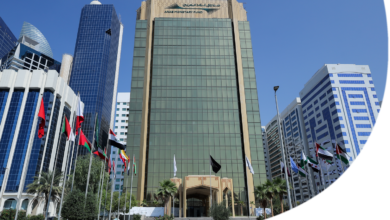
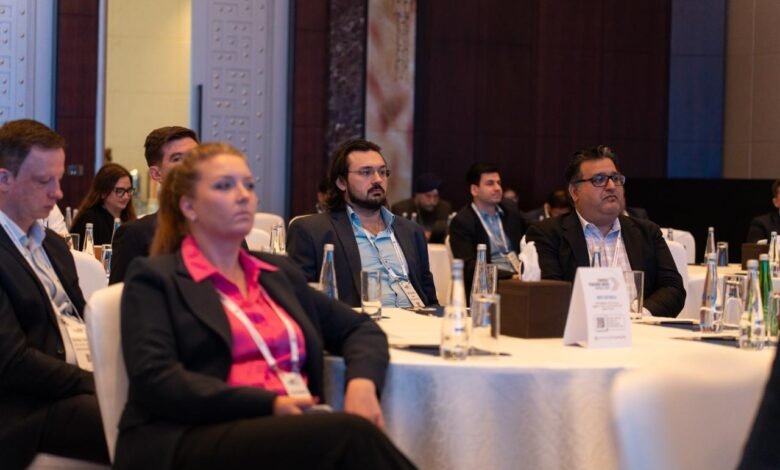
Inside the executive suites of the Conrad Dubai, the strategic focus among chief executive officers, corporate sustainability directors, and commodity desk heads has shifted decisively toward environmental balance sheets following the conclusion of the inaugural Energy Trading Week Middle East yesterday, September 3, 2026. Organized in strategic partnership with the Dubai Multi Commodities Centre (DMCC), the two-day summit confirmed that environmental commodities, spanning compliance carbon credits, voluntary offsets, guarantees of origin, and low-carbon product premiums, have matured into core revenue drivers for global trading firms.
The traditional C-suite view of carbon management as a passive compliance cost or a public relations expense is officially extinct. Over the past three years, premier energy desks operating out of Dubai have integrated environmental commodity traders directly onto their physical crude, natural gas, and metals desks. This commercial alignment reflects a simple structural reality: in 2026, the carbon intensity of an energy molecule directly determines its market price, regulatory access, and ultimate margin.
Operating from Dubai provides C-suite leaders with a strategic advantage in managing global environmental assets. Positioned at the crossroads of European compliance markets, developing voluntary carbon offset projects across Africa and Asia, and emerging Middle Eastern carbon exchanges, Dubai-based trading desks act as global market makers. Executive panelists at the summit highlighted that carbon has effectively become a universal secondary currency, enabling energy firms to monetize emission abatements, structure low-carbon supply contracts, and safeguard institutional capital against tightening global climate regulations.
Furthermore, corporate leaders are responding to increasing scrutiny from international banking syndicates and institutional investors. Access to tier-one trade finance and revolving credit facilities is now tied to dynamic Environmental, Social, and Governance (ESG) performance metrics. By deploying sophisticated environmental commodity trading strategies, energy majors operating in the region can neutralize portfolio emissions, reduce corporate capital costs, and secure competitive financing terms from global capital markets.
Compliance vs. Voluntary Markets: Navigating CBAM and Article 6 Mechanics
A primary topic analyzed during executive strategy sessions at the Conrad was the convergence of compliance carbon systems and voluntary carbon offset markets. Corporate strategy teams are navigating a regulatory landscape shaped by the enforcement of the European Union’s Carbon Border Adjustment Mechanism (CBAM) alongside operational frameworks under Article 6 of the Paris Agreement.
The implementation of EU CBAM has introduced a carbon equalization tariff on energy-intensive industrial imports—including aluminum, steel, fertilizers, electricity, and hydrogen—entering European markets. For Middle Eastern industrial producers and commodity traders exporting to Europe, calculating and mitigating the embedded carbon footprint of exported goods is mandatory for commercial viability. Dubai trading desks are structuring custom CBAM hedging facilities, allowing regional manufacturers to acquire European Union Allowances (EUAs) or accredited offset credits to hedge future border tax liabilities.
Simultaneously, the execution of Article 6 mechanisms is unlocking cross-border carbon credit transfers between sovereign nations. Under Article 6.2 and 6.4 frameworks, Gulf trading firms are financing carbon abatement projects—such as utility-scale solar arrays, mangrove restoration, and direct air capture (DAC) infrastructure—across developing nations in exchange for Internationally Transferred Mitigation Outcomes (ITMOs). These sovereign-backed credits carry corresponding adjustments that prevent double-counting, making them eligible for compliance usage in international markets and commanding premium pricing over unadjusted voluntary credits.
Navigating the voluntary carbon market (VCM) requires rigorous risk management due to past issues with credit integrity and greenwashing risks. To ensure contract validity, executive desks in Dubai are adopting high-integrity carbon standards established by the Integrity Council for the Voluntary Carbon Market (ICVCM) and the Carbon Credit Quality Initiative (CCQI). By focusing exclusively on high-permanence removal credits—such as biochar, enhanced weathering, and technological carbon capture—rather than speculative avoidance offsets, trading firms protect their corporate brands while securing long-term carbon off-take value.
Tracking Green Molecules: Digitizing Carbon Offsets Across Supply Chains
To monetize carbon differentials effectively, trading operations require verifiable visibility into the carbon intensity of physical energy products. A major theme showcased during the conference’s digital innovation track was the deployment of enterprise Carbon Zero tracking platforms designed to audit greenhouse gas emissions across the physical supply chain.
Legacy approaches relying on regional averages and manual spreadsheets are being replaced by automated, sensor-driven digital tracking platforms. Physical energy shipments traded out of Dubai are increasingly assigned a dynamic digital passport that records real-time carbon intensity data from wellhead extraction, pipeline transit, liquefaction, maritime transport, and final regasification or refining. By integrating IoT emission monitors, satellite methane leak tracking, and immutable ledger technology, physical desks can certify the exact carbon footprint of an individual crude oil cargo or LNG shipment.
This granular tracking capacity enables trading desks to structure differentiated product tiers. For example, a cargo of liquefied natural gas produced using electric drive compressors powered by solar energy, paired with real-time methane monitoring and high-integrity removal offsets, can be marketed and traded as a Certified Low-Carbon LNG shipment. Downstream utility buyers in Europe or East Asia are willing to pay a premium for these transparently audited cargoes to satisfy local environmental regulations and corporate net-zero commitments.
Furthermore, digital carbon tracking software connects directly with corporate enterprise resource planning (ERP) and Energy Trading and Risk Management (ETRM) systems. When a physical cargo is bought, sold, or rerouted, the software automatically calculates the associated carbon liability and executes corresponding offset hedges in real time. This automated carbon accounting ensures that corporate sustainability targets are managed with the same analytical precision as financial capital.
Monetizing Abatement: Carbon-Neutral Cargoes and Renewable Credit Monetization
The monetization of carbon abatement strategies has evolved into a sophisticated commercial discipline across Gulf commodity houses. Executive panels detailed how energy producers and merchant traders are packaging carbon-neutral commodities and monetizing renewable energy certificates (RECs) to build high-margin revenue streams.
The market for carbon-neutral energy cargoes—where the lifecycle emissions of a physical crude oil or LNG shipment are offset through bundled environmental credits—has matured significantly. Rather than treating offsets as an afterthought, Dubai trading desks engineer carbon-neutral transactions at the point of origin. By bundling high-grade carbon removal credits directly into physical delivery contracts, traders provide industrial buyers with turn-key decarbonization solutions, embedding environmental value into core commercial offerings.
Concurrently, the growth of utility-scale solar and green hydrogen projects across the GCC has generated a massive volume of International Renewable Energy Certificates (I-RECs) and regional Guarantees of Origin (GOs). Regional trading desks are creating liquid markets for these environmental certificates, allowing renewable energy developers to unbundle power generation from its environmental attributes. By selling I-RECs to multinational corporations seeking to offset Scope 2 emissions from regional data centers, manufacturing plants, and corporate facilities, trading desks monetize the environmental value of clean energy generation.
Looking ahead, executive strategists are preparing for the financialization of emerging environmental products, including green hydrogen certificates, sustainable aviation fuel (SAF) credits, and marine carbon offsets. By establishing standardized trading documentation, derivative clearing frameworks, and OTC liquidity pools for these nascent commodities, Dubai’s commercial community is building an infrastructure capable of supporting the multi-trillion-dollar environmental market of the next decade.
Integrating Environmental Commodities into Corporate Capital Planning
As delegates departed the Conrad Dubai following yesterday’s conclusion of Energy Trading Week Middle East 2026, the message for corporate leadership was clear: environmental commodity trading is no longer an optional add-on, but a fundamental pillar of corporate strategy and risk management.
The energy companies that will thrive in the late 2020s are those that treat carbon as a core commodity—measuring it accurately, trading it dynamically, and embedding it into every capital allocation decision. By combining regulatory foresight, digital supply chain tracking, high-integrity offset sourcing, and sophisticated financial engineering, Dubai’s energy trading leadership is building an operational model for modern sustainable commerce.