Geopolitics on Sheikh Zayed Road: How Gulf Trading Desks Are Redefining Global Energy Security

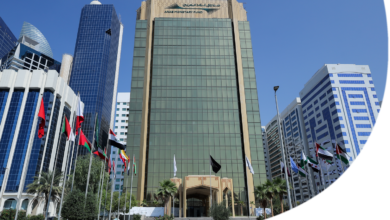
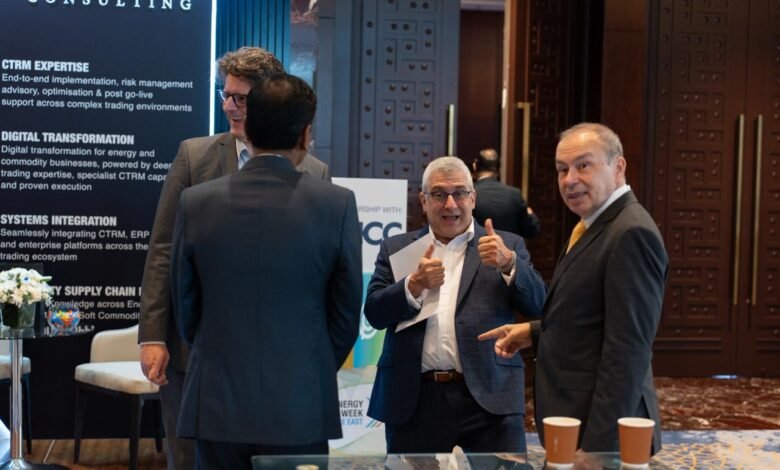
The high-stakes proceedings at the Conrad Dubai officially wrapped up yesterday, September 3, 2026, marking the close of the inaugural Energy Trading Week Middle East. Over two intensive days, the summit drew together more than 1,000 corporate executives, government policymakers, sovereign fund directors, and commodity desk heads. Yet, behind the analytical discussions of algorithmic execution and environmental derivatives lay a larger, defining reality: the fundamental geopolitical reordering of the global energy architecture.
For nearly a century, global energy security was dictated by a rigid, two-node dynamic: resource-rich extraction zones in the Global South shipped physical molecules to industrial consumer hubs in Europe and North America, with price setting dominated by Western financial centers. The debates hosted across the conference floor over the past 48 hours confirmed that this historic order has been permanently replaced. Situated at the crossroads of East-West trade routes, Dubai has solidified its status as an indispensable command center for physical commodity arbitrage, maritime logistics, and global trade diplomacy.
The strategic shift is driven by structural changes in global trade flows. As trade restrictions, sanctions, and protectionist tariffs alter traditional supply routes between Atlantic and Pacific basins, Middle Eastern trading hubs have evolved from regional production centers into neutral clearinghouses for international energy security. Operating within the Dubai Multi Commodities Centre (DMCC) ecosystem—the event’s Strategic Partner—global trading firms are re-routing, hedging, and clearing physical crude oil, liquefied natural gas (LNG), and industrial metals with unprecedented agility.
Macro-analytical panels underscored that in 2026, national security is inseparable from supply chain resilience. Energy security is no longer measured solely by crude oil reserves in the ground, but by a sovereign state’s ability to navigate maritime chokepoints, secure critical processing inputs, and command global trade infrastructure. By maintaining open commercial channels across competing global economic blocs, Gulf-based trading desks provide the structural shock absorbers that prevent global energy supply disruptions.
Navigating Maritime Chokepoints and Supply Chain Fragmentations
A critical focus during the summit’s policy sessions was the operational vulnerability of global maritime corridors. Recent years have demonstrated how localized security crises at critical transit nodes—including the Strait of Hormuz, the Bab el-Mandeb, the Suez Canal, and the Malacca Strait—can trigger immediate systemic shocks across global commodity markets.
Delegates analyzed how major energy houses in Dubai are deploying multi-layered risk mitigation frameworks to ensure physical supply continuity through volatile transit zones. Beyond standard hull and machinery insurance, physical desks are utilizing dynamic rerouting software, private maritime security, and pre-arranged ship-to-ship (STS) transfer protocols outside vulnerable maritime corridors. By establishing strategic floating storage hubs and onshore storage options in Fujairah and Oman, trading firms can cushion physical supply shocks and continue fulfilling long-term off-take commitments during acute geopolitical disruptions.
Furthermore, supply chain fragmentation has fundamentally reshaped physical oil and LNG trade patterns. West-of-Suez and East-of-Suez commodity flows, which previously operated within relatively integrated global pricing structures, now trade with persistent, structural location spreads. Middle Eastern trading desks excel at exploiting these location basis differentials. Armed with real-time maritime tracking and flexible shipping fleets, Dubai traders continuously optimize cargo destinations—diverting flexible LNG shipments between European regasification terminals and East Asian utility buyers based on real-time price signals and geopolitical risk premiums.
This physical agility extends to dark-fleet tracking and regulatory compliance. As international regulatory frameworks become increasingly complex, Gulf-based compliance teams are investing heavily in automated vessel-screening technology. By auditing vessel ownership histories, satellite AIS data, and insurance underwriters in real time, Dubai trading desks ensure strict compliance with international sanctions regimes while keeping vital energy supplies flowing to developing nations across South Asia, Africa, and Latin America.
Sovereign Wealth, Infrastructure Capital, and Global Energy Trade
The geopolitical weight of Middle Eastern commodity trading is directly bolstered by the massive financial capacity of regional sovereign wealth funds (SWFs). Institutional investment panels at the Conrad examined how state-backed investment vehicles across the Gulf Cooperation Council (GCC) are strategically deploying capital to secure equity positions in global energy infrastructure, upstream extraction, and midstream transport corridors.
Unlike traditional institutional investors constrained by short-term quarterly reporting cycles, Gulf sovereign capital operates with multi-decade strategic horizons. GCC-backed funds are acquiring long-term equity stakes in critical midstream assets worldwide—including European regasification terminals, South American copper mines, African port infrastructure, and Asian refinery complexes. These cross-border infrastructure investments are consistently anchored back to Dubai-based commodity trading houses through exclusive long-term off-take and marketing rights.
This integration of sovereign capital and commercial desk operations creates a formidable competitive advantage. When a Dubai-based energy house bids on a complex multi-asset transaction, it offers more than short-term trade finance; it provides a comprehensive capital package comprising long-term equity, sovereign debt guarantees, state-backed off-take security, and direct access to regional refining or power infrastructure. This sovereign-backed commercial model has enabled Gulf energy majors to outmaneuver traditional international trading firms in securing high-value commodity assets across emerging markets.
Moreover, GCC sovereign entities are leading the strategic diversification into transitional energy infrastructure. By financing utility-scale green hydrogen projects, carbon capture hubs, and cross-border high-voltage direct current (HVDC) power grids across the Middle East, North Africa, and South Asia (MENASA) region, sovereign capital is building the physical framework for tomorrow’s clean energy trade routes. This forward-looking capital deployment ensures that as the global energy mix evolves, Middle Eastern trading hubs will remain central to international energy security.
Dollar Dominance vs. Multi-Currency Settlement Frameworks
The macro-financial policy debates at the summit addressed a fundamental structural shift: the gradual transition from a mono-currency global energy system toward a multi-currency trade environment. While the US dollar remains the dominant currency for clearing global energy transactions, sovereign trade policy and bilateral trade agreements are driving the expansion of alternative settlement mechanisms.
Delegates reviewed the rising volume of cross-border energy transactions settled in non-dollar currencies, including the UAE Dirham (AED), Chinese Yuan (RMB), Indian Rupee (INR), and Saudi Riyal (SAR). Driven by strategic bilateral agreements between GCC member states and key Asian import partners, local-currency energy trade has moved from an experimental concept to an established commercial option. Dubai’s banking and clearing ecosystem has rapidly adapted, offering local-currency trade credit facilities, liquidity pools, and multi-currency hedging instruments designed to absorb foreign exchange volatility.
This multi-currency shift is supported by digital central bank infrastructure. The advancement of Central Bank Digital Currency (CBDC) platforms—such as Project mBridge, which connects central banks across the UAE, China, Hong Kong, and Thailand—enables instantaneous, low-cost cross-border trade settlements outside traditional SWIFT messaging networks. For global trading desks operating in Dubai, these sovereign digital rails provide an alternative execution option, reducing settlement risks, lowering transactional friction, and insulating bilateral commodity flows from external geopolitical pressure.
However, market strategists at the conference emphasized that the financialization of non-dollar energy trade requires deep derivative liquidity. While physical cargoes can be contracted in local currencies, benchmarking and hedging flat-price risk still relies heavily on established dollar-denominated futures contracts like Brent, WTI, and Oman crude. The strategic challenge for Dubai’s financial centers over the coming decade is establishing liquid, local-currency derivative markets capable of offering full-spectrum risk management for non-dollar physical energy trade.
The Macro-Geopolitical Outlook: Dubai as the Anchor of 21st-Century Commerce
As the curtains fell yesterday on Energy Trading Week Middle East 2026, the strategic verdict from international diplomats, corporate leaders, and macro-economists was unanimous: the geopolitical center of gravity for global commodities has permanently anchored in the Gulf.
In an era defined by economic fragmentation, strategic competition, and accelerating energy transition, the world requires commercial hubs capable of maintaining global market liquidity and physical supply security. Dubai has met this historic mandate by pairing world-class physical infrastructure with neutral trade policy, sovereign capital, and deep institutional liquidity.
By bridging traditional hydrocarbon logistics with advanced digital infrastructure, critical minerals trading, and multi-currency clearing mechanisms, the commercial ecosystem showcased at the Conrad Dubai yesterday is actively building the operational framework for 21st-century global trade. As global energy markets enter a new era of complexity, Dubai stands prepared to navigate the geopolitical currents and lead global commerce forward.