Energy Trading Week Middle East: How Dubai Became the Global Hub for LNG and Crude Trade

A Structural Migration in Global Physical Trade
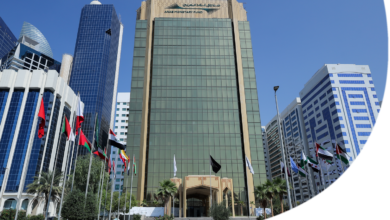
On the trading floors and meeting rooms of the Conrad Dubai on September 3, 2026, the global trade map is being actively redrawn. Over the past three years, the physical center of gravity for international energy commodities has completed a historic migration toward the Arabian Gulf. Where Middle Eastern energy desks once acted primarily as regional production hubs executing point-to-point export sales, today’s Dubai-based trading operations function as hyper-dynamic physical optimization engines. These integrated desks orchestrate complex, multi-directional flows of crude oil, refined middle distillates, and liquefied natural gas (LNG) across the Pacific, Atlantic, and Indian Ocean basins.
This physical trade rebalancing is driven by a fundamental shift in global energy logistics. Shifting geopolitical alliances, evolving sanction frameworks, maritime chokepoint risks, and structural changes in European and Asian energy demand have permanently fragmented traditional supply corridors. In response, international energy majors, state-owned national oil companies, and independent global trading houses have consolidated their physical trading, chartering, and scheduling teams within Dubai. From this central location, physical desks are uniquely positioned to exploit cross-basin arbitrage opportunities created by regional price discrepancies, freight differentials, and unexpected demand surges.
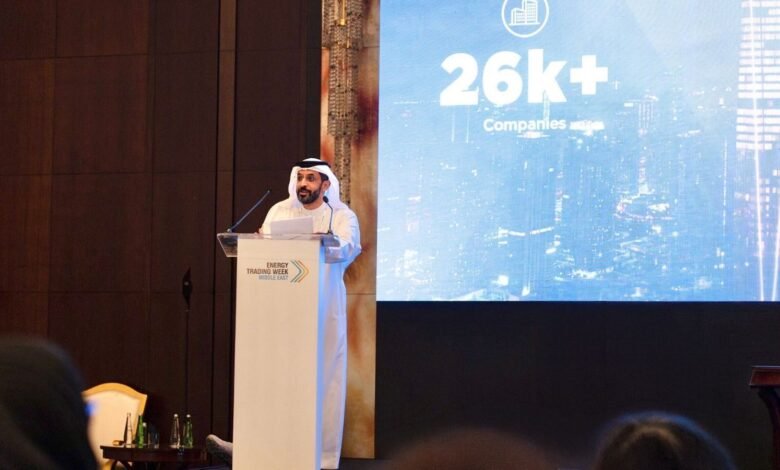
Delegates gathered for the core physical markets track at Energy Trading Week Middle East highlighted that the traditional distinction between East and West energy trade has effectively dissolved. Physical traders operating out of the UAE are managing continuous, non-linear supply loops. A single LNG cargo originating from a Gulf liquefaction terminal may be bought, sold, hedged, and redirected three times while at sea, ultimately discharging at a Western European regasification terminal or an Asian import hub based on real-time price signals across regional gas markers. This level of physical flexibility requires direct access to deep capital markets, sophisticated maritime tracking intelligence, and flexible destination contracts—all of which have become hallmarks of the modern Dubai commodity ecosystem.
Furthermore, the expansion of regional refining capacity and LNG export infrastructure across the Gulf Cooperation Council (GCC) has provided physical trading desks with an unprecedented volume of physical molecules to optimize. The commissioning of world-scale refining complexes and expanded LNG train infrastructure has turned the Middle East into a primary supplier of clean refined products—such as ultra-low sulfur diesel, jet fuel, and naphtha—to both European consumers adjusting to structural supply deficits and rapidly growing economies across Sub-Saharan Africa and South Asia. Managing these complex physical trade flows requires trading desks to act not merely as merchant intermediaries, but as fully integrated supply chain logistics providers capable of managing every link from wellhead to final destination.
The Evolution of LNG Contracting: Destination Flexibility and Spot Optimization
The most pronounced commercial transformation discussed during the physical trade sessions at Conrad Dubai is the fundamental restructuring of global LNG commercial contracts. Historically, the global LNG trade relied almost exclusively on rigid, 20-year take-or-pay sales and purchase agreements (SPAs) tied strictly to crude oil price benchmarks (Oil-Slopes) with non-negotiable destination restriction clauses. Today, physical LNG trading desks in Dubai are leading the transition toward hybrid contracting structures that combine foundational long-term volume security with short-term, spot, and destination-flexible portfolio optimization.
This contracting evolution reflects the needs of global LNG buyers and portfolio players operating in a volatile macroeconomic environment. Importers across Europe and Asia are increasingly hesitant to commit to rigid destination terms given unpredictable domestic demand profiles, industrial fuel-switching capabilities, and renewable energy integration rates. Consequently, modern LNG commercial agreements negotiated by Middle Eastern trading entities frequently incorporate flexible destination options, allowing portfolio managers to reroute cargoes to whichever regional market offers the highest netback margin after accounting for shipping freight costs and boil-off rates.
To hedge these destination-flexible cargoes, physical trading desks rely heavily on the floating price spread between primary regional gas benchmarks: the European Title Transfer Facility (TTF) and the Asian Japan Korea Marker (JKM). When the JKM-TTF spread widens beyond the variable cost of long-haul shipping, Dubai desks execute location swaps and vessel diversions, sending Atlantic or Middle Eastern LNG cargoes into North Asian terminals. Conversely, when European gas storage depletion drives TTF to a premium, physical traders redirect uncommitted cargoes westward, demonstrating how real-time paper hedging directly influences global physical vessel movements.
The growth of spot market liquidity has also catalyzed the development of specialized LNG paper derivatives and index-linked pricing structures. Rather than relying solely on legacy oil-indexed formulas, a significant proportion of newly signed Middle Eastern export contracts are indexed directly to gas hub benchmarks or hybrid pricing baskets that reflect real-time gas-on-gas competition. This shift enables physical trading desks to structure tailored hedging strategies for utility buyers, protecting consumers against extreme price spikes while allowing producers to lock in attractive forward margins. The capability to structure, execute, and hedge these complex, non-standard LNG contracts has established Dubai as the premier commercial engineering center for global gas markets.
Maritime Economics, Chokepoint Risks, and Fleet Chartering Strategies
In the physical energy trade, physical molecules are only as valuable as the maritime transport capacity available to move them. Throughout the shipping and freight sessions at Energy Trading Week Middle East, chartering directors and marine logistics specialists underscored that maritime freight economics have shifted from a secondary operational consideration to a primary determinant of physical trade profitability. Volatile tanker charter rates, rising marine fuel costs, extended voyage durations around major continental capes, and physical chokepoint vulnerabilities have transformed fleet management into a core strategic asset for Dubai-based energy desks.
The physical disruption of traditional maritime transit routes has fundamentally altered global ton-mile calculations for both crude oil and refined products. When vessel traffic through traditional transit corridors like the Bab el-Mandeb Strait, the Suez Canal, or the Strait of Hormuz encounters operational delays or geopolitical security risks, tankers are forced to take longer maritime routes around the Cape of Good Hope. This structural increase in ton-miles absorbs available global shipping capacity, driving up spot charter rates for Very Large Crude Carriers (VLCCs), Suezmax vessels, and specialized LNG carriers. For physical trading desks without secured long-term charter tonnage, sudden freight spikes can instantly erode trade margins on floating cargoes.
To mitigate these freight risks, leading energy trading operations in Dubai are adopting integrated chartering strategies. Rather than relying heavily on the spot freight market, desks are securing long-term Time Charter Equivalent (TCE) agreements and building proprietary, managed vessel fleets. By controlling their own shipping tonnage, physical desks guarantee transport availability during market crises and can monetize excess charter capacity by sub-chartering vessels to third parties when freight rates surge. Furthermore, trading teams utilize advanced marine voyage optimization software systems—such as Softmar and integrated AIS vessel-tracking platforms—to calculate optimal vessel speeds, monitor fuel consumption, minimize carbon intensity metrics, and optimize port entry timing in real time.
The integration of real-time maritime analytics with physical trading desks has also unlocked new forms of operational arbitrage. By analyzing satellite tracking data, vessel draft changes, and port queue density, physical traders in Dubai can accurately predict localized supply surpluses or deficits days before official inventory data is published. If vessel tracking reveals a cluster of uncommitted crude oil tankers drifting off a major discharge terminal, traders can anticipate localized price weakness and adjust their short-term bid-ask spreads accordingly. This real-time visibility into floating energy logistics provides Dubai desks with an information advantage over market participants relying exclusively on traditional, delayed reporting mechanisms.
The Rise of Dubai as the Central Pricing and Arbitrage Hub
A central takeaway from the market intelligence discussions at the Conrad Dubai is the elevation of the UAE from a logistics node to a global pricing setter. For decades, global commodity pricing was anchored almost entirely in London, New York, and Singapore. However, as physical energy trade flows have re-anchored around the Arabian Gulf, the benchmark pricing quotes generated within Dubai’s financial and trading venues have assumed a central role in physical contract settlement across international markets.
The growth of regional pricing benchmarks—most notably the Dubai crude pricing framework administered by the Dubai Mercantile Exchange (DME) alongside Platts benchmark assessments—has provided global markets with a transparent price discovery mechanism tailored to Eastern market fundamentals. Unlike Western benchmarks that primarily reflect light-sweet crude grades, Middle Eastern benchmarks provide an accurate valuation of medium and heavy sour crudes, which constitute the backbone of global refining throughput. As Asian refining complexes expand, the pricing differentials between Dubai crude, Brent, and West Texas Intermediate (WTI) have become the primary economic indicator for global crude oil trade.
Physical trading desks operating along Sheikh Zayed Road exploit these cross-benchmark price differentials through sophisticated basis trading and location arbitrage. By continuously monitoring the Brent-Dubai EFS (Exchange of Futures for Swaps) spread, Dubai traders can determine whether European or Middle Eastern crudes are economically favored by Asian refiners. When the EFS spread widens, making Middle Eastern grades more competitive, local desks aggressively acquire physical Gulf crudes and hedge them on local derivative exchanges. This ability to instantly link physical oil sourcing with cross-currency derivative markets has positioned Dubai as the operational crossroads for global energy arbitrage.
The local institutional architecture provided by the Dubai Multi Commodities Centre (DMCC) and the Dubai International Financial Centre (DIFC) has accelerated this market depth. By providing a secure, regulated framework for physical commodity delivery, contract standardization, and OTC clearing, these free zones have attracted over 3,000 physical trading firms, trade finance banks, and market intelligence providers. The proximity of these ecosystem players facilitates rapid deal execution, enabling physical traders to structure, finance, and execute multi-million-dollar physical trades in a fraction of the time required in more fragmented financial markets.
Supply-Demand Balances and Market Projections for 2027
As the physical trading sessions at Energy Trading Week Middle East 2026 reached their conclusion, executive panelists presented their market outlooks for global supply-demand balances entering Q4 2026 and projecting into 2027. The consensus view among physical trade directors points to a global energy market defined by structural regional imbalances, where physical agility and supply chain resilience will determine commercial success.
In global natural gas and LNG markets, panelists project a period of supply growth balanced by expanding industrial and power generation demand across developing economies in Asia and the Middle East. As major new liquefaction capacity comes online across North America and the Middle East over the next two years, global LNG availability is set to increase significantly. However, rather than leading to a sustained market collapse, physical traders in Dubai anticipate that lower gas prices will trigger demand from price-sensitive Asian markets—such as India, Pakistan, and Bangladesh—that were previously priced out of the spot LNG market during the peak volatility of previous years. Dubai trading desks are establishing physical distribution networks across South and Southeast Asia to capture this growing demand footprint.
In crude oil and refined product markets, physical traders anticipate continued volatility driven by shifting refinery configurations, changing yield slates, and evolving global environmental regulations. The global shift toward petrochemical-integrated refineries means that a higher proportion of crude runs will be dedicated to producing chemical feedstocks like naphtha and LPG, altering the traditional output balances of transportation fuels like gasoline and diesel. Trading desks operating out of Dubai are positioning themselves at the center of this transition, building dedicated trading teams focused on petrochemical feedstocks and blending components to serve industrial markets across Asia and Europe.
Ultimately, the insights shared at the Conrad Dubai demonstrate that physical commodity trading has entered a new era of sophistication. The physical trade matrix is no longer a set of static export routes, but a dynamic, interconnected network managed by data-driven trading desks operating from the heart of the Middle East. By combining direct access to physical supply, control over maritime transport networks, mastery of spot contract flexibility, and advanced benchmark pricing capabilities, Dubai’s energy trading community has established itself as the operational hub of global commodity trade.