Dubai Energy Trading 2026: How Traders Are Managing Collateral and Liquidity Risk

High Stakes and Tight Margins on Sheikh Zayed Road
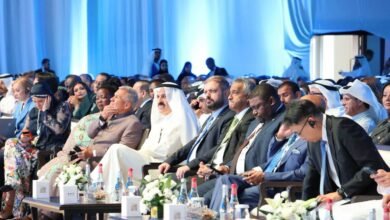
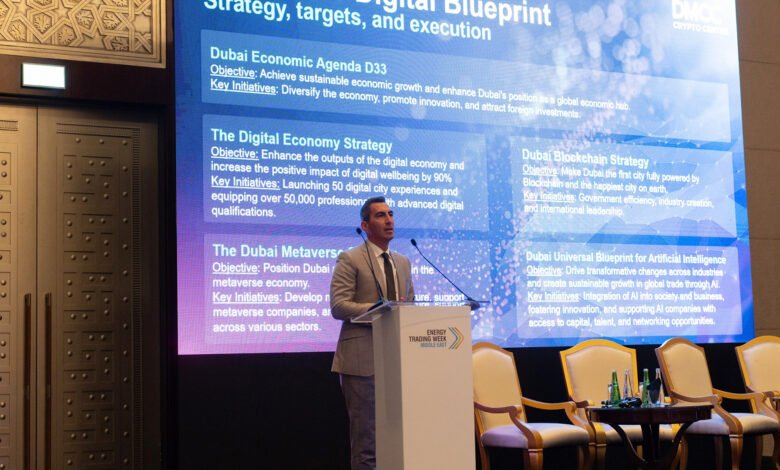
Inside the grand ballroom of the Conrad Dubai today, September 3, 2026, the atmosphere among more than 1,000 senior commodity traders, chief risk officers, treasury managers, and clearing house directors is marked by calculated intensity. As the inaugural Energy Trading Week Middle East wraps up its final sessions alongside the Dubai Multi Commodities Centre (DMCC) ecosystem, the corporate conversation has moved far beyond speculative price direction or macro-economic forecasting. The defining obsession across trading desks operating along Sheikh Zayed Road is liquidity maintenance, collateral optimization, and sovereign counterparty credit exposure in an era defined by sudden, structural market dislocations.
The rapid, structural migration of physical commodity trading desks from traditional Western financial capitals toward Dubai has permanently altered the underlying mechanics of Middle Eastern energy markets. Over the past three years, regional state-owned energy giants, independent global merchant houses, and international banking syndicates have established fully integrated trading hubs across the United Arab Emirates. However, operating in direct physical proximity to the world’s most critical maritime choke points and major export terminals brings direct, unvarnished exposure to global financial frictions. Rapid changes in benchmark interest rates, unpredictable clearinghouse margin requirements, shifting trade flows, and sudden geopolitical events have made credit line management and liquidity protection just as vital to a trading firm’s survival as predicting the spot prices of crude oil, refined products, or liquefied natural gas (LNG).
Opening the executive risk management track this morning, chief risk officers and treasury heads stressed that managing a multi-commodity trading book in late 2026 requires continuous, dynamic stress-testing rather than static daily reporting. The historical reliance on standard end-of-day Value-at-Risk (VaR) calculations is officially obsolete. Traders managing complex physical and derivative portfolios across Middle Eastern crudes, refined middle distillates, power futures, and regional natural gas swaps must now monitor real-time credit utilization metrics to ensure that intraday variation margin calls do not unexpectedly drain corporate treasury reserves or trigger cascading liquidations.
The macroeconomic backcloth against which these discussions are taking place is exceptionally complex. Global commodity markets have entered a regime characterized by structural supply-chain realignments, where physical supply chains are increasingly fragmented and subject to sudden regulatory changes. Consequently, the cost of carrying physical inventory on water or in tank storage has escalated significantly. When combined with elevated cost-of-capital baselines, physical traders no longer have the luxury of holding unhedged or inefficiently collateralized positions. The key differentiator between tier-one trading operations and distressed market participants has become the structural sophistication of their risk architecture and the fluidity of their banking relationships.
Throughout the morning keynotes, speakers repeatedly highlighted that Dubai’s transformation into a primary global commodity hub is not merely a geographic convenience; it is a fundamental reconfiguration of where market risk is priced, structured, and managed. As international liquidity pools increasingly overlap within the Gulf standard time zone, trading desks in Dubai are uniquely positioned to bridge the market gap between early-morning Asian trading sessions and the closing hours of Western derivative exchanges. However, this continuous market exposure requires risk engines capable of operating 24 hours a day without manual intervention, automatically recalculating portfolio exposures as market orders execute across diverse global venues.
The Collateral Crunch: Margin Calls and Bank Credit Lines
The primary operational challenge facing chief financial officers and corporate treasurers across Middle Eastern energy desks is the intense capital requirement of maintaining open derivative hedge positions in an environment of elevated volatility. As price swings across European natural gas benchmarks like Title Transfer Facility (TTF), Asian LNG markers such as the Japan Korea Marker (JKM), and regional crude oil benchmarks continue to widen, central clearinghouses (CCPs) have responded by raising initial margin baselines and enforcing stringent intraday variation margin sweeps.
During dedicated, closed-door panel sessions inside the Conrad, risk executives detailed how these rapid margin swings create severe short-term liquidity squeezes for even the most well-capitalized physical trading entities. When physical energy shipments experience unforeseen transit delays, port congestion, or sudden price divergence from their underlying financial paper hedges, trading entities must post millions of dollars in additional liquid cash collateral within narrow time windows to keep their hedge positions active. For non-bank merchant trading firms that lack the deposit bases of traditional commercial banks, relying exclusively on static cash reserves to absorb these multi-million-dollar margin spikes is no longer financially sustainable or economically efficient.
To manage this operational friction, Middle Eastern trading desks are completely restructuring their corporate credit facilities and collateral management protocols. Major regional financial institutions, working in tandem with international trade finance syndicates, are deploying highly structured letters of credit, revolving credit facilities (RCFs), repurchase agreements (repos) for physical inventory, and dynamic borrowing bases tied directly to real-time asset valuations. By collateralizing floating physical cargoes in transit using advanced satellite tracking and digital bills of lading, energy desks can successfully convert illiquid physical assets into immediate borrowing capacity. This structural fluidity frees up critical working capital and maintains the essential cash buffers required to absorb sudden derivative market movements without forcing premature position closures.
Furthermore, the mechanics of letter of credit (LC) issuance have undergone a major digital evolution across the GCC region. Traditional paper-based trade finance workflows, which historically took days to clear, are being replaced by automated, blockchain-enabled trade settlement platforms integrated directly with regional banking portals. This digital infrastructure allows trading desks operating out of Dubai to issue, amend, and clear complex standby letters of credit in a fraction of the time previously required. As a result, when market volatility triggers an unexpected credit line requirement, treasury teams can programmatically draw down on pre-approved syndicate lines, satisfying exchange requirements and avoiding default notices before secondary market liquidity thins out.
Another prominent theme discussed by treasury experts is the optimization of non-cash collateral. Clearinghouses and bilateral counterparties are increasingly accepting high-grade sovereign bonds, local treasury bills, and money market instruments as eligible initial margin. By building sophisticated collateral optimization engines, trading firms can automatically route the most yield-efficient, non-cash assets to satisfy clearinghouse margin calls, while preserving cash reserves for high-yield physical trades or unexpected intraday liquidity demands. This disciplined focus on collateral efficiency has shifted corporate treasury from a administrative cost center into a strategic value-driver for modern energy trading firms.
Quantitative Risk Engines and Real-Time Portfolios
To maintain absolute visibility over complex, multi-asset portfolios, Middle Eastern commodity firms are making record investments in advanced quantitative risk architecture and enterprise management software. High-profile technology sessions at the event showcased how cutting-edge enterprise platforms—including advanced Financial Engineering Associates (FEA) analytics engines operating alongside fully integrated Openlink Endur and Allegro ETRM suites—are being configured to manage cross-commodity physical and financial exposure within a single, unified view.
These modern quantitative risk models allow chief risk officers to execute continuous, high-speed Monte Carlo simulations that account for non-linear market behaviors and correlated market shocks. Rather than assessing market risks in isolation, these systems simulate complex, multi-variable stress scenarios. For instance, a scenario involving a simultaneous spike in global tanker freight rates, a sudden drop in regional refining crack spreads, an unexpected shift in foreign exchange cross-rates, and a widening basis spread between physical crude grades can be modeled instantaneously across an entire enterprise. This real-time visibility enables risk officers to proactively adjust portfolio hedges, execute spread trades, or trim counterparty credit limits long before potential paper losses manifest as actual capital depletion.
Simultaneously, enterprise credit risk management tools are being redesigned to handle the intricate web of counterparty exposure that characterizes physical commodity trading. Because physical energy cargoes are routinely bought, sold, swapped, and redirected multiple times while at sea, tracking the ultimate creditworthiness of every intermediate counterparty along the physical supply chain has become an absolute operational requirement. Modern credit risk platforms utilize automated data feeds to continuously aggregate exposures across all active contracts, derivative trades, and open invoices, providing automated alerts the moment a specific corporate counterparty or sovereign entity approaches its designated credit limit across any of the firm’s global desks.
The integration of artificial intelligence into quantitative risk modeling was another major talking point among technology directors at the Conrad. While algorithmic trading algorithms have been deployed in financial markets for decades, their application to physical commodity risk management is reaching new levels of sophistication. Advanced machine learning models are now being trained on vast repositories of historical physical trade data, ocean vessel AIS tracking signals, weather pattern forecasts, and refinery maintenance schedules. By analyzing these multi-structured datasets, AI risk engines can identify subtle market anomalies and supply-demand imbalances days before they manifest in published index pricing. This predictive capability allows risk managers to rebalance physical storage positions and adjust hedging ratios before market liquidity dries up during stress events.
The shift toward cloud-native risk architecture has also addressed the long-standing problem of data latency. In legacy ETRM systems, running comprehensive enterprise-wide risk reports often required hours of batch processing overnight, leaving executive management blind to portfolio shifts during turbulent trading sessions. Cloud-native platforms deployed by forward-thinking Dubai trading desks distribute quantitative calculations across dynamic cloud server clusters, reducing process times from hours to seconds. This computational speed allows risk committees to conduct live scenario modeling during active executive meetings, ensuring that capital allocation decisions are guided by current market conditions rather than outdated historical snapshots.
The DMCC Advantage and Settlement Infrastructure
Dubai’s rapid rise to the top tier of global clearing and trading capitals is directly backed by a deliberate, long-term regulatory and legal framework. Through tight strategic alignment with the Dubai Multi Commodities Centre (DMCC)—which now supports a sprawling ecosystem of over 3,000 energy, metal, and soft commodity companies—the emirate provides a stable, internationally benchmarked legal and operational environment that significantly reduces cross-border contract enforcement and financial settlement risks.
Executive speakers during the summit’s legal and regulatory tracks emphasized that the presence of dedicated commodity clearing infrastructure, English-common-law-based legal jurisdictions such as the Dubai International Financial Centre (DIFC) courts, and flexible capital repatriation rules allows international trading entities operating out of Dubai to execute complex, multi-jurisdictional transactions with minimal administrative drag. The high concentration of tier-one global investment banks, specialized trade finance funds, shipbrokers, independent inspection agencies, and physical trading houses within the DMCC footprint has fostered a dense, self-sustaining financial ecosystem where customized credit facilities and complex physical supply contracts can be negotiated and finalized locally.
This localized institutional infrastructure is proving invaluable as Middle Eastern energy companies rapidly diversify beyond traditional crude oil exports into new, highly dynamic commodity sectors. Over the past several years, regional trading desks have aggressively expanded their footprints into power derivatives, cross-border carbon credit trading, and critical energy transition metals such as copper, lithium, and nickel. Having immediate access to multi-currency clearing services, specialized hedging advisory services, and localized regulatory clarity ensures that Middle Eastern trading operations can scale their global activities while protecting their parent balance sheets from unhedged operational, regulatory, or legal shocks.
Furthermore, the DMCC’s proactive approach to digital asset infrastructure and physical commodity digitization is opening up entirely new avenues for trade settlement. The implementation of standardized digital warehouse receipts, smart contract settlement protocols, and transparent custody tracking systems has established a high benchmark for physical inventory management. This digital transparency gives international financing banks complete confidence when backing trade finance facilities, as the underlying physical collateral is verified, trackable, and legally protected under robust local commercial laws. Consequently, middle-market trading firms operating within the DMCC ecosystem can access trade capital at competitive rates that were historically available only to the world’s largest multinational trading conglomerates.
The strategic geopolitical neutrality of the UAE has also played an instrumental role in attracting global liquidity to Dubai’s commodity exchanges. In an increasingly polarized global economy where traditional trade routes and financial messaging networks are subject to geopolitical fragmentation, Dubai offers a transparent, fully compliant, and internationally recognized neutral ground for physical commodity pricing and risk transfer. This unique positioning has accelerated the adoption of regional price benchmarks, encouraging international market participants to utilize Dubai-based contracts to hedge physical exposure across Asia, Africa, Europe, and the Middle East.
A New Standard for Enterprise Resilience
As the inaugural Energy Trading Week Middle East 2026 draws to a close at the Conrad Dubai, the consensus among the global risk management elite is absolute: elevated price volatility, structural supply chain shifts, and tight liquidity conditions are not temporary operational hurdles, but the permanent baseline of the modern global commodity economy.
The energy trading organizations that will dominate global commodity markets in late 2026 and beyond are those that view capital efficiency, dynamic collateral optimization, quantitative risk modeling, and robust legal structuring not as defensive back-office functions, but as core, value-generating competitive advantages. By combining state-of-the-art ETRM software, machine-learning analytics, dynamic banking credit facilities, and the deep institutional framework of the Dubai marketplace, the region’s top energy trading desks are constructing a powerful institutional defense against global market turmoil.
Moving forward, the benchmark for excellence in commodity risk management has been permanently raised. The integration of physical market insights with real-time financial risk monitoring ensures that Dubai-based energy trading desks possess the operational agility to capture global arbitrage opportunities while maintaining absolute balance sheet integrity. As international energy flows continue to realign around Middle Eastern trading hubs, the sophisticated risk practices refined on Sheikh Zayed Road will play an influential role in setting the commercial standards for global commodity finance for decades to come.