How AIM Congress 2026 Is Re-Engineering Global FDI and Sovereign Capital Flows

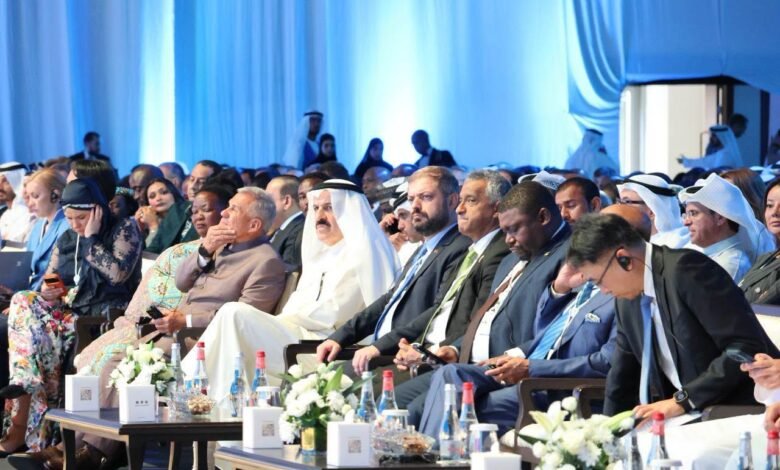
The opening day of the landmark 15th Edition of the AIM Congress commenced today, September 7, 2026, at the Dubai World Trade Centre (DWTC). Organised under the patronage of His Highness Sheikh Mohammed bin Rashid Al Maktoum, Vice President and Prime Minister of the UAE and Ruler of Dubai, by the AIM Global Foundation, the three-day assembly has brought together over 12,000 corporate delegates, sovereign fund managers, institutional investors, and ministerial leaders from more than 175 nations.Convening under the overarching theme, “Reshaping Global Prosperity: Unlocking New Investment Pathways Towards a Sustainable and Inclusive Future,” the primary focus across DWTC’s Halls 1 through 4, the Al Multaqua Ballroom, and the Trade Centre Arena centered on a decisive macroeconomic reality: the structural re-engineering of global Foreign Direct Investment (FDI).
The opening ministerial keynotes and strategic policy roundtables quickly moved past defensive capital preservation strategies. Amid prolonged high interest rates, geoeconomic fragmentation, and shifting trade alliances, the global consensus emerging from Sheikh Zayed Road highlights a strategic transition. Institutional capital is increasingly moving away from traditional, single-region investment channels and toward flexible, multi-bilateral trade and investment corridors connecting high-growth economies across Asia, Africa, the Middle East, and Latin America.
Positioned at the crossroads of these emerging economic axes, Dubai is playing a central role as a neutral global capital mediator. Opening dialogues underscored that sustainable, long-term FDI requires a fundamental evolution in how cross-border risk is underwritten, how Public-Private Partnerships (PPPs) are structured, and how sovereign wealth is deployed to catalyze private institutional capital into vital green infrastructure and industrial supply chains.
The FDI Paradox: Navigating High Interest Rates and Geoeconomic Fragmentation
A major focus of Day 1 revolved around what economists at the congress termed the “Global FDI Paradox.” Despite vast liquid reserves accumulating within sovereign wealth funds and private equity firms globally, net cross-border Greenfield FDI deployments have faced headwinds due to elevated capital costs, currency risks, and expanding regulatory barriers.
During the high-level Investment Promotion Agency (IPA) summit, trade ministers and global fund executives examined how rising debt-servicing costs have squeezed public balance sheets in emerging economies. This macro environment has elevated the hurdle rate for major infrastructure investments, making traditional debt-heavy project finance structures difficult to execute without significant sovereign risk-mitigation guarantees.
To address these financial bottlenecks, discussions on Day 1 highlighted a clear structural pivot away from legacy West-to-East investment routes toward intra-regional and South-South economic networks. Capital is increasingly allocated through strategic economic partnerships that protect supply chains against geopolitical friction, while blended finance models—combining concessionary development loans, sovereign equity, and private debt—are being deployed to maintain momentum across vital capital projects.
Panelists emphasized that countries securing the largest share of cross-border industrial investment are those actively modernizing their investment promotion frameworks. By offering clear regulatory guarantees, streamlined foreign ownership rules, and direct co-investment mechanisms, jurisdictions like the UAE are establishing an environment built for modern cross-border capital deployment.
Sovereign Capital & South-South Trade Corridors
The opening afternoon sessions focused heavily on the evolving role of sovereign wealth funds (SWFs), state pension entities, and government-backed development banks in driving global economic resilience. With traditional venture capital and private equity deal volumes recalibrating worldwide, sovereign capital has become an essential anchor for large-scale, long-term development initiatives.
A central theme across the sovereign investment panels was the rise of South-South investment corridors. Over the past decade, economic links between Gulf Cooperation Council (GCC) member states, East and South Asia, and the African continent have expanded beyond basic energy-for-goods trade into integrated industrial and technology partnerships.
Delegates analyzed how Gulf sovereign funds are taking a direct role in funding critical midstream assets, commercial ports, agricultural processing centers, and renewable power systems across developing markets:
- Supply Chain Integration: Investments are systematically targeted to secure raw material access while building localized processing capacity within host countries.
- Strategic Co-Investment Facilities: Sovereign entities are establishing joint investment platforms that allow foreign institutional investors to deploy capital under shared sovereign risk umbrellas.
- Cross-Border Logistics Pipelines: Funding integrated industrial zones that connect inland production centers directly with deep-water maritime trade hubs.
This sovereign-led investment approach reduces political risk for private co-investors while providing recipient nations with stable, long-term capital that is resilient against global market volatility.
Regulatory Convergence, Trade Facilitation, and Institutional Baselines
Beyond capital allocation, discussions on Day 1 made clear that expanding global investment flows depends directly on the legal, regulatory, and judicial frameworks that govern cross-border commerce. Friction in dispute resolution, inconsistent legal standards, and cumbersome regulatory compliance remain major hurdles to foreign direct investment.
In the policy workshops, international legal experts, trade officials, and institutional arbitrators focused on harmonizing regulatory standards to accelerate cross-border deal execution. Dubai’s dual-regulatory model—combining local civil law systems with common-law commercial jurisdictions like the Dubai International Financial Centre (DIFC)—was highlighted as a proven operational model for international commerce.
Concurrently, the Dubai Multi Commodities Centre (DMCC) and other regional economic zones were cited as clear examples of how specialized legal and operating environments can lower transaction costs for international firms. By providing established arbitration channels, full capital repatriation guarantees, and streamlined corporate setup processes, these hubs give institutional investors the certainty required to execute multi-jurisdictional transactions.
A major milestone of the Day 1 legal sessions was the commitment to standardize cross-border ESG (Environmental, Social, and Governance) compliance protocols. Delegations agreed that while sustainable investment standards must remain rigorous, regulatory frameworks must also remain pragmatic, ensuring developing nations can secure capital for baseline energy and infrastructure projects without facing restrictive compliance costs.
Strategic Keynote Takeaways & Day 1 Verdict
As the initial day of the 15th AIM Congress concluded at the Dubai World Trade Centre, the primary takeaway for the global investment community was clear: global prosperity is being reshaped by agile, cross-border partnerships anchored in sustainable economic models.
Day 1 demonstrated that navigating the current global economy requires moving past legacy capital strategies. The nations, sovereign entities, and institutional investors thriving in this environment are those leveraging strategic geography, flexible regulatory frameworks, and sovereign co-investment to build resilient, multi-regional trade networks.
With Day 1 setting a clear foundation around macro-finance, sovereign capital, and FDI policy, the stage is set for Day 2 and Day 3, where the AIM Congress shifts focus toward frontier AI deployment, venture capital ecosystems, future city infrastructure, and cross-border SME expansion platforms.
Key Policy Takeaways from Opening Day
- Capital Re-Engineering: Foreign direct investment is pivoting away from rigid single-region routes to dynamic South-South and intra-regional trade corridors.
- Sovereign De-Risking: State-backed wealth funds are acting as anchor equity partners, absorbing early-stage risks to attract institutional co-investment.
- Regulatory Harmonization: Expanding common-law commercial frameworks, digital trade rails, and pragmatic ESG compliance is essential to reducing cross-border friction.
The Sovereign Capital Pivot:
Institutional investment is moving away from debt-heavy project finance toward blended capital structures. By combining sovereign equity guarantees with private debt, emerging markets are securing long-term funding for critical infrastructure while insulating projects against global interest rate volatility.