How Female Leadership Is Remaking the UAE’s Cultural and Economic Sovereign Infrastructure

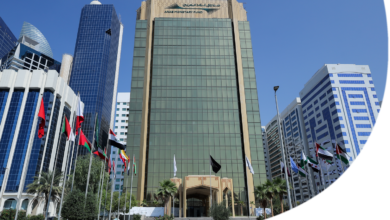
ABU DHABI & DUBAI — To walk through the glass-and-steel canyons of the Abu Dhabi Global Market on Al Maryah Island, or beneath the concrete vaults of the Dubai Future District, is to witness an economic engine running at maximum velocity. Highways curve across reclaimed coastlines; server farms hum in desert enclosures; sovereign capital flows through fiber-optic cables connecting London, Singapore, and Mumbai.
Yet behind this infrastructure lies a less visible transformation. Across the United Arab Emirates, an intellectual shift is underway as the nation approaches a critical juncture in its post-oil transition.
As the country marks Emirati Women’s Day 2026 under the national theme “We Emerge Stronger and Better,” foreign commentary frequently reduces this shift to easily quantified metrics: board seat quotas, parliamentary representation ratios, or public relations campaigns. But these metrics miss the underlying structural reality.
Modern Emirati statecraft relies on two interlinked imperatives: cultural continuity and macroeconomic sovereignty. On one hand sits the preservation of spatial memory, intangible heritage, and visual archaeology—an effort led by female archivists, artists, and scholars documenting the human, domestic, and architectural spaces altered by rapid urbanization.
On the other sits the operational execution of sovereign deep-tech platforms, capital allocation, and cross-border trade networks. Here, female venture capitalists, systems engineers, and policy architects drive the Dubai Economic Agenda (D33), which targets doubling Dubai’s GDP to AED 32 trillion ($8.7 trillion) by 2033, alongside Abu Dhabi’s Industrial Strategy and the UAE National Strategy for Artificial Intelligence 2031.
The Dual Pillars of Emirati Structural Resilience
- Cultural Continuity & Spatial Memory: Encompasses visual archaeology, urban documentarian practice, the preservation of pre-oil and mid-century domestic spaces, and the deconstruction of heritage semiotics and materiality.
- Economic Sovereignty: Driven by the D33 macroeconomic strategy, sovereign AI pipelines, and risk-hedged venture capital allocation.
- Institutional Execution & Executive Authority: Operates across both pillars through direct operational control over state wealth, high-throughput systems, and regional trade policy.
Rather than serving as passive beneficiaries of top-down modernization, Emirati women operate as primary architects of this dual strategy: holding structural authority over both the cultural memory of the pre-oil past and the technological infrastructure of the post-oil future.
THE CULTURAL ARCHITECTS—SPATIAL MEMORY AND VISUAL ARCHAEOLOGY
In hyper-modern states, urban growth often moves faster than historical documentation. Cities expand, courtyard homes give way to glass towers, and entire neighborhoods vanish within a single generation. Urban space is never merely steel, glass, and asphalt; it is a living vessel of domestic ritual, social history, and collective memory.
Long before global art fairs, international auction houses, or mega-museums arrived in the Arabian Gulf, pioneering female Emirati visual artists and scholars established the arts as a serious domain for philosophical inquiry, architectural documentation, and historical preservation.
1. Foundational Pioneers: Light, Systems, and Semiotics
During the late 20th century, as the UAE experienced rapid urban transformation following the discovery of oil, foundational female artists developed visual frameworks to document what was disappearing while questioning the nature of modern development.
Pioneering Paradigms of Gulf Modernism
- Dr. Najat Makki: Luminous Formalism, Fluorescent Pigments, Lunar Geometry, and Material Reliefs.
- Ebtisam Abdulaziz: Systems Performance, Algorithmic Logic, and Institutional Capital Critique.
- Dr. Karima Al Shomely: Deconstruction of Heritage Semiotics, Architectural Analysis of the Burqa.
Dr. Najat Makki (b. 1956, Dubai)—the first Emirati woman to earn a doctorate in the philosophy of art—introduced an academic and material foundation to Gulf modernism. Experimenting with fluorescent pigments under ultraviolet light in the late 1980s, Makki transformed two-dimensional canvases into glowing spatial environments.
Her practice mixes traditional oil paints with natural elements like saffron, henna, za’atar, and crushed desert minerals. By treating lunar geometry and sand topographies as an infinite architecture of collective memory, Makki captured the spiritual and spatial landscape of the pre-urbanized Emirates.
Where Makki explored luminous formalism, Ebtisam Abdulaziz (b. 1975, Sharjah) brought mathematical systems. With a background in science and mathematics, Abdulaziz treats art as a field of algorithmic logic and institutional critique.
In her landmark performance and photographic series Systemic Structures (presented at the 53rd Venice Biennale in 2009), Abdulaziz donned a black bodysuit emblazoned with green numeric codes, documenting herself within financial institutions, bank vaults, and commercial centers. Her work illustrates how hyper-capitalism and rapid urbanization reduce human identity and cultural space into quantifiable, transaction-oriented data points.
Simultaneously, Dr. Karima Al Shomely (b. 1965, Sharjah) undertook an architectural and semiotic deconstruction of the Emirati Burqa (the traditional gold-tinted metallic face fabric worn by elder Gulf women). Moving beyond Orientalist tropes, Al Shomely isolates the mask’s wooden struts (al-seif), metallic cloth, and geometric cutouts, analyzing it as a functional architectural device engineered for privacy, thermal protection, and identity preservation in harsh desert environments.
2. Contemporary Interdisciplinary Practice: Spatial Memory and Materiality
Building upon this foundation, a contemporary generation of female artists and scholars documents the physical, social, and psychological transitions accompanying the UAE’s modern expansion.
Contemporary Emirati Visual Archaeology Matrix
- Farah Al Qasimi (Analog Photography & Video): Focuses on domestic interior overlays, capturing how global synthetic textiles and consumer items overlay traditional Arab domestic environments amidst commercial development.
- Afra Al Dhaheri (Industrial Concrete, Heavy Rope, Woven Hair): Examines the bodily memory of space, translating physical urban growth into sculptural forms to show how the human body remembers demolished domestic environments.
- Maitha Abdalla (Performance, Video, Pigments): Co-founder of Bait 15; explores Gulf folklore and subconscious archetypes, examining the boundaries between religious practice, myth, and personal memory.
- Almaha Jaralla (Archival Research, Oil on Canvas): Maps mid-century residential modernism across Abu Dhabi, Al Ain, and Sharjah, recording the transition from courtyard homes to early oil-era urban housing.
- Rawdha Al Ketbi (Found Desert Ruins, Site-Specific Installations): Documents accelerated decay and desert ruin aesthetics, examining how rapidly human developments succumb to desert winds and saline air.
- Sara Ahli (Molten Glass, Expanding Polyurethane Foam): Captures physical tension, weight, and compression as material metaphors for the social expectations placed on women in rapidly evolving societies.
THE INSTITUTIONAL ENGINE—VENTURE CAPITAL, DEEP TECH, AND THE D33 AGENDA
While cultural documentarians preserve spatial memory, female executives and technical leaders are actively building the country’s economic engine. Under the Dubai Economic Agenda (D33), the UAE is undergoing a macroeconomic shift away from real estate and physical trade dependencies toward total factor productivity (TFP), deep-tech innovation, and digital services.
1. The D33 Macroeconomic Imperative: Core Targets and Female Mobilization
Announced in early 2023, the D33 agenda outlines quantitative benchmarks to double Dubai’s economy by 2033, aiming for an overall GDP target of AED 2.6 trillion ($708 billion). Achieving these targets requires mobilizing the country’s educated talent pool, where women represent a significant portion of advanced degree holders.
Key D33 Quantitative Targets:
- GDP Target: AED 2.6 Trillion ($708 Billion) by 2033
- Foreign Direct Investment (FDI): AED 650 Billion ($177 Billion) cumulative attraction
- Digital Economy Contribution: AED 100 Billion ($27 Billion) annual generation
- Foreign Trade Corridors: AED 25.6 Trillion ($7 Trillion) in global trade exchange
- SME Scale-Up Engine: 400 High-Potential Scale-Ups & 30 Home-Grown Unicorns
Executive Execution Framework Across Core Pillars:
| D33 Strategic Pillar | Quantitative Target by 2033 | Female Executive Mandate |
| Foreign Direct Investment (FDI) | Attract > AED 650 Billion ($177B) cumulative inbound FDI. | Managing sovereign wealth allocation and international LP fund commitments. |
| Foreign Trade Corridors | Reach AED 25.6 Trillion ($7T) in cumulative exchange. | Overseeing port automation, cross-border logistics, and customs technology platforms. |
| Digital Economy Output | Generate AED 100 Billion ($27B) annually from digital value. | Deploying enterprise AI, cloud architectures, and fintech infrastructure. |
| Green Energy & CleanTech | Transition to 100% clean power capacity (Dubai Clean Energy). | Directing ESG compliance, carbon markets, and green infrastructure capital. |
2. Institutional Risk Capital and Venture Governance
The financial centers of the Abu Dhabi Global Market (ADGM) and the Dubai International Financial Centre (DIFC) serve as primary capital allocation hubs across the MEASA (Middle East, Africa, and South Asia) region. Within these zones, female fund managers, corporate venture directors, and investment committee chairs navigate complex financial markets.
Sovereign Capital Allocation Pipeline Flow
- Sovereign Wealth Funds & State LPs (Mubadala, ADQ, DFDF): Establish mandatory ESG, governance, and capital diversification allocation directives.
- Venture Capital & Private Equity General Partners (GPs): Conduct empirical downside modeling, stress-testing, and debt-servicing sensitivity matrices with strict covenant structuring.
- Portfolio Scale-Ups & Deep Tech Ventures: Focus on non-consensus capital deployment to protect against inflated valuations and maintain capital-preserving growth models.
Downside Stress-Testing and Portfolio Governance
Within institutional venture capital and private equity, female investment directors manage downside stress-testing across deep-tech, healthcare, and infrastructure portfolios. Rather than relying on momentum-driven valuations, portfolio governance focuses on building debt-servicing sensitivity matrices, establishing liquidity preferences, and managing operational risk hedges to protect capital during macroeconomic shifts.
Mitigating Investment Groupthink
Data-driven sensitivity analysis helps investment committees avoid consensus-driven valuation inflation. By evaluating capital burn rates, customer acquisition costs (CAC), and unit economics early, female fund managers help protect sovereign and institutional LPs against premature market valuations.
3. Sovereign AI Infrastructure and Deep Tech Engineering
As the UAE positions itself as an international AI hub through entities like G42, the Mohamed bin Zayed University of Artificial Intelligence (MBZUAI), and the Advanced Technology Research Council (ATRC), female software engineers, data scientists, and systems architects play key roles in developing sovereign technology platforms.
- Pipeline Reliability Under High Computational Load: System architects and technical directors manage high-throughput data pipelines where real-time latency or accuracy drops can affect critical national infrastructure, including port logistics, energy grids, and public health systems.
- Fault Isolation and System Iteration: Sovereign technology management prioritizes operational uptime, vector database re-indexing, and automated system recovery over theoretical model development. Establishing fault isolation protocols ensures that enterprise software platforms maintain operational stability during peak load events.
- Data Sovereignty and Compliance: Operating within state-backed technology initiatives requires balancing rapid engineering deployments with strict data residency laws, cyber-sovereignty mandates, and ethical AI governance standards.
4. Global Trade Corridors, Supply Chains, and Regulatory Arbitrage
The UAE’s role as a global trade bridge relies on automated maritime ports, free zone industrial logistics, and cross-border supply chains. Managing enterprise logistics platforms requires coordinating complex international regulatory frameworks while balancing domestic operational realities.
- Multi-Jurisdictional Compliance: Navigating trade regulations, automated customs clearance, and cross-border maritime law across European, Asian, and African markets.
- Operational Context-Switching: Managing international investor capital calls and complex operational disruptions while actively participating in local civic, family, and community institutions.
- Structured Operational Boundaries: Managing high-stress executive roles through explicit delegation, clear operational boundaries, and automated workflow systems rather than relying on abstract work-life balance concepts.
DEEP TECH AND ARTIFICIAL INTELLIGENCE—AN EMPIRICAL DATA ANALYSIS
To understand how female leadership operates within the UAE’s technology ecosystem, one must analyze the policy frameworks, workforce data, and capital channels driving participation in Artificial Intelligence and Deep Tech under D33.
1. Macro Metrics and Talent Pipeline Dynamics
The integration of female professionals into technical sectors is supported by an active educational pipeline, which feeds directly into state-backed research institutions and technology companies.
[ Higher Education Pipeline ]
  └── 64% of all UAE University Graduates are female
  └── 56% of STEM Graduates from Government Universities are female
        │
        v
[ Workforce & Leadership Integration ]
  └── 45.8% of the skilled workforce active in technical roles
  └── 15% of board seats in listed UAE companies held by women (up from 3.5% in 2020)
  └── 50% representation in scientific domains (e.g., Hope Probe Space Program)
        │
        v
[ Macro AI Sector Outlook ]
  └── 88% of regional tech leaders identify female technical talent as crucial for AI
  └── Target: AED 100 Billion ($27B) annual digital economy contribution under D33
Key Quantitative Metrics:
- Educational Pipeline: Women account for 64% of all university graduates in the UAE and 56% of STEM graduates from national public universities, providing a strong talent base for engineering and computer science fields.
- Skilled Technical Workforce: According to Ministry of Human Resources and Emiratisation (MoHRE) data, women comprise 45.8% of the country’s skilled workforce, with participation in tech-adjacent and private-sector roles rising steadily over recent reform cycles.
- Boardroom Representation: As of 2026, women hold 15% of total board seats (191 out of 1,274 seats) across publicly listed companies on UAE stock exchanges—up from 3.5% in 2020. This represents the highest board representation ratio in the GCC region.
- Scientific and High-Tech Programs: National flagship scientific programs, such as the UAE Mars Mission (Hope Probe), maintain 50% female participation across their core science, engineering, and data analysis teams.
- AI Leadership: Regional technology surveys indicate that 88% of regional enterprise technology leaders view female technical experts as key to building bias-free AI models and enterprise governance systems.
2. Strategic Policy Frameworks Accelerating Deep Tech Integration
The movement of female engineers, data architects, and technology founders into AI and deep tech is guided by three specific legislative and institutional levers:
- The D33 Innovation Sandbox & Dubai Future Foundation (DFF) Ecosystem: Under D33’s plan to add AED 100 Billion ($27B) annually to the economy through digital initiatives, platforms like the Dubai Future District Fund, DFF AI Nations, and the DIFC Innovation Hub integrate inclusive funding guidelines. Accelerator cohorts require balanced demographic representation, encouraging growth in female-founded deep-tech ventures specializing in computer vision, automated supply chains, and legaltech.
- Institutional AI Governance (ISO/IEC 42001 Alignment): The deployment of standardized Artificial Intelligence Management Systems (AIMS) across public and corporate entities embeds ethics, transparency, and data inclusion into software development workflows. By establishing clear standards against algorithmic bias, these frameworks encourage the inclusion of female data architects and domain experts in model auditing, reinforcement learning (RLHF), and algorithmic governance.
- Equal Pay Legislative Frameworks & Corporate Quotas: Federal labor laws enforcing equal pay for equal work help prevent compensation disparities in engineering and software roles. Additionally, federal regulations mandating female representation on public corporate boards—alongside mandates from the UAE Gender Balance Council aiming for 30% female leadership across private sector firms—have expanded opportunities for female executives in technical oversight positions.
3. Operational Analysis: Structural Opportunities vs. Growth Bottlenecks
| Ecosystem Vector | Structural Opportunity Under D33 | Remaining Operational Gap |
| Early-Stage Capital (Pre-Seed / Seed) | High access to seed grants, public incubators, and sovereign ticket matching programs. | Series A & B check sizes remain smaller on average than male-led counterparts. |
| Regulatory & Compliance Overhead | Sandbox Dubai lowers testing costs and legal burn rates for novel tech startups. | Regional regulatory fragmentation across GCC borders requires multi-zone compliance spend. |
| AI Executive Leadership Pipeline | High female STEM graduation rates feed entry- and mid-level technical positions. | Mid-career transition gaps from senior engineering to Chief AI Officer (CAIO) and C-suite roles. |
| Boardroom Governance | Mandated female board seat quotas driving listed companies to 15% female representation. | Board appointments remain concentrated in public and state-adjacent entities. |
COMPARATIVE ANALYSIS—THE EVOLUTION OF GCC FEMALE BOARD REPRESENTATION
A critical metric illustrating the structural shift in regional corporate governance is the growth of female representation on corporate boards across the Gulf Cooperation Council (GCC). According to the GCC Board Gender Index Report, female board seat allocation has shown measurable changes across member states.
| Country | Female Board Seat % | Total Female Seats / Total Seats |
| United Arab Emirates | 15.0% | 191 / 1,274 Seats (Highest in GCC) |
| Bahrain | 10.5% | 36 / 342 Seats |
| Oman | 7.0% | 51 / 731 Seats |
| Kuwait | 5.6% | 52 / 927 Seats |
| Qatar | 3.2% | 15 / 467 Seats |
| Saudi Arabia | 2.9% | 58 / 2,014 Seats |
| TOTAL GCC AVERAGE | 7.0% | 403 / 5,755 Seats (Up from 6.9%) |
The data illustrates that while the regional average for female board representation remains modest at 7.0%, the UAE leads the region at 15.0%—a significant increase from 3.5% in 2020. This growth highlights the impact of proactive regulatory mandates, such as requiring publicly listed companies to allocate board seats to qualified female directors.
STRATEGIC IMPERATIVES FOR ENTERPRISE ARCHITECTS AND CAPITAL LEADERS
To maintain this progress and support the targets outlined in the D33 Agenda and UAE AI Strategy 2031, enterprise leaders, policy makers, and fund managers should focus on three strategic priorities:
1. Aligning Startup Value Propositions with National Growth Pillars
Capital allocation is concentrated in sectors tied to state strategic plans:
- GreenTech & Clean Acceleration: Aligned with the Dubai Clean Energy Strategy.
- AI-Driven Supply Chain Logistics: Aligned with D33 Trade Corridors.
- RegTech, Open Banking & Digital Assets: Centered in DIFC and ADGM Fintech Hives.
- Sovereign AI Systems & Arabic LLMs: Driven by ATRC and G42 initiatives.
Founders who design solutions aligned with these pillars gain improved access to state-backed grants, pilot projects, and sovereign co-investment funds.
2. Standardizing Gender-Lens Metrics at the LP Level
To address capital allocation gaps in growth-stage venture rounds, sovereign wealth funds and institutional LPs should formalize gender-lens investment metrics within fund manager mandates. Requiring General Partners (GPs) to track deal-flow demographics, investment committee composition, and follow-on check sizes encourages more objective evaluation during Series A and B funding rounds.
3. Developing Regional Expansion Pathways Early
Technology enterprises based in the UAE should treat the domestic market as an operational launchpad for the broader MEASA region. Utilizing D33’s Economic Corridors program to establish commercial partnerships across India, Saudi Arabia, and East Africa early in the growth cycle helps expand addressable markets (TAM), making enterprises more resilient and attractive to international growth investors.
THE INTEGRATED ARCHITECTURE OF EMIRATI STATECRAFT
As the United Arab Emirates marks Emirati Women’s Day 2026, the intersection of cultural preservation and economic innovation highlights the multi-faceted nature of modern Emirati female leadership.
The visual archivist documenting mid-century domestic architecture in Sharjah and the technology executive managing an AI-driven enterprise platform in Dubai are contributing to the same overarching objective: building a self-determined, resilient nation-state.
By preserving the cultural foundations of the past while building the economic and technological systems of the future, Emirati women serve as key architects of modern statecraft—demonstrating that lasting progress relies on honoring heritage while building for the future.