The Arbitrage of Empire: How Dubai Re-Engineered the Geopolitics of Global Energy Trading

As Western sanctions, maritime chokepoints, and NOC trading arms redraw global supply lines, the Middle East shifts from a passive crude supplier to the world’s most aggressive commodity capital.
The Geopolitical & Economic Realignment
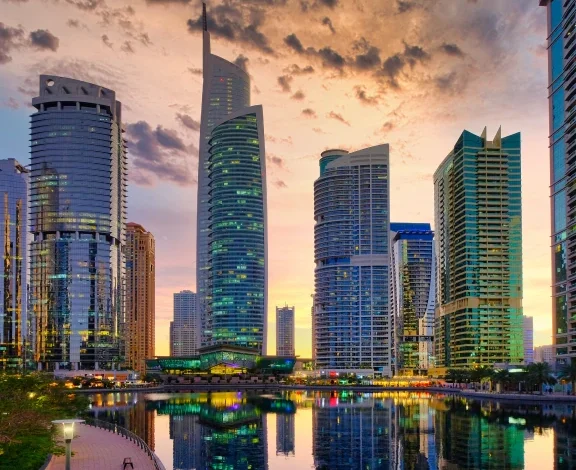
On the high floors of the glass towers lining Sheikh Zayed Road, overlooking the turquoise expanse of the Persian Gulf, the noise of physical energy trading sounds remarkably understated. There are no chaotic trading pits or screaming clerks. Instead, there is the hum of fiber-optic servers cooling in climate-controlled rooms, the steady click of mechanical keyboards, and low-frequency conversations in Arabic, English, Mandarin, and Russian.
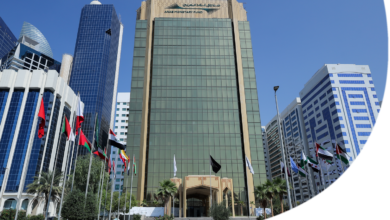
Here inside the Almas Tower in the Dubai Multi Commodities Centre (DMCC)—a commercial district that has quietly expanded to over 26,000 member companies—the tectonic plates of world finance are shifting.
For nearly a century, the global energy architecture rested on a predictable division of labor: the Gulf extracted crude from the sand, Western multinational majors priced and refined it, and trading houses in Geneva, London, and Singapore captured the lucrative trading margins.
That post-war equilibrium has collapsed.
Driven by a combination of Western sanctions, supply chain realignments, and an aggressive, sovereign-backed campaign by Gulf states to capture downstream value, the intellectual and financial capital of global commodity trading has permanently migrated. Dubai is no longer merely a logistics waypoint; it has matured into the operational command center of global physical and derivative energy flows.
The structural drivers behind this migration are systemic:
- The Transformation of National Oil Companies (NOCs): Entities like Aramco Trading Company (ATC), ADNOC Trading, and Qatargas have systematically abandoned their legacy roles as passive concession managers. By building sophisticated, merchant trading desks, these state giants now capture complex cross-basin arbitrage, refined product crack spreads, and third-party barrel margins that once belonged exclusively to international majors like Shell or Vitol.
- Geopolitical Realignment & Sanctions Fragmentation: As G7 price caps, European embargoes, and shifting trade routes rerouted millions of barrels per day toward Asian and African buyers, neutral financial clearinghouses became indispensable. Dubai emerged as the primary, highly liquid jurisdiction capable of settlement across multi-currency instruments while adhering to rigorous local compliance.
- Maritime Chokepoints and Physical Arbitrage: With security crises escalating across the Red Sea, the Bab-el-Mandeb, and the Strait of Hormuz, the physical management of maritime energy trade requires real-time rerouting, floating storage optimization, and rapid freight hedging. Middle Eastern desks sitting at the geographic intersection of Europe, Asia, and Africa are uniquely positioned to monetize these physical dislocation spreads.
Against this backdrop of historic market restructuring, the industry is preparing for the inaugural Energy Trading Week Middle East 2026, taking place September 2–3, 2026, at the Conrad Dubai.Organized in strategic partnership with the DMCC, the summit will convene over 1,000 senior delegates and 150 expert speakers across eight specialized content tracks—marking the formal institutionalization of Dubai as the world’s preeminent commodity trading nexus.
The Technological & Quantitative Core
The migration of global trading desks to the Gulf has accelerated a fundamental technological overhaul: the total obsolescence of legacy Energy Trading and Risk Management (ETRM) systems.
For decades, the global energy trade relied on monolithic, localized ETRM software packages that processed trades via End-of-Day (EOD) batch runs. In an era where a single drone strike on a refinery, a sudden maritime detour around the Cape of Good Hope, or an unexpected central bank rate cut can swing crude futures by 5% in minutes, batch processing represents unacceptable institutional vulnerability.
Next-generation energy trading desks operating out of Dubai are replacing legacy architectures with cloud-native, micro-services ETRM platforms. These systems utilize continuous event-driven processing, pulling real-time data feeds from automated satellite ship tracking (AIS), refinery yield monitors, and derivative exchanges to calculate live Monte Carlo Value-at-Risk (VaR) across multi-asset portfolios.
The Quantitative Disruption: Legacy vs. AI-Integrated Trading Desks
The structural difference between legacy operational models and the technical standards established for Energy Trading Week Middle East 2026 underscores why traditional desks are losing competitive edge:
| Operational Dimension | Legacy Trading Desk Model (Pre-2022) | Next-Gen AI/Cloud Model (ETW 2026 Standard) |
| Risk Calculation | End-of-Day (EOD) batch runs; static VaR models | Continuous, real-time Monte Carlo simulations |
| Trade Execution | Manual voice-broker negotiation; delayed entry | Algorithmic execution; automated arbitrage detection |
| Compliance & Sanctions | Periodic post-trade audits; manual screening | Real-time automated Reg-Tech; dynamic entity mapping |
| Supply Chain Visibility | Delayed bill-of-lading confirmation; manual AIS tracking | Predictive AI satellite tracking; automated yield analytics |
| Trade Finance Clearing | Paper-heavy letters of credit; 5–10 day settlement | Digitized credit lines; instant cryptographic verification |
“Quantitative trading in physical commodities is no longer just about predicting where the front-month Brent contract will settle,” explains a senior quantitative strategist participating in the ETW 2026 Digitalisation track. “It is about processing unstructured data—satellite images of dark fleet tankers, storage tank shadow angles in Shandong, and automated pipeline pressure telemetry—faster than the rest of the market. If your ETRM system cannot process physical supply shocks in milliseconds, you are not trading; you are absorbing someone else’s risk.”
At the same time, this reliance on cloud-native ETRM architectures and algorithmic execution has elevated cybersecurity from an IT maintenance issue to a matter of sovereign energy security. With national energy trading desks managing billions of dollars in physical cargo movements daily, state-sponsored cyber threats targeting ETRM platforms, pipeline telemetry, and automated port logistics represent a modern frontier of economic warfare.
The Risk, Compliance & Sanctions Battlefield
If technology provides the engine for modern energy trading, compliance serves as its structural hull. No region understands this balance better than the Middle East, where trading desks operate in an increasingly complex regulatory landscape.
The post-2022 fragmentation of the global economy created a complex web of overlapping regulatory regimes: US OFAC sanctions, European Union price cap mechanisms, UK maritime insurance restrictions, and regional sovereign laws. For trading desks operating in Dubai, navigating this landscape requires absolute precision. A single compliance failure can result in frozen asset lines, revoked banking licenses, and reputational ruin.
To maintain regulatory integrity while facilitating trade, Gulf commodity hubs have pioneered advanced Reg-Tech (Regulatory Technology) integrations:
- Automated Ownership Structure Mapping: Advanced machine-learning algorithms crawl global corporate registries to identify ultimate beneficial owners (UBOs) through layers of shell companies, ensuring compliance before a trade ticket is generated.
- Vessel Transponder & STS Monitoring: Predictive AI models analyze AIS transponder dropouts, unusual ship-to-ship (STS) transfer locations, and vessel draft variations to flag potential illicit cargo blending in international waters.
- Cryptographic Document Verification: High-volume trade desks deploy digital ledgers to verify bills of lading, certificates of origin, and inspection reports, eliminating double-invoicing and fraudulent documentation.
This institutional focus on rigorous compliance is reflected in the partnership between Energy Trading Week Middle East 2026 and the Professional Risk Managers’ International Association (PRMIA).Delegates participating in the summit’s Risk Management track earn formal Continuing Risk Learning (CRL) credits, underscoring the industry’s shift toward standardized risk governance.
Market Dynamics – LNG, Power, Metals & Carbon
The evolution of Middle Eastern energy desks extends beyond crude oil. The region is executing a rapid diversification into natural gas, power derivatives, energy transition metals, and voluntary carbon offset markets.
- The Global LNG Arbitrage Engine: With Qatar pushing forward its multi-billion-dollar North Field East and North Field South expansion projects, the Middle East is consolidating its position as the global swing producer for Liquefied Natural Gas (LNG). Middle Eastern LNG trading desks are increasingly moving away from rigid, multi-decade oil-indexed contracts toward flexible, destination-free spot contracts. This shift enables traders to redirect LNG cargoes between European regasification terminals and Asian demand centers in response to real-time spark spreads and seasonal weather variations.
- Regional Power Trading and Grid Integration: The expansion of mega-scale solar installations—such as the Mohammed bin Rashid Al Maktoum Solar Park in Dubai and the Al Dhafra Solar Project in Abu Dhabi—has created a new dynamic: regional power trading. Through the GCC Interconnection Authority (GCCIA) power grid, Middle Eastern utility desks are developing cross-border electricity trading mechanisms to balance peak summer cooling loads, manage battery storage dispatch, and price green hydrogen derivatives for export to industrial markets.
- Transition Metals and Critical Mineral Corridors: Recognizing that the energy transition requires vast quantities of physical minerals, Gulf trading hubs are aggressively building out critical mineral trading desks. By securing supply agreements for copper, lithium, cobalt, and nickel across African and Central Asian mining corridors, Middle Eastern commodity houses are positioning themselves as vital liquidity providers for the global clean-tech manufacturing chain.
- Carbon Credit Structuring and Environmental Markets: As global corporate buyer mandates for Scope 1 and Scope 2 emissions compliance tighten, Dubai has established dedicated environmental commodity desks. By structuring verified carbon offsets linked to regional carbon capture and storage (CCS) projects, Middle Eastern trading entities are integrating carbon pricing directly into physical fuel oil and LNG trade contracts.
The Future of Energy Trade Finance & Institutional Conclusion
The ultimate barrier to physical commodity trade has never been a lack of physical resource; it has been the availability of liquidity.
Historically, the multi-trillion-dollar energy trade finance market was dominated by a consortium of European commercial banks. However, under pressure from regulatory capital requirements and ESG mandates, legacy European lenders have contracted their trade finance balance sheets.
Into this funding gap have stepped Middle Eastern sovereign wealth funds, regional commercial banks, and private credit funds. By offering syndicated letters of credit, asset-backed inventory financing, and pre-export prepayment facilities, Gulf institutions provide the credit infrastructure required to keep physical trade moving across emerging markets.
When delegates convene at the Conrad Dubai on September 2–3, 2026, for Energy Trading Week Middle East, they will not merely be attending an industry conference. They will be witnessing the formal establishment of a new global energy order.
The historic alignment of sovereign capital, advanced cloud-native technology, state-backed logistics networks, and rigorous risk frameworks has transformed Dubai into an indispensable capital of world trade. The era in which the Middle East merely pumped crude while distant capitals captured its financial value is over. The new epoch of commodity trading belongs to those who control the trade floor—and that floor now resides firmly in the Gulf.