The Architecture of Autonomy: Inside the Tech Stack Redefining Gulf Energy Trading

As real-time event processing replaces legacy ETRM monoliths, Middle Eastern trading desks are leveraging micro-services, predictive AI, and automated compliance engines to capture global market dislocation.
The Collapse of Legacy ETRM Architecture
For more than three decades, the operational nervous system of global commodity trading rested on a quiet, structural fragility: the End-of-Day (EOD) batch processing model. Mainstream Energy Trading and Risk Management (ETRM) systems were engineered in an era when physical supply chains moved predictably, price discoveries happened on centralized exchange floors during fixed business hours, and geopolitical shocks unfolded over weeks rather than milliseconds.
Under that legacy paradigm, a trading desk logged physical trades, chartering contracts, and derivative hedges throughout the day. Only after market close would the ETRM system run a massive, centralized database script overnight to reconcile positions, compute Value-at-Risk (VaR), and calculate preliminary Profit and Loss (P&L).
In the modern trading landscape centered in Dubai, that architecture is no longer just obsolete, it represents systemic operational risk.
When a drone strike disrupts a red-sea transit corridor, a sudden sanctions update freezes a major clearing institution, or a localized refinery trip creates an instantaneous regional gasoil deficit, physical crack spreads dislocate within seconds. A desk relying on EOD batch processing is essentially navigating dynamic, hyper-volatile markets using yesterday’s radar map.
The physical energy migration to the Gulf, spearheaded by entities within the Dubai Multi Commodities Centre (DMCC) and expanded National Oil Company (NOC) trading operations like ADNOC Trading and Aramco Trading Company, has forced a complete infrastructure overhaul. Enterprise trading operations across Sheikh Zayed Road are abandoning legacy ETRM monoliths in favor of cloud-native, micro-services-driven trading ecosystems.
These next-generation architectures decouple the monolithic database into independent, lightweight event processors running on containerized infrastructure. Instead of waiting for market close, every transaction, vessel location update, satellite storage telemetry point, and order book change triggers an immediate, asynchronous event across the entire enterprise stack.
- Event-Driven Data Ingestion: Telemetry from dynamic Automatic Identification Systems (AIS), refinery yield monitors, and live derivative feeds are ingested continuously via high-throughput data pipelines, eliminating human data-entry latency.
- Decoupled Risk Calculation Modules: Real-time risk engines pull stream data to calculate live intraday Monte Carlo simulations, continuously evaluating portfolio Delta, Gamma, and Vega exposures across physical and financial instruments simultaneously.
- Dynamic Inventory Valuation: Physical storage volumes held across tank farms in Fujairah, Rotterdam, or Singapore are revalued continuously against live freight routes and localized physical benchmark differentials.
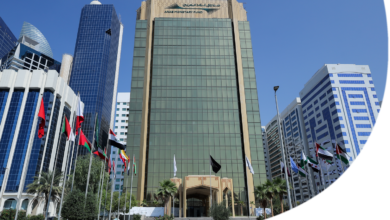
This technical transformation is setting the agenda for the upcoming Energy Trading Week Middle East 2026, taking place September 2–3, 2026, at the Conrad Dubai.Hosted in strategic partnership with the DMCC, the event will gather over 1,000 senior industry leaders and 150 speakers.Across its dedicated Digitalisation, AI, and Risk Management tracks, the summit will showcase how the transition from legacy software to continuous, event-driven architecture has become the primary determinant of competitive survival in physical energy markets.
Algorithmic Execution and Quantitative Physical Arbitrage
The transition to real-time data architecture has fundamentally altered the role of the physical commodity trader. The historical image of the voice-broker relying purely on personal networks and intuition to price a cargo of crude has given way to quantitative trading desks running complex algorithmic execution strategies.
Physical arbitrage is no longer executed as a series of isolated, manual decisions. Instead, Middle Eastern trading desks deploy quantitative models that scan global energy markets for structural inefficiencies, evaluating three distinct dimensions of arbitrage in real time:
1. Spatial Arbitrage (Cross-Basin Spreads)
Algorithms continuously calculate the net-back value of shifting a cargo between basins—for example, evaluating whether a Suezmax vessel of Murban crude loaded at Fujairah yields a higher net margin when delivered to Ningbo versus Rotterdam. The system automatically accounts for real-time bunker fuel costs, canal transit fees, vessel charter rates, and localized spot market premiums, issuing automated execution alerts when the cross-basin spread exceeds predefined threshold margins.
2. Temporal Arbitrage (Contango & Backwardation Management)
When crude or refined product curves shift into contango—where future delivery prices trade at a premium to prompt spot prices—algorithmic execution models evaluate floating storage economics in real time. Quantitative engines link live Time Charter Equivalent (TCE) shipping rates with physical tank rental fees to instantly lock in contango storage trades by buying prompt physical barrels and selling forward financial contracts.
3. Quality and Refinement Arbitrage (Yield & Crack Spreads)
Modern NOC desks trade refined products with unprecedented chemical precision. Algorithms cross-reference raw crude assay profiles, specific gravity variations, and sulfur contents against variable refinery yields and regional product demand. If blending light sweet crude with heavier regional grades yields a higher-margin low-sulfur fuel oil (LSFO) compliant with IMO regulations, the system identifies the optimal blending ratio and initiates physical blending orders at bulk storage facilities.
To process these multidimensional opportunities, Gulf commodity firms are heavily integrating unstructured alternative data into their algorithmic models:
- Satellite Tank Shadow Analytics: Optical satellite imagery measures the shadow angles cast by floating-roof storage tanks across key global refining centers, providing quantitative estimates of global physical inventories days before official government inventory reports are published.
- Predictive AIS & Dark Fleet Mapping: Machine-learning models track ship movements, draught changes, and transponder behavior, allowing desks to infer actual cargo loads and destination shifts even when vessels turn off their transponders in high-risk transit zones.
- Automated Refinery Maintenance Tracking: Infrared thermal imagery monitor flare stack intensities and refinery heat signatures to detect unscheduled operational shutdowns before they are publicly announced to the broader market.
By feeding these unstructured inputs directly into execution algorithms, quantitative desks in Dubai execute physical supply strategies while legacy competitors are still reviewing outdated market reports.
The Reg-Tech Shield – Automated Compliance & Sanctions Risk
As trade volumes through Gulf commercial hubs accelerate, compliance has evolved from a passive legal back-office function into an active, automated front-office clearing layer. The post-2022 fragmentation of the global energy market—characterized by complex G7 price caps, evolving Western sanctions regimes, and multi-jurisdictional compliance rules—makes manual compliance screening physically impossible.
A single cargo of gasoil may involve a physical producer in the Gulf, a Swiss trade finance facility, a Liberian-flagged tanker, a Marshall Islands shipowner, a Singaporean insurance club, and an ultimate end-user in Southeast Asia. Operating safely within this web requires advanced Reg-Tech (Regulatory Technology) platforms integrated directly into the trade-entry workflow.
Automated Ultimate Beneficial Ownership (UBO) Screening
Modern Reg-Tech engines deploy natural language processing and graph database technology to map corporate ownership structures across global jurisdictions. Before an automated trade execution ticket can be confirmed, the system crawls global corporate registries to verify that no entity within the ownership chain, from shareholder to parent company—is flagged on sanctioned entity lists such as US OFAC, EU consolidated lists, or UK HMT registries.
Real-Time Maritime Track Verification and STS Screening
Physical compliance extends beyond corporate entities to the physical asset itself. Automated maritime compliance systems continuously cross-examine historical vessel track data against geospatial intelligence databases:
- Dark Activity Alerts: Flags are automatically generated if a vessel turns off its Automatic Identification System (AIS) transponder for prolonged periods or displays suspicious “spoofing” behavior (manipulating GPS signals to report false locations).
- Ship-to-Ship (STS) Risk Profiling: The system analyzes high-risk STS transfer zones in international waters, evaluating draught variations of both vessels before and after the transfer to detect illicit cargo blending or undocumented origin masking.
- Sanctioned Port Geofencing: Satellite-derived geofencing monitors whether a vessel has called at restricted ports or anchored in contested maritime zones within the past 24 months.
+-----------------------------------------------------------------------------------+
|                        REAL-TIME REG-TECH COMPLIANCE FLOW                         |
+-----------------------------------------------------------------------------------+
|  [Trade Ticket Initiated] --> [UBO Graph Database Scan] --> [Ownership Cleared]   |
|                                                                    |              |
|  [Physical Cargo Loaded]  --> [AIS & STS Maritime Tracking] --> [Vessel Cleared]   |
|                                                                    |              |
|  [Payment Processing]   --> [Cryptographic Doc Inspection] --> [Trade Approved]  |
+-----------------------------------------------------------------------------------+
Cryptographic Document Verification
Trade documentation fraud—including fake bills of lading, forged certificates of origin, and duplicate financing requests—represents a major risk in global trade finance. Modern Middle Eastern trade desks are adopting decentralized document verification networks. Bills of lading and quality inspection certificates are issued with immutable cryptographic signatures, allowing banks, customs agents, and counterparties to verify document authenticity instantly without human intervention.
The operational urgency of standardized, automated compliance is central to the upcoming Energy Trading Week Middle East 2026. In partnership with the Professional Risk Managers’ International Association (PRMIA), the event’s dedicated Risk Management track awards Continuing Risk Learning (CRL) credits to participating delegates, reflecting the industry’s shift toward formalizing digital risk governance and regulatory standards.
Cybersecurity in the Era of Autonomous Trade
As energy trading desks transition to cloud-native ETRM architectures, automated execution, and API-driven compliance integrations, their attack surface expands exponentially. In the modern geopolitical climate, a trading desk managing physical energy infrastructure is an attractive target for sophisticated state-sponsored threat actors, ransomware syndicates, and financial cybercriminals.
Cybersecurity in commodity trading has moved far beyond basic IT perimeter defense. A successful breach of a major NOC trading platform or terminal management system could freeze physical supply chains, manipulate derivative prices, or compromise sovereign trade secrets.
Key Cybersecurity Vulnerabilities in Digital Commodity Ecosystems
- SCADA and Terminal Telemetry Exploitation: Modern ETRM platforms interface directly with Supervisory Control and Data Acquisition (SCADA) systems at bulk storage terminals, pipelines, and offshore loading buoys to track inventory levels. Malicious actors penetrating these IoT networks could tamper with automated tank level readings or pipeline flow telemetry, causing severe miscalculations in physical position reporting or triggering catastrophic physical operational failures.
- API Manipulation and Algorithmic Poisoning: Quantitative trading infrastructure relies on hundreds of external APIs pushing market data, weather reports, and vessel positions into execution engines. Threat actors targeting these integration points can execute “data poisoning” attacks, injecting false data feeds to trick algorithmic trading models into executing loss-making trades or triggering unnecessary liquidation events.
- Trade Finance Ransomware and Fraudulent Clearing: High-volume commodity trade desks execute millions of dollars in daily cash calls, margin payments, and letter-of-credit settlements. Cybercriminals utilize sophisticated spear-phishing and compromised trade communication channels to execute Business Email Compromise (BEC) attacks, attempting to alter bank routing details on digitized letters of credit or hold trade-clearing databases hostage during peak trading windows.
To counter these emerging vulnerabilities, Middle Eastern commodity firms are implementing defensive cybersecurity standards tailored for high-speed trading environments:
- Zero-Trust Enterprise Architecture: Every micro-service, API integration, and user connection within the ETRM ecosystem must be continuously authenticated and authorized using cryptographic identity protocols, ensuring that a compromise in an external data feed cannot spread laterally into core ledger systems.
- Air-Gapped Operational Infrastructure: Critical physical telemetry connections between tank storage facilities and financial ETRM software pass through secure unidirectional data gateways (data diodes), allowing operational data to flow into trading analytics without allowing external network access back into physical terminal control systems.
- Immutable Transaction Ledgers: Core trade confirmation databases utilize append-only, cryptographic audit logs. Any unauthorized attempt to modify trade entries, risk limits, or settlement records is immediately detected and isolated by automated threat-hunting algorithms.
The Synthesis – The Middle East as the Capital of Autonomous Trade
The modernization of technology, risk management, compliance, and security within Gulf energy desks is not an incremental update—it is a structural evolution.
By shedding the legacy constraints of EOD batch processing, manual compliance reviews, and fragmented operational systems, trading houses in Dubai and across the region have built a modern digital infrastructure for physical commodity markets. The convergence of cloud-native micro-services ETRM, predictive quantitative modeling, automated Reg-Tech screening, and defense-in-depth cybersecurity allows Gulf trading desks to execute complex, multi-asset global trades with unprecedented speed and regulatory precision.
When global commodity leaders, technology innovators, and sovereign energy representatives gather at the Conrad Dubai on September 2–3, 2026, for Energy Trading Week Middle East, the discussions will reflect a permanent realignment. The competitive advantage in global commodity markets has migrated to those who command the most advanced technical and analytical infrastructure.
The Middle East has built the modern framework for autonomous, real-time energy trade—and the rest of the global market must adapt to this new standard.