Beyond the Dollar: The UAE–Russia Trade Deal Creating a New Era of Direct Currency and Logistics Power

With the formal entry into force of a landmark trade and investment framework, Abu Dhabi and Moscow have cemented a financial and logistical axis that circumvents traditional Western clearing houses and redefines the architecture of multipolar trade.
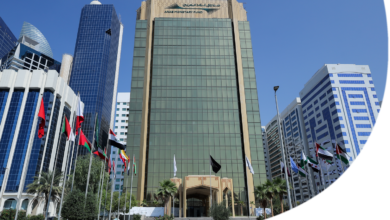
In the air-conditioned tower blocks overlooking Dubai’s International Financial Centre and along the deep-water berths of Jebel Ali, the global financial system has spent the last four years undergoing a silent, fundamental mutation.
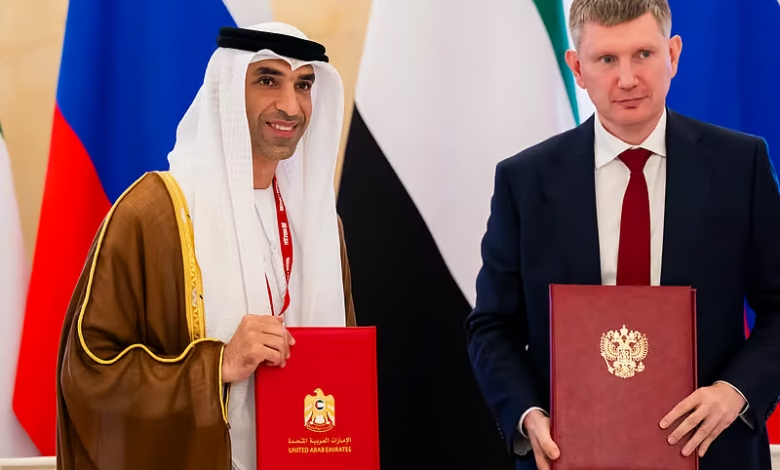
On August 25, 2026, that transformation gained legal permanence. The comprehensive bilateral trade and investment framework between the United Arab Emirates and the Russian Federation formally entered into force. The agreement—spanning tariff reductions on thousands of commodity lines, direct currency clearing mechanisms, and logistics integration across Eurasia—marks the official consolidation of a strategic trade corridor linking the Gulf with Northern Eurasia.
Where traditional trade pacts are celebrated with grand multilateral summits in Western capitals, this agreement operates on pragmatic economic realism. It establishes a parallel framework for cross-border commerce, constructed deliberately to withstand external sanctions, currency volatility, and Western financial friction.
“What we are witnessing is not merely a bilateral tariff agreement,” observed a senior trade strategist in Dubai. “It is the formal institutionalization of a secondary financial infrastructure for the Global South.”
Dismantling the Dollar Clearing Standard
At the technical core of the treaty lies a radical overhaul of trade settlement mechanisms.
For nearly eight decades, global trade in energy, grain, and industrial metals relied almost entirely on foreign reserve clearing systems and Western messaging networks. Under the newly activated frameworks, bilateral non-oil trade between the UAE and Russia—aimed at scaling past twenty billion dollars annually—will settle overwhelmingly through direct dirham-ruble mechanisms and sovereign financial channels.
The operational mechanics represent a masterclass in modern financial engineering:
- Correspondent Banking Nodes: Major commercial banks across Moscow, Abu Dhabi, and Dubai have established direct bilateral accounts, bypassing third-party correspondent banks in Western jurisdictions.
- Commodity Currency Pegging: Industrial shipments of grain, fertilizers, and refined products are increasingly priced using regional benchmarks linked directly to local currencies rather than Western exchanges.
- Fintech and Digital Ledger Clearing: Settling contracts through asset-backed digital tokens and localized messaging rails ensures uninterrupted execution regardless of SWIFT connectivity.
This direct clearing architecture drastically lowers transaction costs for regional state-owned enterprises while insulating energy and agricultural supply chains from external geopolitical disruption.
The INSTC and the Maritime Re-export Pivot
Beyond currency rails, the treaty provides the legal backing for a massive physical reorganization of global freight.
Central to this strategy is the International North-South Transport Corridor (INSTC)—a multi-modal network of railways, sea routes, and highway arteries stretching from St. Petersburg through Iran to the Persian Gulf. With the agreement in effect, UAE logistics operators and port authorities have integrated their digital tracking systems with Eurasian freight networks.
Containers leaving Baltic ports can now travel south via Caspian rail links, transship through Iranian ports, and arrive at Jebel Ali or Khalifa Port in less than half the time required for the traditional maritime voyage through the Suez Canal.
Once goods reach the free zones of Dubai and Abu Dhabi, they undergo processing, repackaging, and re-export. The UAE’s free-zone infrastructure acts as a primary liquidity hub, redistributing agricultural output, rare earth minerals, and heavy machinery to fast-growing markets across East Africa, South Asia, and the broader Middle East.
Food Security, Energy, and Sovereign Wealth
For the United Arab Emirates, the agreement represents a crucial pillar of national economic security.
As a country that imports the majority of its food supply, securing uninterrupted access to Russian agricultural commodities—specifically wheat, barley, and synthetic fertilizers—provides an essential buffer against global food inflation. In return, Russian state entities gain access to world-class port infrastructure, global maritime logistics management, and deep pools of Gulf investment capital seeking long-term yields.
Joint investment ventures between sovereign wealth funds are already targeting key industrial sectors:
- Agritech and Processing: High-tech storage and grain silos constructed within UAE free zones to serve as emergency reserves for the entire Gulf Cooperation Council (GCC).
- Clean Energy Integration: Collaborative investments in hydrogen, nuclear technology, and LNG transshipment terminals.
- Metals and Petrochemicals: Advanced refining partnerships that convert raw inputs into high-value industrial exports.
The Multipolar Benchmark
The entry into force of the UAE-Russia trade deal signals a broader structural shift in international relations.
The Western financial architecture, long considered the sole operational framework for international business, now competes alongside a network of regional financial agreements, local currency clearings, and sovereign supply corridors.
By positioning itself as the indisputable capital of this new trade network, the UAE has demonstrated that modern economic sovereignty relies on flexibility, strategic neutrality, and cross-cultural commerce. As cargo ships align along the North-South corridor and digital ledgers settle transactions outside traditional channels, the economic center of gravity has shifted firmly toward the Global South.