OFF THE DOLLAR GRID: THE GULF’S QUIET FINANCIAL REVOLUTION

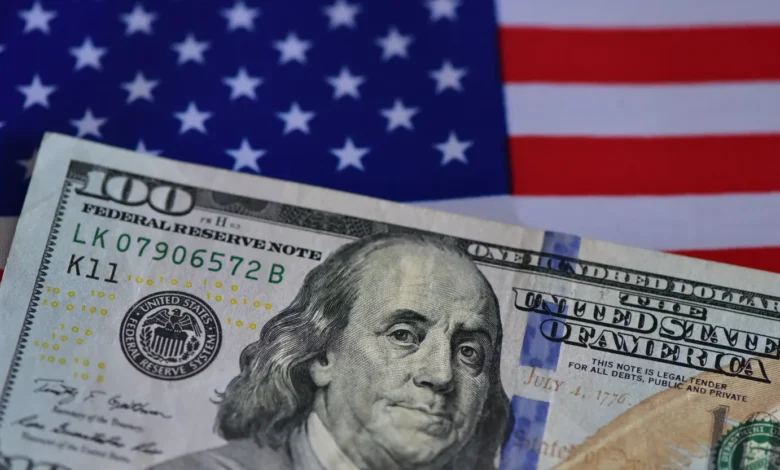
For eight decades, the global financial system ran on a simple consensus: all roads lead to Washington. Now, a quiet structural revolution in the Persian Gulf is proving that international trade can thrive off the dollar grid.
For half a century, the primary pillar supporting global American financial hegemony was not merely military primacy or technological dominance, it was the petrodollar.
The implicit 1970s agreement between Washington and Riyadh established a clear global rule: energy was priced, sold, and settled in U.S. dollars. Countries around the world were forced to accumulate massive greenback reserves simply to purchase energy and clear basic commodities. That structural demand created an unshakeable bedrock for Western financial institutions, granting Western sovereign treasuries unmatched borrowing power and turning Western clearing systems into the mandatory gateways for world trade.
That era is rapidly giving way to a multi-currency reality.
On August 23, 2026, the bilateral Trade in Services and Investment Agreement (TISIA) between the United Arab Emirates and the Russian Federation formally entered into force, complementing the overarching trade framework established with the Eurasian Economic Union. Non-oil trade between the two partners reached $20.4 billion in 2025—a 77.7 percent jump over the previous year.
Yet the most significant detail of this milestone lies not in the volume of goods moved, but in how those transactions are settled: outside the domain of the U.S. dollar, outside SWIFT, and beyond the reach of Western clearing houses.
Pragmatism Over Ideology
When economists analyze de-dollarization, they often frame it as a hostile ideological crusade led by rival powers. But viewing the shift purely through the lens of East-West geopolitical confrontation misses the real catalyst.
The true engines of today’s currency diversification are neutral, pragmatically aligned middle powers, chief among them the United Arab Emirates and its peers within the Gulf Cooperation Council (GCC).
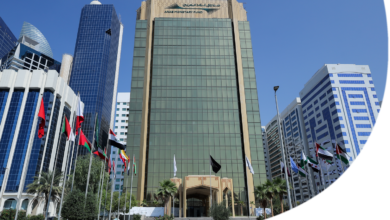
For commercial hubs like Dubai and Abu Dhabi, shifting toward local currency settlement is an act of economic risk management. Over the past decade, the aggressive weaponization of Western financial clearing mechanisms, extraterritorial sanctions, and asset freezes demonstrated a clear vulnerabilities framework to non-aligned nations. Relying on a single reserve currency and a centralized messaging rail suddenly carried existential counterparty risks.
By establishing direct dirham-ruble, dirham-rupee, and dirham-yuan settlement mechanisms, Gulf states are not seeking to destroy the dollar; they are hedging against its institutional weaponization. They are building a parallel financial redundancy layer for global commerce.
Under the traditional petrodollar model, a routine transaction required double currency conversion—shifting local funds into U.S. dollars, clearing through New York banks or SWIFT messaging networks, and converting back into the importer’s local currency. The emerging multipolar framework bypasses this Western clearing loop entirely. Exporters and importers now settle directly using non-dollar pairs such as the dirham, ruble, or rupee, routing transactions seamlessly through regional financial hubs.
The Gulf as the New Capital Clearing Engine
The mechanics of this transition are moving with surprising speed. The UAE’s aggressive Comprehensive Economic Partnership Agreement (CEPA) program—which targets $1.1 trillion in non-oil foreign trade by 2031, serves as the blueprint for this new commercial architecture.
When Gulf sovereign wealth funds and logistics conglomerates ink trade deals with India, China, Russia, or African partners, local currency clearing clauses are no longer experimental additions—they are core structural requirements.
Consider the compounding network effects:
- Currency Pairing and Pegging: The UAE dirham, pegged to the dollar, acts as a uniquely stable intermediary bridge currency. It allows foreign counterparties to settle transactions in local currencies while maintaining price predictability and eliminating double-conversion friction through Western correspondent banks.
- Commodity Pricing Independence: From grain shipments to precious metals and petrochemicals, regional clearing hubs are pricing physical freight using localized benchmarks rather than Western futures exchanges.
- Fintech & Sovereign Messaging Rails: Direct bank-to-bank messaging systems and digital asset ledgers are quietly replacing traditional correspondent banking networks across Eurasia and the Global South.
When an Indian importer purchases Eurasian wheat via a Dubai free-zone intermediary, paying in dirhams or rupees via localized clearing accounts, the entire commercial cycle executes without touching a single U.S. bank account or clearing house. Multiply that transaction by tens of thousands of trade cycles per month across the Indian Ocean rim, and the erosion of dollar demand becomes structural and irreversible.
The Multipolar Balance Sheet
The long-term consequence of this shift is not a sudden collapse of the dollar, but its transition into a regionalized currency. The greenback will remain a primary global currency, but it will no longer enjoy an uncontested monopoly as the sole medium of international exchange.
As regional economic pacts across the Gulf, Eurasia, and Asia take full effect, the global financial system is splitting into a decentralized, multi-currency network. Nations will trade using whatever rail is most efficient, cheapest, and least susceptible to external political interference.
By transforming their economies into non-aligned financial clearing hubs, the states of the Gulf are not just adapting to a multipolar world—they are building its financial engine.