From Petrodollars to Planet: The Royal Insider Driving the Middle East’s Green Revolution

In the shadow of the Gulf’s petrodollar boom, Sheikh Abdul Aziz bin Ali Al Nuaimi abandoned the refineries of his youth to spark an ecological revolution across the Middle East.
THE MIRAGE AND THE FALCON
AJMAN, United Arab Emirates — In the late autumn of 1972, when the red sands of the Rub’ al Khali desert still drifted across unpaved tracks in the northern emirates, a six-year-old prince rode into the dunes alongside his father. The United Arab Emirates was barely a year old. Across the coastline, the subterranean oceans of crude oil discovered decades earlier were beginning to gush upward in earnest, bankrolling the most meteoric material transformation in human history. Wooden dhows and pearl-diving rigs were giving way to concrete, steel, and air-conditioned palaces.
Yet in the quiet expanse of Ajman—the smallest of the seven emirates that comprised the fledgling federation—Bedouin tradition demanded that a prince of the royal house of Al Nuaimi master the ancient art of falconry.
Sitting atop his father’s shoulders, the young boy, Sheikh Abdul Aziz bin Ali Al Nuaimi, watched a peregrine falcon dive from the high azure sky, its wings pinned back in a 200-mile-per-hour stoop. The bird struck its target with surgical precision, landing on the leather-gloved wrist of the elder prince. Entranced by the creature’s fierce nobility, the young prince begged his father for a falcon of his own.
His father looked down at him, his face weathered by sun and wind, and offered a response that would echo across decades:
“I don’t want you to be a falconer like me,” the elder prince told the boy softly. “I want you to be my future. I want you to focus on something bigger than yourself and your life. In time, you will discover your passion. I won’t tell you what it is, but I can show you. Because, in truth, you are the falcon.”
It took thirty years for Sheikh Abdul Aziz to understand what his father meant.
The boy would not grow up to capture wild raptors. Nor would he spend his life tending the immense hydrocarbon machinery that powered his nation’s emergence onto the global stage. Instead, in an act of quiet, radical defiance that sent shockwaves through royal council chambers across the Persian Gulf, Sheikh Abdul Aziz would turn his back on the lucrative petrodollar industry that had enriched his family. He would exchange the hard hat of a chemical refinery engineer for the mantle of global ecological activism, earning a moniker that once sounded like an oxymoron in the Middle East: The Green Sheik.
INSIDE THE HYDROCARBON FIRE
To understand the magnitude of Sheikh Abdul Aziz’s metamorphosis, one must first understand the intoxicating pull of the Gulf’s petroleum golden age. In the 1980s and early 1990s, to be a young, educated Emirati royal was to be groomed for senior stewardship within state-owned oil enterprises. The Gulf ran on oil; its schools, hospitals, freeways, and geopolitical clout were all distilled from sulfurous dark liquid pumped from thousands of feet beneath the desert floor.
Following the expected path for a bright young noble, Sheikh Abdul Aziz enrolled at United Arab Emirates University in Al Ain, graduating with a bachelor’s degree in chemical and petroleum engineering. Soon after, he entered the sprawling industrial complexes that anchored the regional economy.
For more than five years, the prince worked inside the literal engine room of the hydrocarbon age. He stood on metallic catwalks above heavy distillation towers, breathing air heavy with sulfur dioxide, volatile organic compounds, and toxic hydrogen sulfide gas. He monitored gas flaring stacks that cast ghostly orange illuminations across the desert night sky, burning off billions of cubic feet of natural gas.
┌──────────────────────────────────────────────────────────────────────────┐
│                   THE HYDROCARBON PARADOX (1980s–1990s)                  │
├──────────────────────────────────────────────────────────────────────────┤
│                                                                          │
│   Economic Engine               Unseen Ecological Cost                   │
│   ───────────────               ──────────────────────                   │
│   • Rapid Infrastructure        • Industrial Air Toxins (SO₂, H₂S)       │
│   • Desalination & Power        • Marine Thermal Pollution               │
│   • Unprecedented Wealth        • Desert Ecosystem Fragmentation         │
│   • Sovereign Influence         • Massive Carbon Footprint Per Capita    │
│                                                                          │
└──────────────────────────────────────────────────────────────────────────┘
It was on those catwalks that the physical reality of the industry caught up with him. Exposure to industrial pollutants left him with chronic respiratory ailments and skin irritations. But far more painful than the physical distress was an alarming realization that gnawed at his conscience.
“I saw the black plumes of smoke rising into our pristine desert air,” Sheikh Abdul Aziz recalled in a conversation reflecting on his early career. “I saw heavy metals spilling into the waters of the Gulf, where my ancestors had dived for pearls for centuries. I realized that while we were building cities of marble and glass, we were poisoning the foundational systems that make human life possible on this peninsula. We were consuming our future to light up our present.”
In 1996, at the height of a promising executive trajectory in the energy sector, Sheikh Abdul Aziz tendered his resignation.
In a region where oil was revered as the source of national survival, stepping away was viewed by many peers not as an act of enlightened conscience, but as an eccentric aberration. Royalty did not walk away from petroleum. Royalty managed it.
“People thought I was crazy,” he admitted with a gentle laugh. “They asked me, ‘How can a prince from the Gulf fight against the very resource that gave us everything?’ But I told them: I moved from a polluter to a protector. Without oil, we wouldn’t be here today; we wouldn’t have our infrastructure or our healthcare. But if we stay addicted to it, we will have no tomorrow.”
THE MAKING OF AN ECOLOGICAL SCHOLAR
Sheikh Abdul Aziz knew that emotional passion alone would not dismantle entrenched industrial mindsets. If he was to challenge the energy orthodoxy of the Middle East, he needed to arm himself with rigorous scientific discipline.
Thus began an extraordinary, decade-long academic odyssey that took the prince across three continents.
He traveled first to Cairo, earning an Advanced Diploma in Management from the Sadat Academy for Management Sciences.He then moved to the United States, pursuing a Master’s degree in Environmental Science and Management through joint coursework at Regis University and Chapman University.Seeking to understand how non-Western industrial giants approached resource efficiency, he spent time in Japan studying environmental management systems and Japanese language, immersing himself in the philosophy of Mottainai—the traditional Japanese sense of regret over waste.
The culmination of his scholarly quest came at Griffith University in Brisbane, Australia. There, he completed a PhD in Cleaner Production and Industrial Ecosystems. His doctoral research focused on transforming linear industrial systems—where raw materials are extracted, processed, used, and dumped as toxic waste—into closed-loop, circular ecosystems where the waste product of one process becomes the raw material for another.
┌──────────────────────────────────────────────────────────────────────────┐
│                   THE ACADEMIC TRAJECTORY OF A PRINCE                     │
├──────────────────────────────────────────────────────────────────────────┤
│                                                                          │
│  [B.Sc. Chemical & Petroleum Engineering]  ─► UAE University              │
│       │                                                                  │
│  [Advanced Diploma in Management]         ─► Sadat Academy, Egypt        │
│       │                                                                  │
│  [M.Sc. Environmental Management]         ─► Regis / Chapman Univ., USA  │
│       │                                                                  │
│  [Research & Japanese Language Studies]   ─► Tokyo / Tsukuba, Japan      │
│       │                                                                  │
│  [Ph.D. Cleaner Production & Ecosystems]  ─► Griffith Univ., Australia   │
│                                                                          │
└──────────────────────────────────────────────────────────────────────────┘
When Dr. Sheikh Abdul Aziz bin Ali Al Nuaimi returned home to Ajman in the late 2000s, he was no longer just a royal prince with a cause. He was one of the most highly credentialed environmental engineers in the Arab world.
He fused his technical doctorate with deep-rooted principles of Islamic environmental jurisprudence. He drew frequently upon the Quranic concept of Khilafah—the doctrine that humanity is appointed not as absolute owner of the Earth, but as its temporary trustee or steward (Khalifah).
“This world doesn’t belong to us, and it doesn’t even belong to our children,” Sheikh Abdul Aziz said during an address on ecological ethics. “We are merely its stewards during our brief time here. If you borrow a expensive car from a friend, do you bring it back with broken windows and an empty fuel tank? No. You clean it, you fill it up, and you return it in better condition than you received it. The Earth is our borrowed vessel.”
THE REBEL PRINCE OF AJMAN
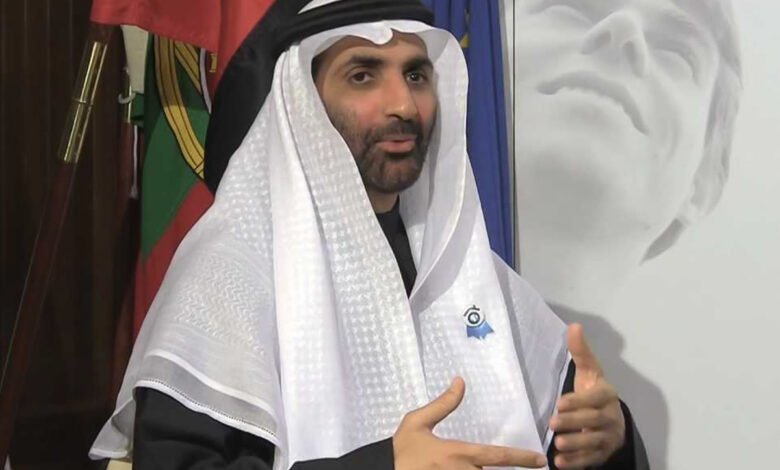
Returning to Ajman, Sheikh Abdul Aziz formalised his crusade. Adopting the official moniker “The Green Sheik”—a title he registered to symbolize his life’s mission—he began wearing green scarves alongside his traditional white kandura, a visual signature that quickly caught global media attention.
Appointed as the official Environmental Advisor to the Government of Ajman, he transformed the tiny emirate into an experimental incubator for regional sustainability policies.
Long before major global climate summits focused on grassroots youth education, Sheikh Abdul Aziz targeted the classroom. Partnering with the Emirates Nature-WWF, he launched the Eco-Schools Initiative across Ajman. The program mandated that primary and secondary schools integrate environmental literacy into their core curricula, install solar panels on school rooftops, establish rainwater harvesting systems, and operate student-led composting programs.
┌──────────────────────────────────────────────────────────────────────────┐
│                     THE THREE PILLARS OF EMIRATE POLICY                  │
├──────────────────────────────────────────────────────────────────────────┤
│                                                                          │
│   1. CURRICULAR INTEGRATION                                              │
│      Embedding ecological stewardship into regional K-12 education.      │
│                                                                          │
│   2. INDUSTRIAL AUDITING                                                 │
│      Applying cleaner-production frameworks to local manufacturing.      │
│                                                                          │
│   3. COMMUNITY ACTION                                                    │
│      Fostering neighborhood waste-sorting and water conservation.        │
│                                                                          │
└──────────────────────────────────────────────────────────────────────────┘
“If you try to change adults through top-down laws, you encounter resistance, politics, and greed,” Sheikh Abdul Aziz explained. “So I go bottom-to-top. If I can inspire a child of seven, that child goes home and audits their parents. They ask their father why he leaves the tap running while washing his car; they ask their mother why they are using single-use plastics. A prince cannot easily convince a hardened businessman to change, but that businessman’s own daughter can change him in a single evening.”
FROZEN FRONTIERS AND AFRICAN WILDERNESS
Sheikh Abdul Aziz quickly recognized that sitting behind an administrative desk in Ajman would not suffice. To inspire a generation raised on screen-based hyper-consumerism, he needed to lead high-stakes, experiential expeditions that captured the public imagination.
The Antarctic Odyssey (2010)
In 2010, Sheikh Abdul Aziz organized an expedition that shattered multiple cultural precedents simultaneously. He led a team of five young Emirati women on a research voyage to Antarctica.
In a region where young women were rarely encouraged to undertake extreme polar expeditions, the journey was groundbreaking. The team endured katabatic winds, sub-zero gales, and treacherous ice terrain to measure ice-sheet degradation alongside international polar scientists.
Upon returning, the expedition published data showing how thermal expansion and melting Antarctic ice directly threatened low-lying coastal infrastructure in the Persian Gulf—where billions of dollars of real estate sat just meters above sea level.
“When people in Dubai or Abu Dhabi look at Antarctica, they think it is another world,” Sheikh Abdul Aziz declared upon his return. “We proved that what melts in Antarctica will eventually flood the coastlines of Arabia. There are no borders in the atmosphere. There are no walls in the ocean.”
Wildlife Conservation in Rwanda
His environmental crusade expanded into sub-Saharan Africa. Recognizing that biodiversity loss in Africa directly destabilizes global ecosystem equilibrium, Sheikh Abdul Aziz became an active international partner of the Kwita Izina gorilla-naming ceremony in Rwanda.
In the dense, mist-shrouded bamboo forests of the Virunga Mountains, he personally sponsored and named an infant endangered mountain gorilla. He worked directly with local rangers to establish anti-poaching funding networks linking Gulf philanthropy with East African forest conservation.
┌──────────────────────────────────────────────────────────────────────────┐
│                   GLOBAL EXPERIENTIAL CAMPAIGNS                          │
├──────────────────────────────────────────────────────────────────────────┤
│                                                                          │
│   LOCATION         MISSION & OBJECTIVE                                   │
│   ────────         ───────────────────                                   │
│   Antarctica       Polar ice melt analysis & empowering female youth.    │
│   Rwanda           Mountain gorilla protection & rainforest ecology.     │
│   Jordan & Oman    Arid-land water conservation & community recycling.   │
│   Global (Virtual) WAYOUT Water Solutions for off-grid purification.     │
│                                                                          │
└──────────────────────────────────────────────────────────────────────────┘
THE ARCHITECTURE OF COMPASSION
To view Sheikh Abdul Aziz purely through the lens of environmental engineering is to miss the beating heart of his movement. For the Green Sheik, ecological degradation cannot be separated from human poverty, social injustice, and spiritual alienation.
As Executive President of the Al Ihsan Charity Association—one of the premier non-governmental humanitarian organizations in the UAE—Sheikh Abdul Aziz oversees social safety nets for thousands of underprivileged families.Under his leadership, the charity sponsors over 900 orphans and provides direct monthly food, medical, and educational aid to more than 5,000 vulnerable households, widows, and low-income migrant workers.
                                  ┌─────────────┐
                                  │ ENVIRONMENT │
                                  └──────┬──────┘
                                         │
                                         ▼
                                ┌─────────────────┐
                                │   A  R  T       │
                                │  (of Being)     │
                                └────────┬────────┘
                                         │
                                         ▼
                                  ┌─────────────┐
                                  │ HUMAN BEINGS│
                                  └─────────────┘
This holistic synthesis is distilled into his trademark philosophical framework: E-H-ART.
“Look at the word,” Sheikh Abdul Aziz explained, tracing the letters in the air. “It starts with E for Environment. It ends with H for Human Beings. And right in the middle, it spells ART. Environmental work is the art of being human. It is not just about measuring carbon parts-per-million; it is about cultivating compassion, kindness, and dignity for every living creature.”
His human-centric approach is articulated across his authored books, including Voices of Inspiration, Soar with the Green Sheikh, and From Deprive to Thrive. In these writings, he advocates for an internal paradigm shift prior to external environmental activism.
“You cannot fix the planet if you are unfixed inside,” he wrote. “A person filled with internal chaos, greed, and anxiety will project that chaos outward onto the landscape. Inner sustainability precedes outer sustainability.”
THE COP28 TRANSITION AND THE DIGITAL AVATAR
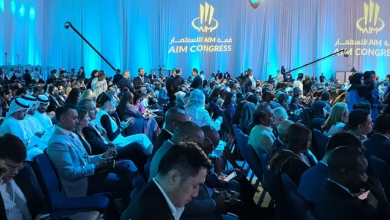
The high-water mark of the Gulf’s environmental diplomacy arrived when the United Arab Emirates hosted the United Nations Climate Change Conference (COP28) at Expo City Dubai.
For decades, international critics argued that a petrostated host could never deliver meaningful climate progress. Yet Sheikh Abdul Aziz spent years laying the intellectual and cultural groundwork that made such a summit possible in the region.
During COP28, as world leaders debated the wording of global agreements, Sheikh Abdul Aziz moved between diplomatic suites, youth pavilions, and civil society forums. He championed the historic UAE Consensus, which formally called on nations to transition away from fossil fuels in energy systems in a safe, orderly, and equitable manner to achieve net-zero carbon emissions by 2050.
┌──────────────────────────────────────────────────────────────────────────┐
│                   THE SHIFT IN GULF CLIMATE REALITY                      │
├──────────────────────────────────────────────────────────────────────────┤
│                                                                          │
│   ERA              DOMINANT PARADIGM                                     │
│   ───              ─────────────────                                     │
│   1970s–1990s      Unchecked Petro-Expansion & Infrastructure Growth     │
│   2000s–2010s      Emergence of Green Advocacy (The Green Sheik Era)     │
│   2020s–Present    COP28 UAE Consensus & Net-Zero 2050 Commitments       │
│                                                                          │
└──────────────────────────────────────────────────────────────────────────┘
Yet even as global climate accords are signed in glass convention centers, Sheikh Abdul Aziz remains focused on long-term generational mentorship. Through the Green Sheik Academy and the BlueYouth Initiative—first launched at COP22 in Marrakech—he has set an audacious personal goal: training one million young leaders worldwide to serve as climate champions in their local communities.
Recognizing that physical travel limits his reach, he has turned toward artificial intelligence and digital technology.
“I want to see a Green Sheik avatar in the digital world,” Sheikh Abdul Aziz revealed, outlining his vision for scaling global mentorship. “I want to encode my values, my doctoral research, my spiritual principles, and my life experiences into artificial intelligence. Long after my physical body has returned to the desert earth, a million young people in Africa, Asia, Latin America, and Europe will be able to learn from that digital mentor, building local solutions for their own communities.”
THE STEWARD ON THE DUNES
Fifty years after he first rode into the desert with his father, Sheikh Abdul Aziz bin Ali Al Nuaimi stood once again on the red dunes of Ajman as the sun dipped toward the horizon.
The distant skyline of Dubai glittered with steel towers against the twilight sky. The sound of distant highways echoed across the desert floor, carrying trucks powered by the very petrodollars he had walked away from decades prior.
He reached down and picked up a handful of cool desert sand, letting the fine red grains stream through his fingers like an hourglass.
“When my time on Earth is finished,” he said softly, looking out across the desert, “I don’t want people to remember me as a prince. Royalty is an accident of birth. I want them to remember that there was a human being who loved this planet, who loved its people, and who refused to let short-term wealth destroy our shared home.
My father told me I was the falcon.A falcon doesn’t own the sky. It simply flies through it with grace, respects the thermal currents, and protects its nest. That is all any of us are called to do.”